Home Blog

Hurmat Drama Review: Ten Episodes Inside a Father’s Rules

0
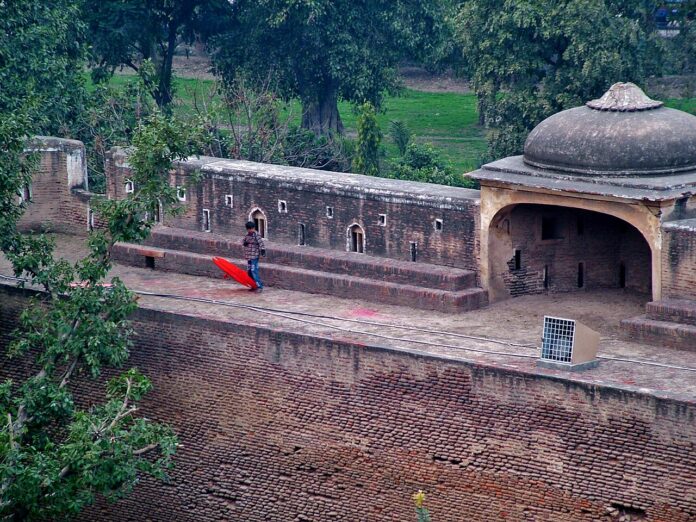
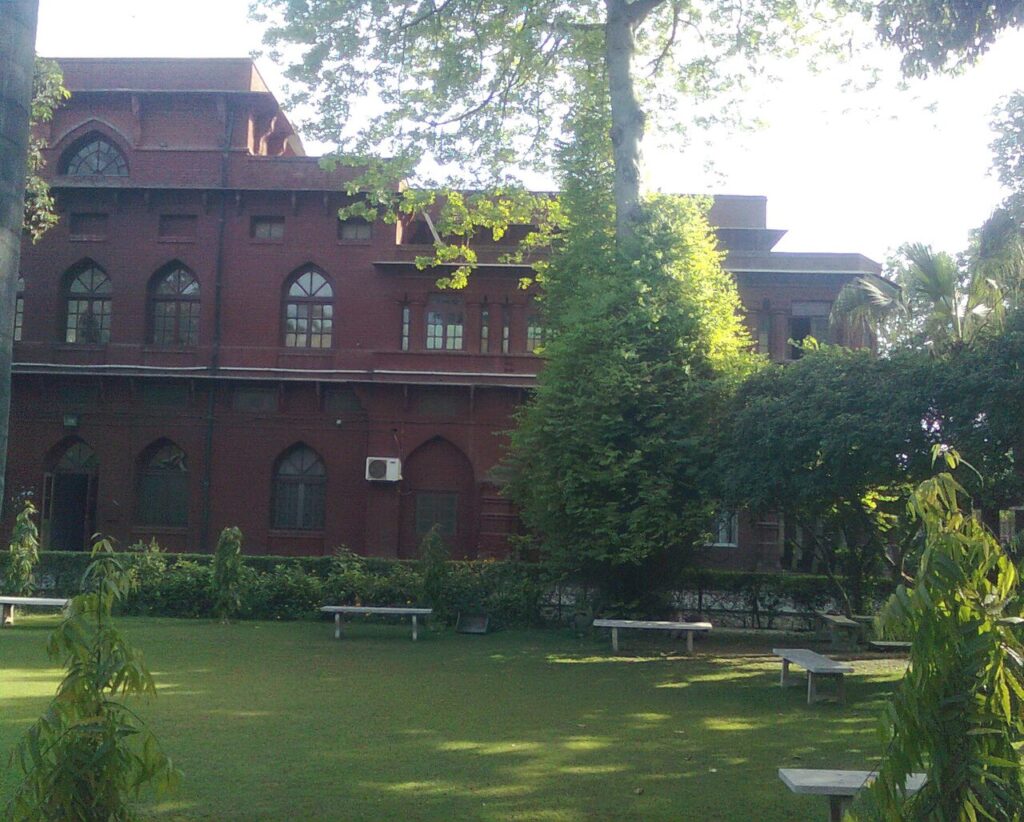
Red-brick building of the University of the Punjab old campus in Lahore, seen across a tree-lined lawn
Photo: Jugni / Wikimedia Commons, CC BY-SA 3.0

The first episode of Hurmat opens in a prison, with its young heroine behind bars, and only then flashes back to the house that confined her long before any prison did. It is a confident opening for a serial about confinement. The HUM TV serial, written by Kashif Anwar, directed by Nadeem Siddique and produced by Momina Duraid, premiered on 5 October 2026 in the Monday and Tuesday 8pm slot. Dananeer Mobeen plays a young woman who has finished her bachelor’s degree and wants to keep studying, and Ali Tahir plays Akram, the father who will not allow it.

The Hurmat drama drew a strong response almost immediately. Within two days of the premiere, as Images reported on 7 October, Mobeen shared a viewer’s comment on Instagram saying that their own father had painted over the windows of their home so the family could not look outside. The actor said she was glad audiences connected with Hurmat and saddened by the reason they did. A drama that so many viewers recognise as their own story owes them more than a strong premise.

At the ten-episode mark, Hurmat has delivered that premise with real force and then swerved, through a hurried engagement, a death that may or may not be a killing and a new romance, into territory that is harder to defend. The serial is at its best when it studies the house and its rules, and at its weakest when it treats the men around Hurmat as exits from that house.

The premise: a father’s rules and an uncle who opens the door
Red-brick building of the University of the Punjab old campus in Lahore, seen across a tree-lined lawn
Photo: Jugni / Wikimedia Commons, CC BY-SA 3.0

Anwar sets up the household economically. Akram distrusts anyone who comes near his family, and Hurmat’s mother, played by Uzma Hassan, lives in fear of him. Hurmat has the grades for university, but her father sees no need for a young woman to leave the house. The intervention comes from inside the family: her taya, played by Javed Sheikh, takes her side and gets her admitted. When a family friend proposes a match with his son, Hurmat’s refusal is whispered to her mother rather than spoken to her father, a small detail that says a great deal about who holds the floor in that home.

Fuchsia’s review of the first episode singled out the natural lighting, the overhead shots and a rooftop scene with the taya in which the sky opens up above Hurmat. Those choices give her confinement a physical shape. The roof is the one place where the house opens to the sky, which is why it matters that the terrace was among the spaces her father had forbidden her.

Kashif Anwar keeps returning to the confined heroine

Hurmat is not the first Anwar heroine to grow up behind someone else’s walls. In Nauroz (Green Entertainment, 2023), Mawra Hocane played Rishtina, raised in isolation in Jalalam, a remote mountain town, and taught that the outside world is dangerous, until her adoptive mother’s death and the truth about her origins send her out into it. In Neem, on HUM TV the same year, his heroine returns to Kashmir to work for children’s schooling. Anwar, still best known for Sabaat (2020), keeps returning to two ideas: education as a woman’s claim on the wider world, and the outside world as something men call dangerous so that women will stay in.
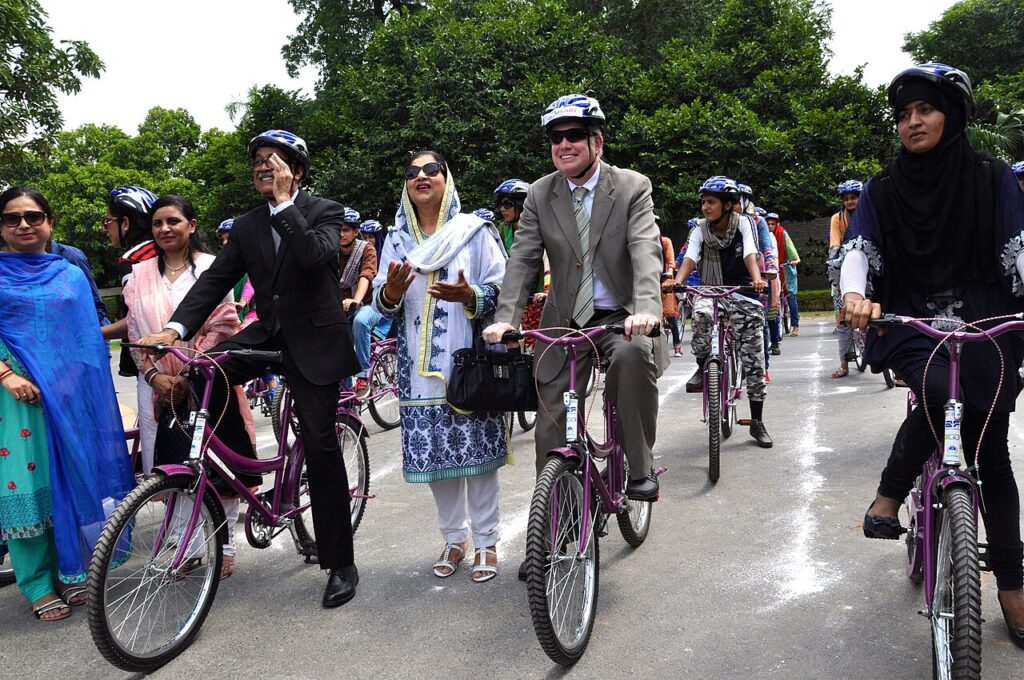
Women students riding bicycles on the University of Agriculture Faisalabad campus during a 2016 gender equity programme event
Photo: USAID Pakistan / Wikimedia Commons, Public domain

The teaser, released in early September and reported by Minute Mirror, included a line observing that a woman takes a surname twice in her life, at birth and again at marriage. It names the serial’s real subject, which is not one cruel father but an arrangement in which a woman passes from one household’s authority to another’s. Read that way, Hurmat belongs to a long tradition, from Haseena Moin’s PTV heroines to the women-led serials Miysha Usman gathered in her piece on dramas women can relate to. It also recalls Rokeya Sakhawat Hossain’s Sultana’s Dream, published in 1905, which imagined a Ladyland where men were kept in seclusion while women ran the country. Hurmat is not satire, but its opening episodes achieved a similar estrangement, letting viewers see the rules of an ordinary middle-class house as the strange and costly things they are.

Tabish and the problem of the rescuer

The romance with Tabish is where the serial first loses its footing. Shahveer Jafry, a YouTuber in his first television drama role, plays an upright young officer whose appeal for Hurmat lies in his willingness to stand up for what he believes in. In practice the relationship moves from chance meeting to proposal to engagement within a handful of episodes, with Hurmat doing much of the pursuing (Reviewit’s recap of the seventh episode called it stalking). Niche, writing on 20 October, argued that her attachment looked more like a response to her father’s control than a romance, and that Tabish risked becoming an escape route that would swap one dependency for another.

That reading may well be what Anwar intends. In the seventh episode Hurmat learns about Tabish’s traumatic childhood and decides she wants out, and she has since told him she will not marry him. The difficulty is that the drama has not given Tabish enough inner life for the turn to land as a recognition rather than a whim. Much of the online response to the ninth and tenth episodes sided with him, and the complaint was less that Hurmat changed her mind than that the serial changed her too quickly. A story about a young woman learning that a man is not a way out needs time to show her learning it.

Hurmat airs on HUM TV on Mondays and Tuesdays at 8pm Pakistan time, and full episodes are uploaded to HUM TV’s official YouTube channel.

Akram’s death and the ambiguity of the eighth episode

The serial’s boldest move came in the eighth episode. After Hurmat confronts her father over something she has learned about his past, Akram is found dead. The death first appears natural; then a flashback suggests, without confirming, that Hurmat may have choked him. Reviewit’s account of the episode recorded viewers split between those who believed she had killed him and those who read the scene as a hallucination brought on by years of abuse. Given that the first scene showed Hurmat in a cell, the drama is clearly building toward an answer.

There is a version of this arc that would be bold in the best sense: a story about the violence that a lifetime of control can plant in a person, told without excusing or sensationalising it. What worries me is what followed. Hurmat then discovers that her father kept her photograph as his phone wallpaper, and her mother explains his strictness as fear of what society would say. Poise Mag, reviewing the first four episodes, fairly argued that Akram needed to be a full human being rather than a villain. But humanising a controlling father after his death, through a sentimental detail and a wife’s explanation, is not the same as dramatising him while he was alive, and it risks telling viewers like the one who wrote to Mobeen that such rules were love in another form. The best serials about honour, Mustafa Afridi’s dramas among them, show how custom persuades from the inside without letting it off the hook.

Dananeer Mobeen’s performance and the new romance

Dananeer Mobeen, who plays the title role in Hurmat, during a television interview in 2025
Photo: GirlsOnly / Wikimedia Commons, CC BY 3.0

Mobeen remains the strongest reason to watch. Early reviews praised the fear and lack of confidence she brought to Hurmat under her father’s control, and that tentativeness gives the first half its emotional truth. Her career has moved quickly since the viral video of February 2021 that made her famous: the 2023 Lux Style Award for best emerging television talent for Sinf-e-Aahan, lead roles in Muhabbat Gumshuda Meri and Meem Se Mohabbat, and a first film, Abu Aleeha’s Mera Lyari. Gulf News noted that Hurmat echoes her role in that film, another daughter under a father’s pressure. The risk for an actor this young is being cast repeatedly as the daughter in need of rescue; the opportunity, if the second half allows it, is to play a woman living with what she may have done.

The arrival of Zeeshan, a company owner’s son back from America with plans for an artificial intelligence and robotics venture, does not help yet. Hurmat tells him the engagement was her parents’ arrangement and one she never truly accepted, a claim that sits uneasily beside the episodes in which she pursued Tabish herself. If the drama wants viewers to notice that Hurmat is rewriting her own story, it needs to signal that more clearly. The latest episodes leave her caught in a police raid after a party, and it is not yet clear whether this is the cell the first episode opened on.

What Hurmat still has to prove

Hurmat began as one of the season’s most pointed serials, a drama about a young woman’s right to study and move through the world that many viewers recognised from their own homes. It has since tried to become a mystery and a love triangle at once, and the strain shows in the pacing of recent episodes. None of that is fatal. The prison framing gives Anwar a structure for the second half, and in Nauroz he has already written a heroine reckoning with the world after leaving a closed home.

What the serial must avoid is resolving its central question in the easiest way, either by forgiving Akram through his daughter’s grief or by making Hurmat’s freedom depend on choosing the right man. Its own teaser observed that a woman takes a surname twice, and the remaining episodes will show whether Anwar can imagine a heroine who defines herself by neither. On the strength of its first half, and of Mobeen’s performance, Hurmat deserves its audience; on the evidence of its recent episodes, it deserves to be watched with a more critical eye than the early enthusiasm suggested.
Mustafa Afridi Dramas: The Writer Who Puts Honour on Trial

0
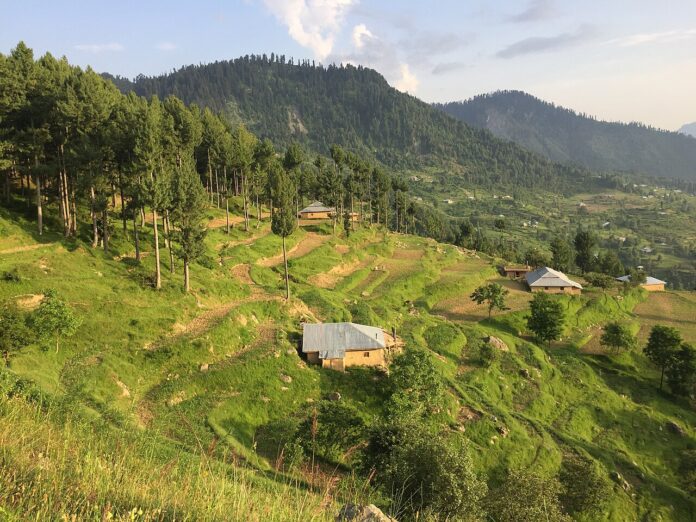
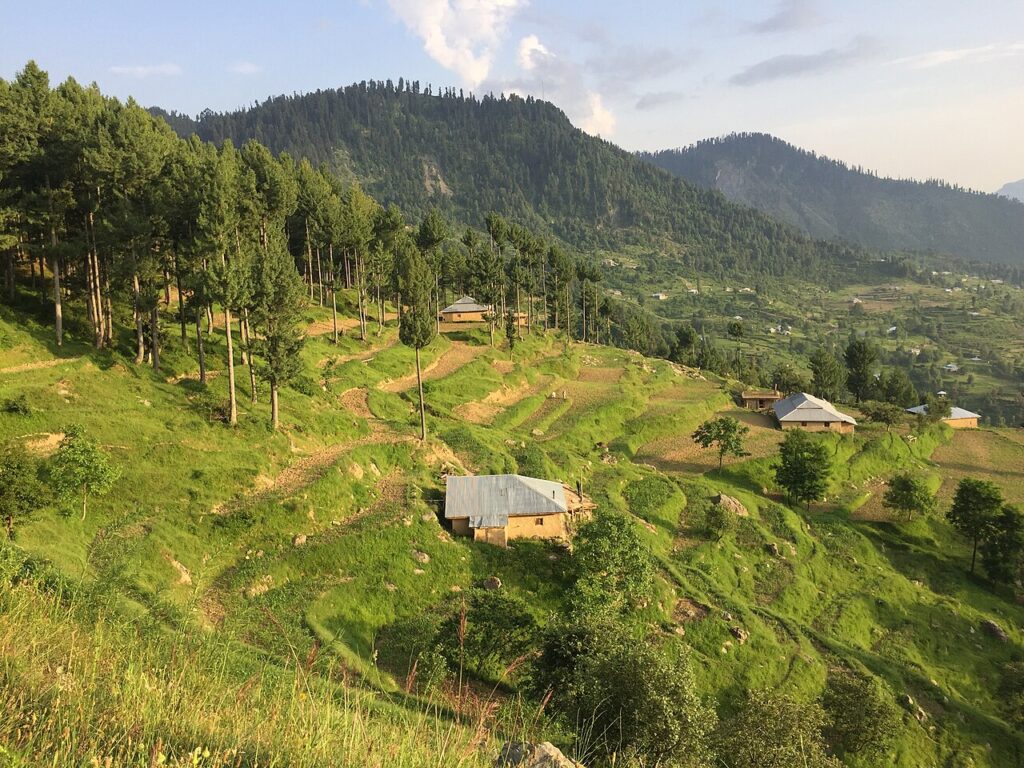
Terraced village of Malam Jabba in the Swat Valley, the region where Sang-e-Mar Mar is set
Photo: HQRaja / Wikimedia Commons, CC BY-SA 3.0

Early in Sang-e-Mar Mar, Gulistan Khan, the patriarch Nauman Ijaz plays with a heavy, watchful stillness, kills his aged father, Baran Khan, because the old man has asked him to. The scene establishes, before any romance or feud has begun, that in this Swat household duty and violence are bound so tightly that a son can commit the gravest act imaginable and call it obedience.

The scene belongs to Mustafa Afridi, who over the past decade has written the most sustained body of work on Pakistani television about custom and the damage it does. Born in Dera Ismail Khan, he went to the National Academy of Performing Arts wanting to act, but his teachers judged him better suited to writing. His first script was “Mukti”, an episode of PTV’s Partition Stories in 2007, and he has since won Best TV Writer at the Lux Style Awards twice, for Sang-e-Mar Mar and Sang-e-Mah.

Taken together, Mustafa Afridi dramas make a consistent argument: that honour, ghag and the mob are systems with their own internal logic, and that a serial can only defeat that logic by first showing how persuasive it is from inside. When he trusts that method, he writes some of the best television of the period. When a sponsor’s message or a spectacular finale stands in for it, the work loses the patience that made it distinctive.

Early Mustafa Afridi Dramas: The Household as an Institution

After lighter early work such as the ARY comedy Khandaan-e-Shuglia (2011), the turn came with Aseerzadi, which aired on Hum TV from 17 August 2013 to 25 January 2014 under Mohammed Ehteshamuddin’s direction. Its premise is a family in which men take three wives in pursuit of a male heir, and its heroine, Maira, is a new bride who refuses to accept the arrangement as natural. The serial is uneven, but the central idea is already his: the home is not a private refuge but an institution with rules, and the drama lies in a woman testing them.

Sang-e-Mar Mar and the Logic of Ghairat

Mikaal Zulfiqar, who played Aurang in Mustafa Afridi's Sang-e-Mar Mar
Photo: Sammy.joseph / Wikimedia Commons, CC BY 3.0

Sang-e-Mar Mar ran on Hum TV on Thursday nights from 1 September 2016 to 9 March 2017, 28 episodes directed by Saife Hassan and produced by Momina Duraid. It follows two Pashtun families in a Swat village, and its central injustice is the fate of Shireen (Kubra Khan), handed over in vani to Safiullah (Omair Rana) to settle a killing she had no part in. Around her, Gulistan Khan and Sania Saeed’s Shameem form a marriage of two people who understand exactly what the code costs and keep paying it anyway.

Writing in The Express Tribune in October 2016, Mahwash Badar connected it to the murder of Qandeel Baloch that July and the anti-honour-killing legislation that followed, and praised it for exposing the social machinery behind honour rather than simply condemning it. When it ended, Sadaf Haider’s review for Dawn Images called it a necessary critique of the obsession with ghairat, praising Afridi’s refusal to excuse his villains and noting that Mikaal Zulfiqar’s Aurang was written as a weak, conflicted man rather than a rescuing hero. Afridi won Best Writer at the 2017 Hum Awards and Best TV Writer at the 2018 Lux Style Awards, and Rahat Fateh Ali Khan’s title song is among the best-loved Sahir Ali Bagga OSTs.

Its weakness is one that recurs in his later work. In the final third, the serial resolves its arguments through a run of killings and an accident, and the deaths arrive with the regularity of plot mechanics rather than the weight of consequence. The serial shows a writer who can build a moral trap with great care and then reach for melodrama to spring it.

Aangan: Adapting Khadija Mastoor’s Novel

Afridi’s screenplay for Aangan, directed by Ehteshamuddin and aired on Hum TV from 20 December 2018 to 27 June 2019, took on a more literary source. Khadija Mastoor’s 1962 novel watches the politics of Partition intrude on a family courtyard through the eyes of Aaliya. Afridi kept that structure, with Mawra Hocane as Aaliya and Sajal Aly as Chammi, a performance discussed in our piece on Sajal Aly dramas. What the adaptation cannot carry over is the novel’s interiority. Mastoor’s Aaliya is a judging, reflective presence; on screen she becomes a passive observer, and the serial leans on Chammi’s fire for energy that, in the book, comes from Aaliya’s mind. It reveals Afridi’s natural strength, which is confrontation rather than contemplation.

Ehd-e-Wafa and the Limits of a Commissioned Script

Osman Khalid Butt, who played Shahzain in Ehd-e-Wafa
Photo: VOA / Wikimedia Commons, Public domain

Ehd-e-Wafa, which aired on Hum TV, PTV Home and the ISPR channel from 22 September 2019 to 15 March 2020, is the outlier in his serious work. Created by ISPR with MD Productions, it follows four Lawrence College friends who choose different careers in the army, politics, television news and the civil service, played by Ahad Raza Mir, Osman Khalid Butt, Wahaj Ali and Ahmed Ali Akbar. It won Best TV Play at the Lux Style Awards and made Wahaj Ali a star.

The friendship is written with a humour his heavier dramas rarely allow, but the brief limits it. Of the four paths, the soldier’s is the one whose choices are never seriously questioned, while the politician and the journalist absorb the moral doubt; a petition at the Lahore High Court over the portrayal of politicians and the media was dismissed, yet the imbalance it pointed to is visible on screen. As a friendship drama it works, but it is the clearest example of how an institutional commission narrows a writer whose best work depends on putting institutions on trial.

Sang-e-Mah: Hamlet in Laspiraan

Atif Aslam in 2021, who played Hilmand in Sang-e-Mah
Photo: Shahveer Jafry Second / Wikimedia Commons, CC BY 3.0

Sang-e-Mah, the second part of a planned trilogy begun by Sang-e-Mar Mar, ran on Hum TV from 9 January to 3 July 2022 over 26 episodes, again directed by Saife Hassan. Atif Aslam, in his acting debut on television, plays Hilmand, a young man living a dervish’s life in a graveyard, opposite Nauman Ijaz and Samiya Mumtaz. Its subject is ghag, the tribal custom in which a man publicly claims a woman for marriage and so forecloses her choices.

It is also the clearest instance of Afridi’s reading entering his scripts. In April 2022, Mehreen Odho argued in Dawn Images that it is a deliberate adaptation of Hamlet: Hilmand speaks to his dead father at the graveside, is dismissed as mad, and confronts a stepfather who poisoned his father and married his widow, and in episode nine Sheherzaad says outright that something is rotten in Laspiraan. A revenge tragedy suits a story about a culture of revenge, and Shakespeare gives Afridi a structure in which brooding is itself a form of resistance.

Its problems are also more serious. The Friday Times reported in January 2022 on criticism that the show trades in stereotypes of Pashtuns, and Aneela Khalid’s review for Independent Urdu argued that the writing blurs ghag with love, softening the custom it sets out to condemn. The ending compounds this. Marjaan and Zarsanga take their own lives rather than live with the disgrace, and only in this closing stretch does the jirga rule that ghag must end; Aaj News reported the next day that many viewers were angry at the finale. The deeper difficulty is structural: a drama arguing against a violent custom concludes that only a spectacular death can end it, which comes uncomfortably close to the custom’s own logic.

Zard Patton Ka Bunn and Tan Man Neel o Neel: Two Kinds of Message Drama

Zard Patton Ka Bunn, which premiered on Hum TV on 12 May 2024, was a co-production with Kashf Foundation, and as Arab News reported that month, it set out to discuss family planning and women’s health, with Sajal Aly as Meenu. The subject is one television usually avoids, but the brief shows in scenes where characters speak in the register of a public-information campaign rather than of people under pressure.

Tan Man Neel o Neel, produced by Sultana Siddiqui and directed by Saife Hassan, begins as a lighter story about young dancers, with Sehar Khan and Shuja Asad as Rabi and Sonu. In its final ten minutes, a rival falsely accuses Sonu of dancing at a holy site and a mob kills the accused; the episode closes with photographs of real victims of false blasphemy accusations, including Mashal Khan and Priyantha Kumara. As Images reported in February 2025, viewers praised its courage while some found the turn abrupt, which is fair, since the earlier episodes barely prepare it. Yet this death works differently from the one in Sang-e-Mah. It resolves nothing and offers no reform, and so it indicts the society watching rather than tidying up the plot.

Mustafa Afridi’s Place Among Pakistani Drama Writers

Afridi’s most important collaborator is Saife Hassan, who directed Sang-e-Mar Mar, Ehd-e-Wafa, Sang-e-Mah, Zard Patton Ka Bunn and Tan Man Neel o Neel, and whose restrained camera gives the writing room to breathe. In seriousness Afridi stands close to Bee Gul, though he favours broad social canvases over the intimate psychology she prefers, and he is more willing than most dramas about taboo subjects to leave his audience with discomfort.

I would place Sang-e-Mar Mar first among his serials, because it holds its argument most steadily and lets its characters, rather than its message, carry the critique. Sang-e-Mah is more ambitious and more flawed, and Tan Man Neel o Neel is the bravest of the recent work despite its rushed construction. What links them is a writer who understands how custom persuades, which is rarer than simply condemning it. His appetite for the grand finale is a real weakness, but it is the weakness of someone attempting what most of the industry will not.

Where to watch: Sang-e-Mah is on HUM TV’s official YouTube channel; Hum Network took Sang-e-Mar Mar off YouTube in 2017 and later made it available on its own website.

Sajal Aly Dramas: The Quiet Power Behind Her Best Roles

0
Courtyard and facade of Haveli Dina Nath in the Walled City of Lahore
Photo: The Walled City of Lahore Authority / Wikimedia Commons, CC BY-SA 4.0

Midway through the first stretch of Chup Raho, Rameen tells her mother what her brother-in-law has done to her, and her mother’s answer is to ask her to keep it to herself so that her sister’s marriage survives. Sajal Aly played the scene without the usual apparatus of television grief, no wail and no collapse, only a young woman absorbing the fact that her family had chosen the house over her. That stillness announced something about the actor that has held for more than a decade.

Sajal Aly was born in Lahore in 1994 and, as she told Sumaira Jajja in a 2017 Dawn Icon interview, started out as a promotions girl at a mall, taking work that supported her family before television found her. Her first substantial role came in the ARY soap Mehmoodabad Ki Malkain in 2011. She has since won the Hum Award for best actress several times and crossed into Hindi cinema alongside Sridevi in Mom (2017) and into English with Shekhar Kapur’s What’s Love Got to Do with It? (2023).

Read as a body of work, the Sajal Aly dramas that last share a type: women whose resistance is slow and costly, pushing against a family or a village from inside it. Her weaker work comes when a script asks her to be an ideal of romance or a draw for a big banner. That pattern explains both her best performance, in Aangan, and her most criticised recent choice.

Chup Raho and the early survivor roles

Between 2011 and 2015 she appeared in more than twenty serials, and the ones that mattered placed her inside a household that was failing her. Nanhi (Geo, 2013, directed by Haseeb Hassan) brought her first Lux Style nomination, and Sannata (ARY, 2013) paired her with Kashif Nisar, whose patience with domestic pressure, discussed in our piece on Kashif Nisar’s dramas, suited her.

Chup Raho (ARY Digital, 2014–15), written by Samira Fazal and directed by Yasir Nawaz, is still called her breakthrough. Reviewing it for Dawn in March 2015, Sadaf Haider argued that the serial made the case that there is no honour in silence, which is the right reading of its first half. The second half is harder to defend: a trafficking subplot and a villain who conveniently goes mad turned a story about complicity into one about luck, and the role drifted toward the bechargi that drama too often sells as sympathy. That Aly kept Rameen watchful rather than merely wounded is why the serial is remembered for her and not its plot.

Romance and the Farhat Ishtiaq years

Actor Bilal Abbas Khan during a 2020 interview with BBC Urdu
Photo: BBC News / Wikimedia Commons, CC BY 3.0

Yakeen Ka Safar (Hum TV, 2017), adapted by Farhat Ishtiaq from her own novel and directed by Shahzad Kashmiri, cast her as Dr Zubiya, whose mother has been killed by her father, opposite Ahad Raza Mir, and won her the popular best actress prize at the 2018 Hum Awards. The same year’s O Rangreza, opposite Bilal Abbas Khan, gave her Sassi, a brash, headstrong heroine she named to Jajja as her favourite role because it forced her to open up emotionally. Sassi is the outlier in her filmography, and the jury prize it earned her suggested the industry noticed the stretch.

The weaker side showed in Yeh Dil Mera (2019), her second Ishtiaq serial with Mir, where a revenge thriller kept her reacting to a man’s secret for most of its length. The refusal to perform pain that made Rameen frightening reads as passivity when there is nothing to resist except a love story. Her work with Ishtiaq, whose wider career is traced in our guide to Farhat Ishtiaq’s dramas, is consistently polished and rarely her most interesting.

Aangan and the best performance of her career

Courtyard and facade of Haveli Dina Nath in the Walled City of Lahore
Photo: The Walled City of Lahore Authority / Wikimedia Commons, CC BY-SA 4.0

Aangan aired on Hum TV on Thursday nights from December 2018 to June 2019, 27 episodes adapted by Mustafa Afridi from Khadija Mastoor’s 1962 novel and directed by Mohammed Ehteshamuddin. Mastoor’s novel sees the Partition years from inside the women’s quarters, where politics arrives as rumour and men’s decisions land on people never consulted. Aly played Chammi, an abandoned relative in the ancestral haveli, attached for years to her cousin Jameel while he flirts with her and then turns to Aaliya.

The performance works because Chammi is allowed to be unattractive in the moral sense: jealous, stubborn, humiliating herself and aware of it. Aly plays her with a wary, defensive physicality, as though Chammi always expects to be asked to leave the room. Dawn Images placed it among the best television performances of 2019, and it remains the clearest case for her as a character actor. The ending is less convincing. After Chammi leaves an abusive marriage and returns, Jameel, moved by her devotion, proposes, turning years of humiliation into a romantic reward that flatters the love story more than the woman and sits awkwardly in a serial about how little the courtyard’s women get to choose.

Alif, Sinf-e-Aahan and the prestige-project problem

After Aangan, Aly moved into large, carefully marketed projects. Alif (Geo, 2019), Umera Ahmed’s spiritual drama directed by Haseeb Hassan, cast her as the film actor Momina Sultan opposite Hamza Ali Abbasi, and Sinf-e-Aahan (ARY, 2021–22), directed by Nadeem Baig, placed her among five young women joining the army, an ensemble whose appeal Miysha Usman set out in her reasons to watch Sinf-e-Aahan. Both earned her Lux Style nominations and both are worth watching, but in each she is one element of a message rather than the centre of a story, and her particular gift gets less room. Ishq-e-Laa (2021), in which her character left after eight episodes, was a more awkward case. None of these is a poor performance, yet together they show an actor being used for her name at a stage when she could carry harder material.

Kuch Ankahi and Zard Patton Ka Bunn: range, then depth

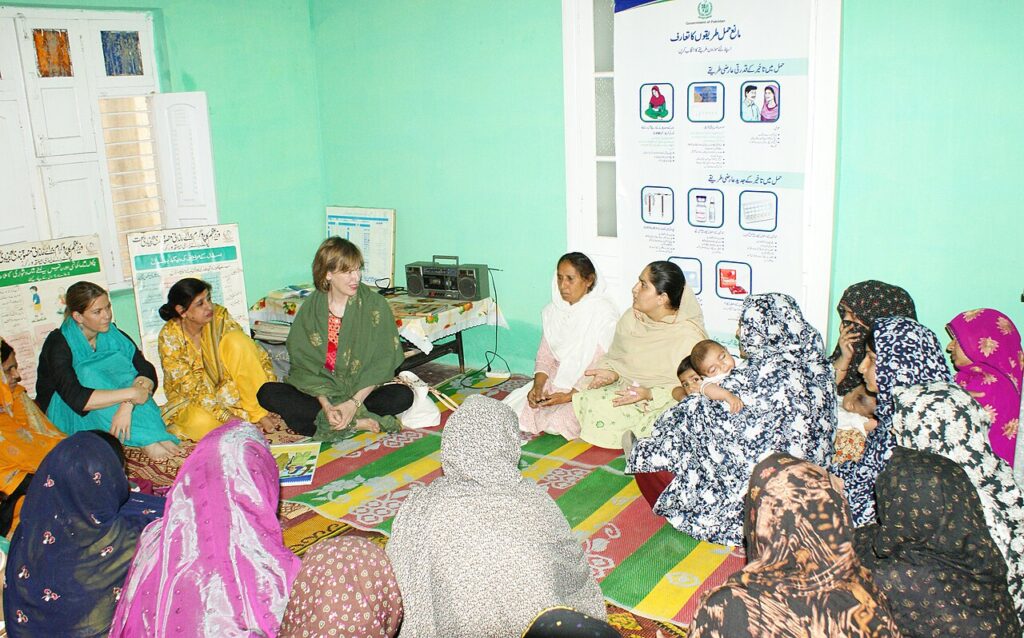
A Lady Health Worker training local women on maternal and child health at a health house near Jhelum, Punjab
Photo: USAID Pakistan / Wikimedia Commons, Public domain

Kuch Ankahi (ARY, January to July 2023), written by Syed Mohammad Ahmed and directed by Nadeem Baig, was the corrective. As Aaliya, a middle-class estate agent supporting her family and trying to buy back its home, Aly finally played comedy at length, sparring with Bilal Abbas Khan’s rival agent with a dry timing her earlier roles never asked for. The News International found the serial’s picture of the property business unrealistic, which is fair, but the performance proved that her restraint could be funny as well as tragic.

Zard Patton Ka Bunn (Hum TV, 2024), made with the Kashf Foundation, reunited her with Mustafa Afridi under director Saife Hassan. Meenu wants to become the first doctor from her village, and the serial threads her ambition through child labour and overpopulation. Reviewing it for Images in November 2024, Sana Hussain called it a story that comes along once in a long while and singled out only one flaw, Aly’s accent drifting away from the regional speech the character would use. That flaw matters more than the review allowed, since a village heroine who sounds urban weakens the serial’s claim to authenticity, and a finale in which Meenu graduates with eighteen gold medals tips hard-won progress into wish fulfilment. Even so, it is the strongest case for her since Aangan, and it won her both the jury and popular best actress prizes at the 10th Hum Awards. Its title song, “Teri Arzoo”, is sung by Zaw Ali and Sohail Shehzad.

Main Manto Nahi Hoon and the cost of a big banner

The pattern broke badly in 2025. Main Manto Nahi Hoon (ARY Digital, July to November 2025), written by Khalil-ur-Rehman Qamar and directed by Nadeem Baig, was produced by Humayun Saeed’s Six Sigma Plus. Aly played Mehmal Amritsari, a student from a Lahore gangster family who falls for her economics professor, played by Saeed. The romance drew sustained criticism, and in July 2025 Images objected to a fat-shaming classroom joke delivered by her character, noting that fans had long defended her as an actor drawn to strong female roles. Sanam Saeed later told Images that the cast, Aly included, had reworked some lines, which suggests the problem was visible on set.

The title borrows the name of a writer who put women’s choices on the page with uncomfortable honesty, yet the serial offered the most conventional gender politics in Aly’s recent work. Her reputation for serious roles lent it a credibility its script had not earned, which is partly why so much of the backlash landed on her as well as on its writer.

What her career asks of writers

Her latest serial, Zanjeerain, which premiered on Hum TV on 29 April 2026, returns her to Farhat Ishtiaq and Shahzad Kashmiri, with Aly as Rabia, who runs a dhaba with her brother and is caught in a feud between powerful families. The setup at least gives her a working woman with a place of her own rather than a heroine waiting in someone else’s house; the wider tradition she belongs to is surveyed in our list of iconic female roles in Pakistani dramas.

Across fifteen years, the serials that hold up are those where a writer trusted her with an inner life that runs ahead of the plot, as Mustafa Afridi has twice; the ones that fade gave her a love story or a cause to stand beside. For a viewer coming to her fresh, Aangan and Zard Patton Ka Bunn are the essential pair, with Chup Raho‘s first half and Kuch Ankahi showing the range in between, and I would leave the prestige projects for later. She is at her strongest when she follows writers rather than banners, and her choices after Main Manto Nahi Hoon will show whether she and the producers who cast her have taken that lesson.

Where to watch: Zard Patton Ka Bunn and Zanjeerain are on HUM TV’s official YouTube channel; Kuch Ankahi and Main Manto Nahi Hoon are on ARY Digital’s.

Doctor Bahu Drama Review: The Patriarch in the White Coat

0
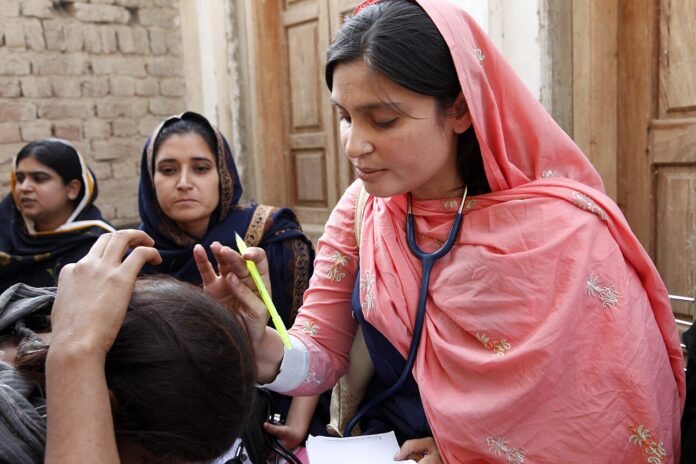
A woman doctor examines a patient at a mobile health clinic in Sindh, Pakistan
Photo: DFID - UK Department for International Development / Wikimedia Commons, CC BY 2.0

Midway through Doctor Bahu, after Dr Farheen has died, the camera moves slowly through the grieving house until it settles on her husband, Dr Shahnawaz, the one man in it who will not accept any share of the blame. He has already decided whose fault it is: his younger son’s wife, Dr Sania, the daughter-in-law who would not do her residency where she was told. The scene needs no dialogue, because by then the serial has spent months showing how this household runs.

The Doctor Bahu drama, written by Sanam Mehdi Zaryab and directed by Mehreen Jabbar, ran on ARY Digital from 27 March to 31 July 2026. On paper it is familiar territory: a strong-willed bahu, a difficult sasural, a husband caught in the middle. What made it one of the most discussed serials of the year was its treatment of control inside a respectable, educated family as a system with rules and rewards, and its interest in what that system costs the women expected to keep it running.

That ambition is the reason the serial is worth taking seriously, and also the reason its ending disappoints. A drama conceived as an argument about women’s medical careers spends its final hour on a hospital bed, a newborn son and a repaired marriage, while the question it set out to ask is left politely unanswered.

Where Doctor Bahu came from: the “doctor bride” debate

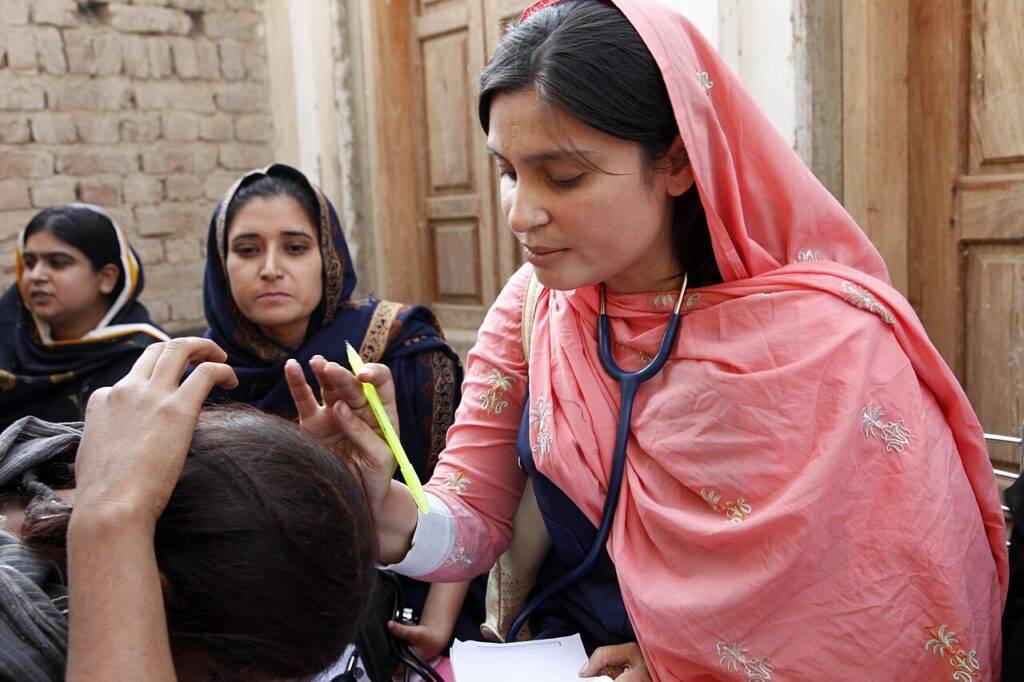
A woman doctor examines a patient at a mobile health clinic in Sindh, Pakistan
Photo: DFID – UK Department for International Development / Wikimedia Commons, CC BY 2.0

The serial began as a public complaint. In January 2022, Humayun Saeed posted that only about one in four women who qualify as doctors in Pakistan go on to practise, blamed family pressure, and attached the hashtag #DoctorBahu to a project he was considering. The problem is well documented. An AFP report carried by Images in April 2026 cited medical associations’ estimates that around 70,000 registered women doctors, almost a fifth of the country’s 370,000, are not practising. In a 2019 piece for Dawn, “The myth of ‘doctor brides’“, the bioethicists Sualeha Siddiq Shekhani and Farhat Moazam argued that the stereotype of the girl who studies medicine to improve her rishta hides structural failures such as poor postgraduate training and no day-care.

Saeed and his producing partner Nadeem Baig took the idea to Jabbar, and Six Sigma Plus produced it. Jabbar told Usman Ghafoor of Gulf News in March 2026 that she had hesitated over a 30-episode commitment, since she prefers shorter formats, and she described the serial’s target precisely: families who want a woman doctor in the house as an unpaid, live-in carer rather than a working professional. For most of its run the serial honours that premise. Sania (Kubra Khan) is preparing for her FCPS when the proposal arrives from Salman (Shuja Asad), the only member of Dr Shahnawaz’s family who is not a doctor. The in-laws accept the match on a condition: she will defer to them and work at the family hospital, as the elder daughter-in-law, Mina (Hajra Yamin), already does.

Dr Shahnawaz and the rules of a controlling house

Shahzad Nawaz at the 2025 Red Sea Film Festival
Photo: Zafer / Wikimedia Commons, CC BY 4.0

The serial belongs, more than to anyone else, to Shahzad Nawaz. His Shahnawaz is an oncologist who owns two private hospitals, and he never raises his voice when a raised eyebrow will do. Writing in Dawn’s Icon in July 2026, Sarwat N. Shah read the show as a study of coercive control dressed up as tradition, and pointed to the mechanics that make it convincing: the tap of a spoon that tells the women what is expected of them, the information he hoards, the favours he grants the families of his daughters-in-law so that gratitude does the work orders would otherwise do. The household runs on fixed roles, with a compliant wife, a favoured son and a son labelled difficult, and the drama shows that the arrangement functions even as it shrinks everyone inside it.

Some of the best writing goes to those who have made their peace with him. Saba Hameed’s Dr Farheen, a qualified doctor confined to an aesthetics practice and the home, carries the cost of that peace without naming it, and her death, after she overhears her husband and Dr Rubina (Atiqa Odho) discussing their past, lands as the bill for a lifetime of silence. Adeel Hussain’s Faizan, the obedient elder son with a childless marriage, drifts into a relationship with Dr Amber (Mira Sethi), and the serial asks for sympathy for his suffocation without excusing the betrayal of Mina.

The weakness in this strand is a late revelation about Shahnawaz’s own past that recasts him as a wounded man. Shah argued that it does not excuse him, and the script does not quite say it does, but the timing works against the drama. Arriving so close to the end, it offers viewers a reason to sympathise with him at the moment the serial most needs to show what his control has cost, and Brandsynario’s round-up of reactions to the finale found many viewers defending him as practical and misunderstood.

Mehreen Jabbar’s direction and the Mil Hi Lo OST

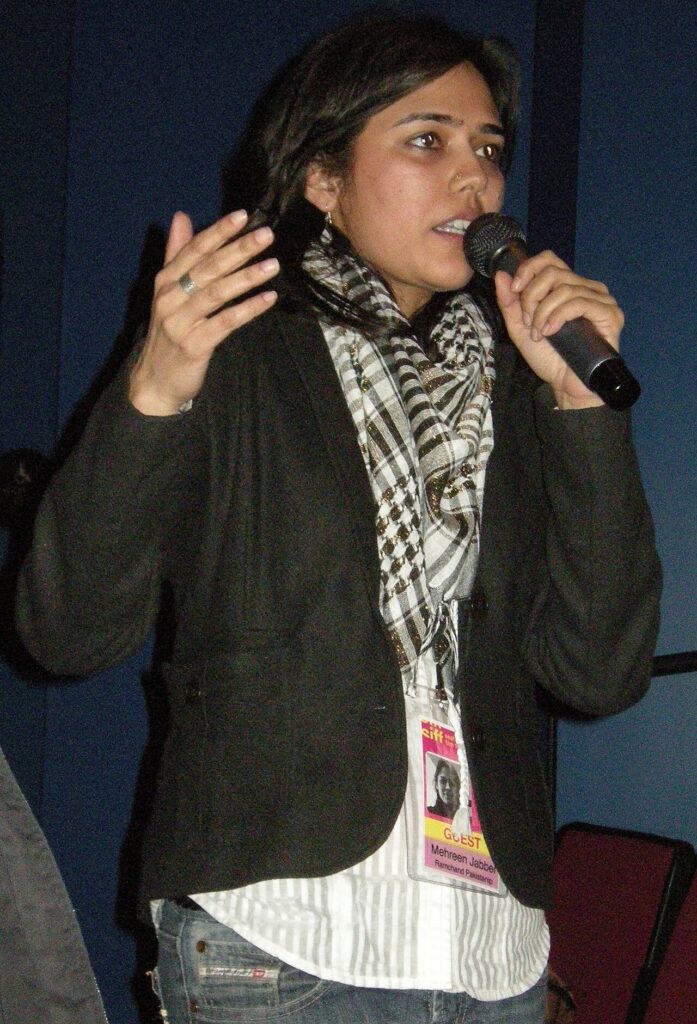
Director Mehreen Jabbar at the Seattle International Film Festival
Photo: Joe Mabel / Wikimedia Commons, CC BY-SA 3.0

Jabbar has been making television since the mid-1990s, and her best work, from Doraha, which won her a Lux Style Award, to Daam and Jackson Heights, has preferred observation to declaration. Doctor Bahu, a weekend primetime serial, is her most mainstream project in years, yet she compromised little for the slot. Ozair Majeed, reviewing the early episodes for PakistaniCinema.net in April, singled out a six-minute single-take party sequence that establishes, through movement alone, who is circling whom. The mourning scene described above, which the actor Sahar Hashmi shared on Instagram as “Pure cinema”, works the same way.

Kubra Khan plays Sania as competent and slightly impatient rather than saintly, and Jabbar defended that choice on a podcast, as ARY News reported in July, saying Sania does not see herself as flawed even when she hides her father-in-law’s corruption from her husband. Majeed also noted that Khan’s dialogue delivery is sometimes indistinct, which is fair. The soundtrack is unusually strong. “Mil Hi Lo”, sung by Faisal Kapadia and Zeb Bangash and composed by Saad Sultan as part of his In The Box series, sounds like a duet written for two distinct voices rather than a theme written for a montage.

Thirty-five episodes and a rushed ending

Actor Shuja Asad, who plays Salman in Doctor Bahu
Photo: Zara Shabbir / Wikimedia Commons, CC BY-SA 4.0

The structural problem is visible in the arithmetic. Jabbar agreed to 30 episodes and the serial ran to 35, with the extra length going into a middle stretch that circles Faizan’s affair and Salman’s insecurities at a slow pace, and then into a finale that has to close half a dozen threads at once. Salman hands the evidence of his father’s corruption to the press, Faizan and Mina give statements to the anti-corruption authorities, and Shahnawaz is left exposed and alone, walking out of his home, apparently to leave the country, rather than facing arrest. Sania survives a dangerous delivery and wakes to a son and a penitent husband.

Salman’s arc suffers from the compression. Asad wrote after the finale, as the Express Tribune reported, that the character’s journey was about accountability and redemption, and he plays well a son made defensive by a father who never forgave his career choice. But months of resentment are forgiven in a handful of bedside scenes. The larger cost falls on Sania. The serial grew out of Saeed’s question about women who stop practising after marriage, yet its final episode never shows whether its heroine returns to her residency. By leaving that off screen, the finale implies that a woman doctor’s story is complete once her health, marriage and motherhood are secured, which is the very assumption the serial was written to question.

From Dhoop Kinare to Doctor Bahu

A piece of casting shows how far the genre has and has not moved. Marina Khan, who appears here as Zainab, was Dr Zoya in Haseena Moin’s Dhoop Kinare in 1987, the PTV serial in which a woman doctor’s hospital work was the setting for a romance, never something she had to defend. Almost four decades later, a woman doctor’s right to keep working is the conflict itself. Urdu literature has known this household for a long time: Rashid Jahan, a doctor and one of the writers of Angarey in 1932, wrote about middle-class women whose lives were organised around the needs of the home, and the sasural in Doctor Bahu would be recognisable to her.

Among recent serials, Doctor Bahu sits closer to Kafeel, Umera Ahmed’s argument against silent endurance, than to the saas-bahu dramas its title evokes, and it extends the line of women-led stories Miysha Usman traced in her round-up of dramas women can relate to. Its controlling household, though, is a family of consultants, which makes the point that degrees do not dismantle the system and can just as easily be absorbed into it.

Is Doctor Bahu worth watching?

For its first two-thirds, Doctor Bahu is among the most intelligent serials ARY has aired in recent years: carefully shot, well cast, and written with a clear understanding of how control works in families that consider themselves enlightened. Shahzad Nawaz’s performance alone justifies the time. Its failures are of nerve and length rather than craft. It softened its villain when it should have held him to account, and it gave its heroine a happy ending in every part of her life except the one the drama was named for.

Viewers who start it should expect an abrupt finale, but the central household is observed with a precision Pakistani television rarely sustains at this length, and even the flaws are instructive. Before the serial aired, Jabbar said she wanted producers to move towards shorter, season-based storytelling. The stretched middle and compressed ending of Doctor Bahu support that view, since a tighter serial would have left room to settle the question of Sania’s career that Saeed’s 2022 post first raised.

Where to watch: all 35 episodes are on the official ARY Digital HD YouTube channel.

Hasan Raheem’s Rangeen and the Promise of Coke Studio Nu.WAV

0
A child flying a kite at the Shahi Qila in Lahore, the city whose Basant sets the scene for Hasan Raheem's Rangeen
Photo: Guilhem Vellut / Wikimedia Commons, CC BY 2.0

The video for Rangeen opens on a Lahore rooftop during Basant. Hasan Raheem plays a young man who glimpses a girl across the rooftops and builds an entire romance around her in his head, in a pastel city full of cassettes, CDs and old film posters, until the daydream ends at her wedding to someone else and a shehnai carries the procession. The heartbreak is played for warmth rather than tragedy, and that lightness is a large part of the song’s appeal.

Rangeen was released on 18 September 2026 as the second song from Coke Studio Nu.WAV, the franchise’s new artist-led platform. Three weeks later, on 11 October, Raheem posted a clip of himself dancing to it in New York with a crowd joining in, and the song has since been travelling the way Pakistani pop now tends to travel, through short clips on Instagram and TikTok rather than through radio or television.

The song is the clearest case so far for what Nu.WAV is for: a compact, personal single shaped by a filmmaker’s eye, rather than the meeting of traditions that defined the main Coke Studio seasons. That same quality is also its limit. Rangeen is very much a Hasan Raheem song, built on a persona his audience already knows, and it asks less of its collaborators and its listeners than the best Coke Studio work has done.

What Coke Studio Nu.WAV is, and how it differs from the main seasons

A child flying a kite at the Shahi Qila in Lahore, the city whose Basant sets the scene for Hasan Raheem's Rangeen
Photo: Guilhem Vellut / Wikimedia Commons, CC BY 2.0

Coke Studio Pakistan began in 2008 as a studio-performance show in which a house band brought folk, qawwali and classical musicians together with pop singers, and for most of its life its seasons were judged on those encounters. Season 14, produced by Zulfiqar Jabbar Khan (Xulfi) and released on YouTube between January and March 2022, broke with the episodic format and presented each song with its own music video. Among the directors that year was Kamal Khan, and it is Kamal Khan who created Nu.WAV.

When Coke Studio announced the platform in August, The Express Tribune reported that it would combine music with design, visual storytelling and film, and that artists would build their own creative worlds instead of fitting into the established Coke Studio sound. Coke Studio’s general manager, Sami Wahid, summed up the idea by saying that “each song has its own world.” The first edition was announced as six songs, and the opener, Dil, by Afusic, Ali Soomro and Zoha Waseem, arrived in early September to what the Tribune described as a mixed reception, with much of the argument turning on whether Nu.WAV should be judged on its own terms or against its parent show.

Who made Rangeen

The credits are worth setting out, because they explain the song’s character. Hasan Raheem wrote the lyrics and composed and arranged the vocals. The producer Umair, born in Karachi and credited with more than 150 releases, composed, produced and mixed the track and co-arranged it with Raheem; the two had already worked together on Radha, OBVIOUS and MAKE YOU MINE. Izzchugtai, a Lahore producer and performer known for Ghuroor and Nadiyan Paar, is the featured artist. Muhammad Salim plays the shehnai, Sean Tallman mastered the track, and Kamal Khan is executive producer.

The video was directed and edited by Arham Ikram for Gali Films, produced by Iman Khan, shot by Aamir Mughal and designed by Hashim Ali, with Sukaina Zaidi as the girl on the rooftop. Images noted the early-2000s detail of the sets, a decade that Pakistani pop audiences now look back on with real affection, as CurryFlow’s piece on the one-hit wonders of 2000s Pakistani pop suggests.

Why Rangeen is spreading

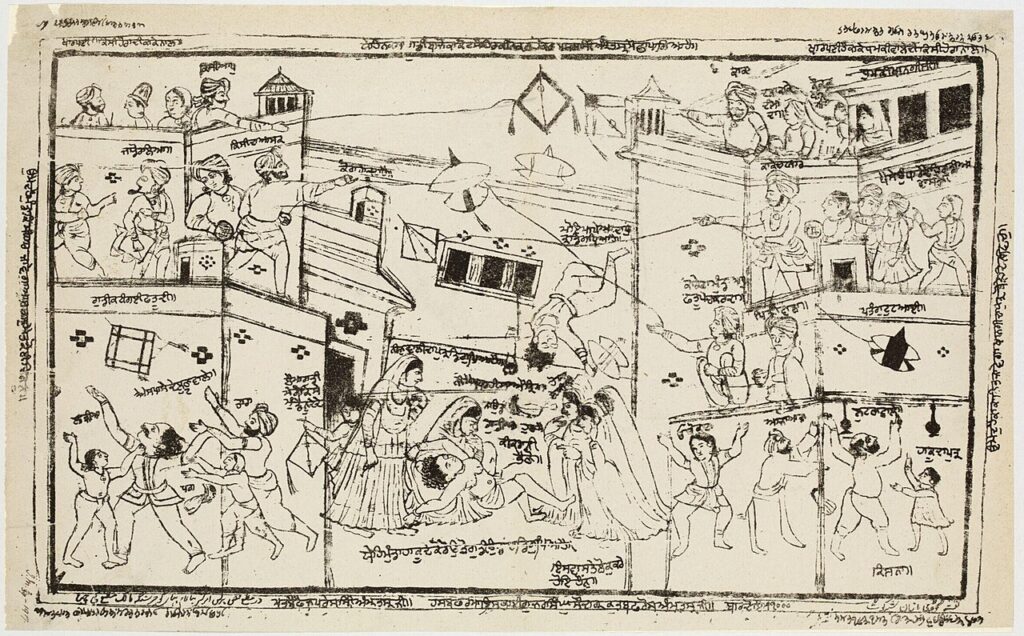
A woodcut of kite-flying from Lahore or Amritsar, around 1870, from the album collected by John Lockwood Kipling
Image: unknown artist, c.1870 / Wikimedia Commons, Public domain

Part of the answer is the setting. Basant is one of the most loaded images available to a Lahore storyteller, a festival that has been argued over for years, as CurryFlow noted in 2017 in a piece on the movement to restore Basant. Kite-flying on Lahore’s rooftops was a subject for local woodcut artists as far back as the 1870s, and John Lockwood Kipling, who later ran Lahore’s art school and museum and became the model for the curator in his son’s novel Kim, collected prints like the one above. Rangeen uses that inheritance lightly, as a backdrop of colour and longing rather than a statement, which makes it easy to share and hard to argue with.

The other part is Raheem himself. His videos have long made room for the loose, Gilgiti-inspired dancing that fans imitate, and Images reported that an Instagram clip of him dancing with Sukaina Zaidi circulated alongside the release. Fans also seized on the fact that he is once again dressed as a dulha, joking about his earlier MEMORIES campaign, when some followers believed he had actually married. The New York clip, which 24 News reported on 11 October, fits the same pattern: Raheem in a leather jacket, a public crowd, and a song simple enough for strangers to join. In a market where songs now spread through repeatable fifteen-second moments, an artist whose physical presence is part of the music has a clear advantage.

Where Rangeen sits in Hasan Raheem’s career

Raheem was born in Gilgit in 1997 and began releasing singles in 2018 while studying medicine in Karachi. Aisay Kaisay, released in January 2020, made his name, and Joona, made with Abdullah Kasumbi, followed. Reviewing Joona for Dawn’s Icon in January 2021, the columnist Band Baji described his vocals as low-key and relaxed and noted a short passage in Shina, his first language. That combination of an unhurried voice and a regional signature has stayed with him. Unlike singers who reached a mass audience through drama soundtracks, the route that made composers such as Sahir Ali Bagga household names, Raheem built his following through independent singles and streaming.

His Coke Studio debut came with Peechay Hutt in Season 14, released on 19 February 2022 with Justin Bibis and Talal Qureshi, a multilingual track in English, Urdu and Shina that later played over the end credits of Marvel’s Ms. Marvel. Since then he has released the album Nautanki (2022), the EP Maybe, It’s Love (2023), which included Wishes, and the album Dil Kay Parday (2025). Rangeen brings him back to Coke Studio more than four years after Peechay Hutt, but on very different terms: Peechay Hutt was a three-way collaboration built inside Xulfi’s production, while Rangeen is effectively a Hasan Raheem single made with his regular producer under the Nu.WAV banner.

What works in Rangeen, and what it leaves out

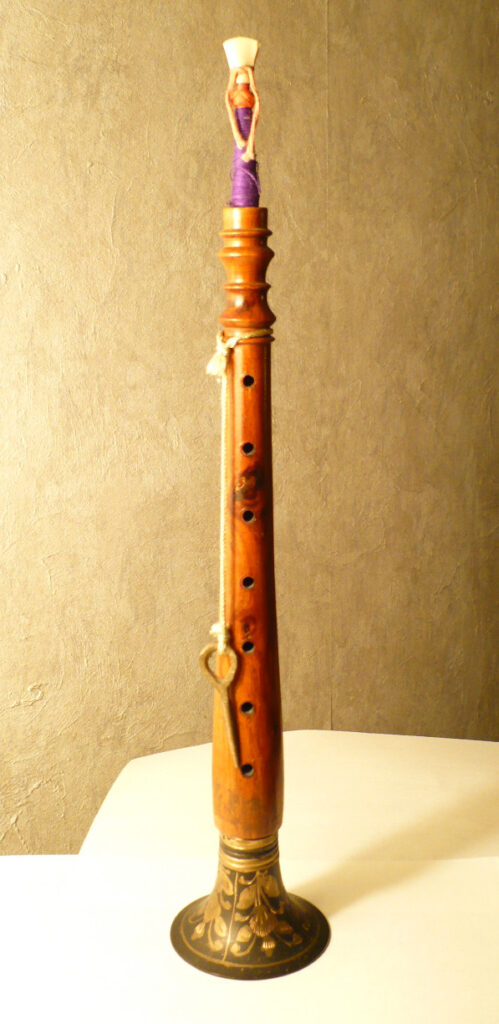
A shehnai, the double-reed wedding instrument played by Muhammad Salim on Rangeen
Photo: Badagnani / Wikimedia Commons, CC BY 3.0

The strengths are real. Rangeen is economical, at a little under four minutes, and it knows exactly what it wants to be: a bittersweet romance with a smile at the end. The partnership with Umair gives Raheem a sound he is comfortable in, and the video’s team, from Arham Ikram’s direction to Hashim Ali’s period sets, treats a three-minute daydream with the seriousness of a short film. As a demonstration of Nu.WAV’s promise that each artist can build a world, it succeeds.

The weaknesses come from the same place. The traditional element that once gave Coke Studio its purpose is present here mainly as a cue: in the video, the shehnai arrives with the wedding, signalling the end of the fantasy rather than shaping the song. Izzchugtai is credited as a featured artist, but the lyrics and vocal composition are Raheem’s, so the collaboration reads more as a guest appearance than a meeting of two artists. The groom’s costume, which fans have already noticed, suggests a persona at some risk of repeating itself. None of this spoils the song, but it does sharpen the question the Dil debate raised, which is what distinguishes a Nu.WAV release from a well-funded label single.

Where to listen: Rangeen (Coke Studio Nu.WAV) is on Coke Studio’s official digital platforms, including Spotify and Apple Music.

A good single, and a test still to come for Nu.WAV

Rangeen deserves its success. It is warm, well made and honest about its own scale, and it shows why an artist with Raheem’s ease in front of a camera suits a platform built around film as much as sound. The song’s spread owes as much to that presence, and to a video designed for repeat viewing, as to anything new in the music, and there is nothing wrong with that. Pop has always travelled on images as well as melodies, and few current Pakistani artists understand that better than he does.

The larger test belongs to Nu.WAV. With Asim Azhar’s Maheya already out and Young Stunners, Maanu and Shae Gill still to come, the platform has room to show that artistic freedom can produce risk as well as polish. Rangeen proves the format can make a likeable, widely shared single. Whether it can also make the kind of song that changes what listeners expect from Coke Studio, as the best of the main seasons did, will depend on the artists who follow Raheem being willing to leave their comfort zones in a way he did not need to here.

Kashif Nisar Dramas: The Director Who Lets Scenes Simmer

0
Naumaan Ijaz, who played the Peer in Dumpukht and Maqsood in Raqeeb Se for director Kashif Nisar
Photo: VOA Urdu / Wikimedia Commons, Public domain

Dumpukht is a way of cooking in which the pot is sealed with dough and left on a low flame, so that nothing escapes and everything inside cooks slowly in its own steam. Kashif Nisar used the word as the title of his 2016 A-Plus serial Dumpukht (Aatish-e-Ishq), about a household that will not take a decision without its pir. A decade later, the title describes his whole body of work. Nisar’s dramas seal their characters inside a house or a marriage and keep the heat low, trusting slow pressure to reveal more than any twist.

That approach has won him three Lux Style Awards for Best TV Director, for Dar Si Jaati Hai Sila, Ranjha Ranjha Kardi and Raqeeb Se. Yet viewers who could name every lead in those serials often could not name their director, because the industry sells its dramas by star and channel.

When Nisar is discussed at all, it is usually as Bee Gul’s director, which is accurate but incomplete. Across the writers he has worked with, from Zafar Mairaj and Saji Gul to Faiza Iftikhar, a consistent preoccupation emerges: the respectable man at the centre of a household, and the harm done in the name of faith or custom while everyone keeps up appearances. The patience that makes those themes land is also his main weakness, and his best serials show both.

From screenwriter to three-time award-winning director

Nisar came to directing through writing, with early screenwriting credits on the PTV Home serial Cousins in 2007 and on Jinnah Ke Naam, which earned him a Lux Style nomination for television writing in 2009. Early serials such as Ullu Baraye Farokht Nahi (2013) and Sannata (2014) brought director nominations, but the decisive turn came in 2016 and 2017.

Within eighteen months he made Dumpukht; O Rangreza for Hum, written by Saji Gul and starring Sajal Aly and Bilal Abbas Khan, which won him Best Director at the 2018 Hum Awards; and Dar Si Jaati Hai Sila, Bee Gul’s serial about a girl abused by a man her family trusts, which brought his first Lux Style win. Ranjha Ranjha Kardi, Faiza Iftikhar’s story of Noori, a factory worker married to Bhola, a landowner’s son with a mental disability, followed on Hum from November 2018 and won him the award again. Iftikhar is on air this autumn with Mitti De Baway, her caste drama for Green Entertainment, another story about shrines and inherited status.

The respectable man at the centre of the house

Naumaan Ijaz, who played the Peer in Dumpukht and Maqsood in Raqeeb Se for director Kashif Nisar
Photo: VOA Urdu / Wikimedia Commons, Public domain

The clearest thread through Nisar’s work is a single actor. Nauman Ijaz played the pir Habib Ullah in Dumpukht, the charming, neglectful father Khayyam Sani in O Rangreza, Jawad, the household manager everyone trusts, in Dar Si Jaati Hai Sila, and Maqsood, the married man whose old love arrives at his door, in Raqeeb Se. Across four serials and three writers, the figure is the same: a man the family has arranged itself around, whose authority is real and whose failings sit in plain sight.

Ijaz is unusually good at warmth that curdles, and Nisar uses him to make a point Pakistani drama often avoids: the danger in a family rarely comes from outside it. In Dar Si Jaati Hai Sila the abuser runs the house and flatters its elders; in Dumpukht the family’s obedience to its pir sets the tragedy in motion; in O Rangreza, Sassi’s adoration of her father blinds her to how he treats her mother. Nisar lets that menace emerge from the arrangement of a room, from who sits, who serves and who may interrupt. It is a harder-edged version of the critique of polite patriarchy that Haseena Moin’s PTV heroines once offered, and a large part of why his late-2010s serials still hold up.

Faith, custom and the people who profit from them

A dough-sealed pot of dum biryani being opened, the slow-cooking method that gives Dumpukht its title
Photo: Ming Tang-Evans / Wikimedia Commons, CC BY-SA 4.0

Nisar’s longest partnership after Bee Gul is with Zafar Mairaj, who wrote Dumpukht, Kabli Pulao and Mann Jogi, and together they keep returning to the gap between religion and the uses people make of it. In Dumpukht, a girl’s request to the family pir for a taweez draws her into his orbit. In Mann Jogi, a nine-episode Hum serial from 2024, a moulvi’s suggestion of nikah halala sends a divorced woman into a marriage with a stranger, played by Bilal Abbas Khan, that neither her first husband nor the cleric can control. Iftikhar’s Ranjha Ranjha Kardi belongs to the same family: its plot turns on a mother’s vow to sacrifice her son at a shrine, and its sympathy lies with Noori, who questions the vow. In each case the target is not belief but the person who turns belief into leverage over someone weaker.

Kabli Pulao (2023) is the gentlest of the Mairaj collaborations and arguably the best. Mohammed Ehteshamuddin plays Haji Mushtaq, a 51-year-old Lahori bachelor who marries Barbeena, a young Afghan woman played by Sabeena Farooq, and what begins as a comedy about a marriage without a shared language becomes a drama about who may call a place home. Green Entertainment aired its 19 episodes from July to November 2023, and reviewing it for Images that August, Foha Raza singled out its camera work. Its title song, Ankhain, sung by Rahat Fateh Ali Khan to music by Sahir Ali Bagga, was directed as a video by Nisar himself.

The Bee Gul partnership, from Sila to Pakeezah

Sania Saeed, who played Hajra in Kashif Nisar's Raqeeb Se
Photo: The Citizens Foundation / Wikimedia Commons, CC BY 3.0

CurryFlow’s guide to Bee Gul’s dramas covers her side of this collaboration; from the director’s side, what stands out is how differently their serials are staged. Dar Si Jaati Hai Sila is claustrophobic, built around rooms Sila cannot leave. Raqeeb Se, which aired on Hum from January to May 2021, opens onto the courtyards of a Punjabi house as Sakina, played by Hadiqa Kiani in her first acting role, arrives with her daughter at the home of Maqsood, the man she once loved, and his wife Hajra, played by Sania Saeed. The title comes from Faiz Ahmad Faiz’s nazm addressed to a rival in love, which treats the other man as a fellow keeper of the same memories rather than an enemy, and Nisar takes that reading seriously. Hajra and Sakina refuse to behave like rivals, and the serial’s strongest scenes let the two women share space without forcing a confrontation.

Aik Aur Pakeezah, which began on Geo on 14 January 2026 and was produced with the Kashf Foundation, brought the partnership into the present, with Sehar Khan as a lawyer whose life comes apart after a private video of her spreads online. Writing in The News on Sunday after the first two episodes, Gaitee Ara Siddiqi called the direction superb. In her review for Images in April, Sana Hussain credited Nisar with restrained symbolism, pointing to the tea-pink outfit Pakeezah wears in the finale, an echo of an earlier wish about her wedding, and to the house key she takes back.

Where the slow cooking goes wrong

The same review identified the problem that runs through much of Nisar’s work. Hussain found the middle episodes repetitive, with characters discussing a media trial whose effects the audience does not see until the final episode, and the first substantial courtroom hearing arriving only around episode 21. The criticism is fair and not isolated: when a long episode order outlasts the story, slow pressure turns into stasis, and Ranjha Ranjha Kardi, at 31 episodes, sagged in the same way in its middle months.

O Rangreza shows a different weakness. Its late subplot, in which Tipu’s girlfriend Mina takes the name Amna and marries Qasim, exists mainly to give Sassi a rival, treating a conversion as a plot mechanism rather than a story. The direction does nothing to complicate a turn that blurs the serial’s sharp study of a daughter and her father. The reliance on Nauman Ijaz has a cost too: four variations on the compromised patriarch let regular viewers see the pattern before the story reveals it. The best counter-argument is Mann Jogi, which at nine episodes had no room to idle and suggests Nisar’s method suits shorter formats far better than the long serials channels still prefer.

Where to start with Kashif Nisar’s dramas

For newcomers, Raqeeb Se is the most rewarding introduction, although Hadiqa Kiani’s performance turns repetitive in places, as Gaitee Ara Siddiqi observed when it aired. Kabli Pulao is the warmer choice, for viewers willing to accept its unhurried pace. Dar Si Jaati Hai Sila remains the most important and the hardest to watch, and is best approached knowing that it deals directly with the sexual abuse of a child. Where to watch: most of these serials are on the official YouTube channels of HUM TV, Har Pal Geo and Green TV Entertainment, though availability varies by country.

Why Kashif Nisar deserves to be followed by name

Pakistani television tends to treat directors as technicians, and Nisar’s career argues against that habit. His writers are very different, yet their serials with him share a moral interest in the respectable man at the centre of the house and the customs that protect him, along with a visual patience that lets those men reveal themselves. In a medium where directors rarely choose their scripts, that consistency is what authorship looks like.

His dramas are not without faults, and the long middle of Aik Aur Pakeezah shows he has not solved the stretched episode order. But while many serials still send their heroines to the shrine for answers, he has spent a decade asking who benefits from the shrine, the taweez and the family’s silence, and his subjects have widened from a pir’s household in 2016 to a courtroom and a viral video in 2026. On that record, his next serial deserves attention for the director’s name as much as its cast.

Mitti De Baway Review: Mahira Khan’s Pirni and a Caste Feud

0
The shrine of Sufi poet Bulleh Shah in Kasur, Punjab
Photo: Khalid Mahmood / Wikimedia Commons, CC BY-SA 3.0

The first episode of Mitti De Baway opens with a homecoming that turns into a massacre. Iqbal Channan, known to everyone as Baala, walks out of prison to a small crowd of well-wishers, goes to a graveyard to pray at a family grave, and is ambushed there by gunmen. The order, the episode makes clear, came from Bilqees Bano, the woman he once loved, who is now a revered pirni and has vowed not to break her fast until her mannat is fulfilled. It is a bold way to introduce a heroine.

The serial premiered on Green Entertainment on 23 September 2026 and airs on Wednesdays and Thursdays at 8pm. It is written by Faiza Iftikhar, directed by Syed Wajahat Hussain and produced by Tehreem Chaudhary, and it pairs Mahira Khan, as Billo, with Wahaj Ali, as Baala, for the first time. When Images reported on the trailer on 26 August 2026, it described a story that moves between 1998 and 2002 and a romance that appears to run from lovers to enemies and, perhaps, back again.

Six episodes in, Mitti De Baway is one of the more ambitious serials on air this autumn: a Punjabi period drama about class, caste and the authority that comes with a spiritual seat. The writing is sharp about how status is used as a weapon, but the show is less sure what it thinks of the power its heroine holds, and that uncertainty matters more than the rough edges in its production.

What Mitti De Baway is about: Billo, Baala and a feud across years

The story alternates between two timelines. In the late 1990s, young Billo (Aena Khan), the daughter of a respected family in Wazirabad, falls for Baala (Fazal Hussain), the son of a woman who sings at weddings while he plays alongside her. Years later, Baala is released from prison, and Billo has become Bari Sarkar, a spiritual figure whose followers obey her without question. Sohail Ahmed, Samiya Mumtaz, Hina Afridi, Noor ul Hassan and Amar Khan fill out the cast.

The flashbacks are where the series sets out its argument. In the third episode, after Baala misses a meeting because his mother has died, the young Billo and a friend mock him, and she dismisses him as a marasi, the hereditary musician caste that Punjabi village society has long treated as beneath it. By the sixth episode, as Minute Mirror reported on 9 October 2026, the adult Billo is taking revenge by exposing secrets that wreck the marriage of Baala’s sister and drive his brother out of town. The romance, in other words, is being built on contempt.

Faiza Iftikhar returns to Punjab

Faiza Iftikhar, a Lahore-based novelist and screenwriter, has returned to Punjabi families more often than most of her peers. Bilqees Kaur (Hum TV, 2012) moved between New York, Lahore and Gujranwala and earned praise for the Punjabi spoken by Bushra Ansari in the title role. Ranjha Ranjha Kardi (Hum TV, 2018–19) won her the Lux Style Award for best TV writer. It is hard not to notice that her new heroine is also called Bilqees.

What links these serials is an interest in pride, in the way people hold on to status even when it costs them happiness. Mitti De Baway pushes that interest further than before. Billo is not a misunderstood heroine waiting to be redeemed; on the evidence so far, she is cruel, and her cruelty is tied to her class. The director, Syed Wajahat Hussain, has worked on class-divided romances before, including Do Bol (ARY Digital, 2019), about an heiress married to her father’s manager, and Mannat Murad (Geo, 2023). This is a darker version of the same terrain.

Mahira Khan’s Billo and the power of a pirni

Mahira Khan at a press event in 2016
Photo: Bollywood Hungama / Wikimedia Commons, CC BY 3.0

This is Mahira Khan’s first television serial since Razia in 2023, and it is a long way from the role that made her famous, Khirad in Humsafar (Hum TV, 2011). Her Billo is controlled and watchful. The review site Sunday, writing about the first two episodes on 28 September 2026, singled out that restraint. Viewers who know her from romantic leads (our Mahira Khan profile covers that career) will find a harder edge here.

The difficulty is in how the drama frames that authority. Billo orders an ambush in a graveyard while keeping a devotional fast for its success, and the first episode treats this as a mark of her resolve. The blogger Shabana Mukhtar, who reviews each episode on The Other Me Unfolded, asked after the first episode whether the show was granting its pir and pirni a licence to kill. It is a fair question, because the early episodes seem more interested in Billo’s command than in its consequences. If the second half of the serial does not reckon with what the gaddi allows her to do, the show will have flattered the very hierarchy it set out to criticise.

Wahaj Ali, Amar Khan and the supporting cast

Pakistani actress Amar Khan, who plays Zareena in Mitti De Baway
Photo: VOA Urdu / Wikimedia Commons, Public domain

Wahaj Ali comes to the serial after the success of Tere Bin (Geo, 2022), which won him the viewers’ choice award for best TV actor at the 2025 Lux Style Awards. Baala is a quieter role than Murtasim, and Wahaj plays him with a wounded patience that suits the material. In the first episode he also sings a Bulleh Shah kalaam in his own voice as Baala remembers the past. His Punjabi has drawn less praise. Mukhtar found it unnatural, and in a serial that depends so much on texture, any gap between him and the more fluent members of the cast is costly.

The most talked-about performance after six episodes belongs to Amar Khan as Zareena. The Current reported on 9 October 2026 that viewers were praising her colloquial Punjabi and her delivery, and that the actor Saboor Aly had publicly called it a solid performance. Aena Khan and Fazal Hussain carry the flashbacks with an energy that, as Minute Mirror noted on 26 September, made some viewers briefly forget they were waiting for the adult stars. That matters, because the case against Billo is built in those flashbacks.

Bulleh Shah, caste and the word marasi

The shrine of Sufi poet Bulleh Shah in Kasur, Punjab
Photo: Khalid Mahmood / Wikimedia Commons, CC BY-SA 3.0

The choice of Bulleh Shah for Baala’s song carries real weight. Bulleh Shah, born into a Syed family, scandalised his relatives by becoming the disciple of Shah Inayat Qadiri, a teacher they considered beneath them, and his poetry repeatedly mocks the idea that birth or ritual makes one person purer than another. Giving his words to a man called a marasi by a woman who later holds a spiritual seat is pointed writing. The serial seems to know which tradition it is arguing with: a Sufi inheritance that began as a rejection of caste and has, in many places, hardened into its own aristocracy. It is the most interesting idea in the drama, and it places Mitti De Baway alongside older Punjabi love stories such as Heer, in which the lovers’ real enemy is a family’s sense of its own standing. Minute Mirror’s report that viewers have responded to the drama’s treatment of caste-based discrimination suggests the idea is reaching its audience.

Where the early episodes fall short

The period setting is thin: Mukhtar observed that the late-1990s scenes, with their styling and houses, look much like the present, and the background score is heavy enough to flatten moments that would work better in silence. She also found the adult leads too unlike their younger selves to be convincing as the same people. None of this is fatal, but it keeps the drama less rooted in its time and place than its writing deserves.

The deeper risk lies in the structure. A story about caste and status can easily become a story about two individuals settling scores, and the sixth episode, with its exposed secrets and broken marriage, leans in that direction. When Billo’s cruelty is explained as personal hurt, the social argument loses its force, because the problem becomes one bad woman rather than a system that rewards her. Amber Javed Malik wrote in Images on 2 July 2026 that 2026 had become a “golden quarter” for Pakistani dramas, with serials such as Kafeel (which we reviewed here) taking social themes seriously. Mitti De Baway has the material to join that list, but only if it treats Billo’s power as a subject rather than a spectacle.

Is Mitti De Baway worth watching?

For viewers who want a period drama with real conflict, the answer is yes, with reservations. The writing is braver than most prime-time romance. It gives its heroine a truly ugly past, it uses Punjabi music and Sufi poetry with some intelligence, and it has found in Amar Khan and the young leads performers who make its world feel inhabited. Those who prefer their heroines sympathetic from the first scene, in the tradition of the women in our list of iconic female roles in Pakistani dramas, may find Billo hard to like, which is partly the point.

The test for the rest of the run is whether Faiza Iftikhar and Syed Wajahat Hussain can hold on to the argument they set out in the flashbacks. A serial that began by asking why a woman of high standing could call a man a marasi and walk away should end by showing what that standing costs, both to him and to her. If it settles for a revenge romance, it will still be watchable, but it will have wasted its best idea. On the evidence of six episodes, I think the writing is good enough to deserve the benefit of the doubt.

Where to watch: Green Entertainment, Wednesdays and Thursdays at 8pm; the official trailer is on the Green TV Entertainment YouTube channel.

Kafeel Drama Review: Umera Ahmed’s Case Against Silent Sabr

0
Sanam Saeed, who plays Zeba in the ARY Digital serial Kafeel
Photo: Sammy.joseph / Wikimedia Commons, CC BY-SA 3.0, background extended by CurryFlow

The first chapter of Kafeel is about a woman doing sums. Zeba, played by Sanam Saeed, teaches for a living, raises four children and keeps the household’s bills paid, while her husband, Jamshed, whom everyone calls Jami, drifts from one failed plan to the next and answers his wife’s worries with contempt. Little of this is staged as tragedy. The damage is done in ordinary exchanges about money and in a husband’s steady habit of belittling the person who is holding his family together, and the serial’s real achievement is to show how those exchanges accumulate, over years, into the shape of several lives.

Written by Umera Ahmed and directed by Meesam Naqvi, Kafeel premiered on ARY Digital on 15 December 2025 in the Monday and Tuesday 8pm slot and ended in late April 2026 after 34 episodes. Fahad Mustafa and Dr Ali Kazmi produced it for Big Bang Entertainment, with Emmad Irfani as Jami and Hasan Khan as Jamal, who eventually becomes Zeba’s second husband. As Minute Mirror reported on 25 April 2026, Ahmed told viewers on social media that it was inspired by a real woman who spent more than twenty years in a marriage to a man who would not provide for their four children.

The serial was widely praised while it aired, and its finale was just as widely argued over. Both reactions are deserved. Kafeel is one of the few recent Pakistani serials to treat a wife’s endurance as a harm rather than a virtue, and to follow that harm into the next generation. It is also a drama whose structure, a twenty-year leap early in its run and a hurried final fortnight, keeps undercutting the patient case its writing makes.

Umera Ahmed, Meesam Naqvi and a story taken from life

Umera Ahmed’s name on a serial usually promises a particular kind of drama. Zindagi Gulzar Hai, Alif and Sinf-e-Aahan, which Miysha Usman championed on this site in nine reasons to watch Sinf-e-Ahan, are earnest stories in which characters are tested and come out improved. Kafeel is quieter and less certain of itself. Its pressure falls on a whole family rather than on one heroine’s faith or ambition, and its central antagonist is not a scheming outsider but a husband who is weak far more often than he is wicked.

The choice of director suited that material. Meesam Naqvi had already made Mayi Ri (2023), about a fifteen-year-old married to her cousin at a dying uncle’s wish, and Parwarish (2025), about two teenagers struggling under their families’ expectations, both for ARY Digital. Naqvi’s interest in younger characters is one reason Kafeel‘s second half never becomes a conventional romance.

Zeba and Jami: a marriage drawn without melodrama

Sanam Saeed, who plays Zeba in the ARY Digital serial Kafeel
Photo: Sammy.joseph / Wikimedia Commons, CC BY-SA 3.0

Sanam Saeed first worked from an Umera Ahmed script in Daam (2010), and became a household name as Kashaf in Zindagi Gulzar Hai (2012–13), the guarded daughter of Rafia, a government school principal whose husband left her for a second wife because she had not given him a son. In Kafeel Saeed plays a woman much closer to Rafia’s position: a teacher keeping a household afloat while its father fails it. Whether or not the echo was intended, it gives Zeba a weight before she says a word, and Saeed plays her exhaustion without ever asking the audience for pity.

Saeed has been unusually direct about what the role meant. In an Instagram note marking the end of the serial’s first chapter, reported by Images in January 2026, she rejected the idea that a dutiful woman must give up her future and her peace, wrote that “self-preservation is not selfishness”, and said women had written to the team about seeing their own lives in Zeba’s.

Emmad Irfani’s Jami is the harder role, and the serial’s most interesting gamble. Writing in Dawn’s Icon on 26 April 2026, Sarwat N. Shah read him as a covert narcissist, but one whose behaviour is partly explained by his own upbringing: his siblings left him to care for their parents, and nobody encouraged him to finish his education. That background is the most generous decision in the script. It is also a risk, because a drama that explains an abusive husband so carefully can drift towards excusing him, and in some of the middle episodes Kafeel lingers on Jami’s grievances longer than the story needs. Irfani keeps him from becoming either a monster or a victim.

The children of Kafeel and the cost of the time leap

Aashir Wajahat, who plays Subuk in Kafeel, in 2024
Photo: VOA Urdu / Wikimedia Commons, Public domain

In episode 11 the serial jumped roughly twenty years forward and turned its attention to Zeba and Jami’s grown children, a shift that, as Jang reported in January, split viewers who had settled in for a marriage drama. The second half is where Kafeel is most original. Shah’s Icon review traced a different survival response in each child: Subuk, the eldest son, takes on the role of a parent; Javeria blames herself and tries to please everyone; Zoya carries her fear in her body; and Tania, the youngest, copies her father. Subuk is the most painful case, because the son who protects his mother has also absorbed some of his father’s anger, and the serial lets that contradiction sit unresolved.

Aashir Wajahat gives Subuk the steadiness the role requires. His best scene comes late, in a conversation in which he tells his mother that she is allowed to want a life of her own, including a second marriage. Few Pakistani serials put that argument in a son’s mouth, and fewer let him make it calmly, as a matter of fairness rather than rebellion.

The leap, though, costs the serial more than it gains. Ahmed has said the script originally spanned 27 years and was compressed after casting changes, and in his review for Images in May 2026 Mamun M Adil noted that some characters now look too young for the marriages the plot hands them. The deeper problem is what the leap removes. The years in which these children learned to flinch, to please and to imitate pass off screen, so Kafeel shows causes in its first ten episodes and effects in the rest, but rarely the process connecting them. For a serial whose subject is how damage is passed down, that missing middle is a real loss.

Where the ending lost its nerve

Adil’s review, published in Images on 12 May 2026, argued that the last two episodes felt as though someone had pressed fast-forward, and the complaint is hard to dispute. Zeba’s decision to leave her marriage, which should feel like the serial’s reward, arrives so late that it reads as overdue rather than triumphant, and her acceptance of Jamal’s proposal follows a single meeting with the mother of his late wife. Adil credited the serial for refusing the familiar clichés about divorced women remarrying, and that credit is fair. The problem is speed: Zeba has no time to reflect on one marriage before entering another.

As Samaa reported after the finale, viewers asked why Zeba could move on and leave her daughters behind so easily, and others objected that Jami was absent from the last episode altogether. Both complaints point at the same weakness. A serial that spent thirty episodes arguing that parents shape their children’s inner lives chose, at the end, to put the daughters’ futures off screen and to deny Zeba any final reckoning with the man who shaped theirs.

Kafeel and the long tradition of sabr on Pakistani television

Pakistani drama has rewarded women for endurance for as long as it has existed. The wife who swallows insults and waits for her husband to change is a fixture of the genre, and CurryFlow’s older surveys of dramas tackling domestic issues and dramas women can relate to show how often the form returns to marriages that women survive rather than leave. Even Rafia in Zindagi Gulzar Hai, one of Ahmed’s most admired characters, earns her dignity by enduring alone.
Kafeel breaks with that tradition in two ways. It names the cost of a wife’s sabr and shows her children paying it, and it allows her to leave and to marry again without punishing her for either. The title helps here. A kafeel is a guarantor or guardian, the person who takes responsibility for another, and the serial’s quiet irony is that the man who should have filled that role never does, while the woman he belittles fills it for twenty years.

Is Kafeel worth watching?

Taken as a whole, Kafeel is better than its ending and more uneven than its reputation. Its first ten episodes are among the most precise portraits of a failing marriage on Pakistani television in recent years, Sanam Saeed’s Zeba deserves a place beside the women in our list of iconic female roles in Pakistani dramas, and the serial’s account of how children absorb their parents’ unhappiness is more careful than most prime-time drama manages. Against that, the time leap leaves a hole at the centre of its argument, and the finale resolves in a few scenes what took months to set up.

I would still recommend it, with the expectation that the last two episodes will disappoint. The serial’s lasting value is that it asked a mainstream ARY audience to see a wife’s patience as something that can wound her children, and it made that case largely through performance and accumulation rather than speeches. Pakistani television does not need more serials about suffering wives, but it could use more that treat their suffering, as Kafeel mostly does, as a problem with causes and consequences rather than a virtue to be admired.

Where to watch: episodes are available on ARY Digital’s official YouTube channel and the ARY Zap app.

Haseena Moin Dramas: Why Her PTV Heroines Still Feel Modern

0
PTV rebroadcast station at Thandiani near Abbottabad, Pakistan
Photo: M. Saeed Ul Hassan Raza (iammshr) / Wikimedia Commons, CC BY-SA 4.0

In the first episodes of Ankahi, Sana Murad takes an office job she is plainly not ready for. Her younger brother needs heart surgery, the family has no money, and so a graduate with more confidence than experience walks into a company where every task she touches seems to go wrong in front of her boss. Audiences in 1982 laughed at her mistakes, but the joke was never on her. Sana is clever, outspoken and stubborn, and the serial treats her need to earn a living as the most natural thing in the world.

That premise is a good way into the dramas of Haseena Moin, who wrote Ankahi and, across five decades, a long list of serials that many Pakistanis still quote from memory. She died in Karachi on 26 March 2021, aged 79. The obituaries remembered her for Tanhaiyan, Ankahi and Dhoop Kinare, and for the women at the centre of them, characters who studied, worked, argued and wanted things for themselves at a time when television heroines were more often defined by patience and suffering.

The usual tribute to Haseena Moin calls her heroines “strong” and leaves it there. The more useful point is how she made them strong. She did it through comedy, which let her heroines be wrong, clumsy and loud without being punished for it, and that choice explains both why her best serials have aged so well and where their limits lie.

From Radio Pakistan to PTV’s first original script

Playwright Haseena Moin, writer of Ankahi, Tanhaiyan and Dhoop Kinare
Photo: Zzzapple2 / Wikimedia Commons, CC BY-SA 4.0

Haseena Moin was born in Kanpur in November 1941 and moved with her family to Pakistan after Partition, settling in Karachi in the 1950s. She took a master’s degree in history from Karachi University in 1963 and wrote skits for Radio Pakistan’s Studio Number 9 while building a career in education. Her move into television came in 1969, when Iftikhar Arif, then heading the script department at PTV Karachi, asked her for an Eid play.

What followed changed the way PTV made drama. Until the early 1970s its serials were mostly adaptations of novels, and her own first serial, Shehzori, was drawn from Azeem Beg Chughtai. Kiran Kahani is widely described as PTV’s first original script. Even her later adaptations show a reader’s range: Parchhaiyan, with Sahira Kazmi in the lead, reworked Henry James’s The Portrait of a Lady, a novel about a spirited young woman whose freedom is tested by marriage. Isabel Archer is an unexpected ancestor for a Karachi serial, but the question James asked about her, what an intelligent woman does with her independence, runs through almost everything Moin wrote afterwards.

Ankahi: a working woman as the comic lead

Javed Sheikh, who played Faraz in Ankahi, with Amrita Rao at a film premiere
Photo: Bollywood Hungama / Wikimedia Commons, CC BY 3.0

Ankahi, directed by Shoaib Mansoor and Mohsin Ali, aired on PTV between March and May 1982 and remains the purest example of her method. Shehnaz Sheikh plays Sana opposite Shakeel as her boss, Taimoor, with a young Javed Sheikh as Faraz, the admirer who takes a job in the same office simply to be near her. Around them Moin built a household of comic types: Jamshed Ansari’s Timmy, the neighbour pressed into service as a butler, and Behroze Sabzwari’s Moby, the cousin who arrives from America with his mother pretending to be rich. The serial won Nigar Awards for Shehnaz Sheikh and for Moin’s writing.

What makes Ankahi work is that the comedy never undercuts Sana’s dignity. Her blunders at work are funny because she refuses to be intimidated, and the serial never asks her to become meeker in order to be liked. It is also more serious than its reputation suggests. The title means “the unsaid”, and beneath the office farce sit a sick brother, a family short of money and a love that goes unspoken for most of the story. Moin keeps those notes quiet, which is part of the charm, though it means the financial pressure that drives the plot is resolved with a lightness that real families rarely enjoy.

Tanhaiyan: two sisters and the house they lost

If Ankahi is Moin at her most playful, Tanhaiyan, directed by Shahzad Khalil for PTV in the mid-1980s, is where she pushed comedy closest to grief. Zara and Sanya lose their parents in a car accident and, with them, the family’s money and home, and they move in with their aunt in Karachi. Shehnaz Sheikh’s Zara throws herself into earning enough to buy the house back, while Marina Khan’s more mischievous Sanya carries much of the humour. Marina Khan won a Nigar Award for the role, and the serial went on to be shown on BBC2 in Britain in 1992.

Behroze Sabzwari, who played Qabacha in Tanhaiyan, in 2023
Photo: VOA Urdu / Wikimedia Commons, Public domain

The supporting cast is where Tanhaiyan became folklore. Behroze Sabzwari’s Qabacha, the shy secretary whom Sanya never stops teasing, and Jamshed Ansari’s Buqrat, the servant who dispenses confident and usually useless advice, are still recognised by people who were children when the serial first aired. In his tribute for The News on Sunday in March 2021, the critic Omair Alavi singled out these characters, together with Moin’s heroines, as the reason her work has stayed in popular culture.

Seen today, Zara’s story is the serial’s most interesting and most troubling thread. Her ambition is real and sympathetic, yet the plot treats it as a fault to be corrected: once she finally buys the house, she is overwhelmed, runs from it and is injured, and the drama turns towards repairing the relationships she neglected. It is moving television, but it quietly suggests that a woman’s drive must be paid for in a way a man’s would not. Moin allowed her heroines more freedom than most writers of the period, and Tanhaiyan shows that the freedom still came with conditions.

Dhoop Kinare and the romance of competence

Dhoop Kinare, produced and directed by Sahira Kazmi in 1987, completes the trio and is often named among the best Pakistani dramas of all time. Marina Khan plays Dr Zoya, an impulsive intern, opposite Rahat Kazmi’s reserved senior doctor, Ahmer Ansari, and the romance grows through work, in a hospital where Zoya’s competence matters as much as her charm. Set beside Ankahi, it shows Moin moving her working heroine from an office farce to a profession with real stakes, although the gap in age and seniority between Zoya and Ahmer, with him so often cast as mentor and corrector, reads less comfortably now than it did in 1987. The serial travelled far: Sony Entertainment Television remade it in India as Kuch Toh Log Kahenge in 2011, and in Gulf News in August 2026 Areeba Hashmi recalled PTV serials such as Dhoop Kinare reaching families in the UAE on videocassettes passed from house to house. Its romance, its Faiz ghazal and its long afterlife are the subject of CurryFlow’s rewatch of Dhoop Kinare.

What her dramas leave out, and what later writers took from her

Moin’s own range was wider than these three comedies suggest. In the early 1990s she wrote Aahat, a serial on family planning, and Tansen, a historical drama, and in 1991 she wrote the dialogue for Raj Kapoor’s Henna, recommending Zeba Bakhtiar for the lead. Writing again in Dawn’s Icon in April 2021, Alavi argued that she leaned towards comedy more than social questions, unlike her contemporary Fatima Surayya Bajiya, and that her heroines stood shoulder to shoulder with men. Both observations are fair. Her best-loved serials take place in comfortable, educated Karachi households, poverty arrives as a plot device rather than a condition, and nearly everything ends happily.

Her later career also shows how hard her tone was to reproduce. When Tanhaiyan Naye Silsilay revived the serial in 2012, Moin wrote the opening episodes, handed the rest to another writer while she was abroad, and later distanced herself from what the sequel became. Her real influence shows up elsewhere, in serials that let women be funny, ambitious and imperfect at the same time. Writers as different as Farhat Ishtiaq and Bee Gul work in a medium that Moin helped to persuade that such women were worth watching.

Where to start with Haseena Moin’s dramas

For a first encounter, Ankahi is the best entry point: it is the funniest of the three, the most generous to its heroine and the least dated in its politics. Dhoop Kinare comes next for its craft and its music, provided viewers accept that its central romance belongs to its decade. Tanhaiyan is the richest and the most uneven, and I would save it for last, because its comic characters are best enjoyed once the rhythm of Moin’s dialogue feels familiar. All three were re-run by PTV Home in 2020, and readers curious about the actors of that era will find more in our tribute to PTV’s late legends.

Watched together, the three serials make a case that Moin’s comedy was never a retreat from serious subjects but her way of approaching them. Sana’s family crisis, Zara’s grief and Zoya’s inexperience are real problems, and the jokes allow each woman to face them without becoming a victim. The serials have blind spots about class and about what ambition costs a woman, and her heroines are freer than their era but not entirely free of it. Few Pakistani writers have created women whom audiences wanted to be rather than pity, and that achievement is the reason her name still comes up whenever viewers ask what Pakistani television once did well.

Dhoop Kinare Revisited: PTV’s Hospital Romance, Seen Today

0
Marina Khan, who played Sanya in Tanhaiyan, in 2012
Photo: VOA Urdu / Wikimedia Commons, Public domain

Early in Dhoop Kinare, Dr Ahmer Ansari learns that the house he grew up in, the home of the man he called Baba, has been left not to him but to a granddaughter he has never met. He tries to buy it through a lawyer and is turned down. The granddaughter turns out to be Zoya Ali Khan, the careless young intern he has spent his shifts correcting at the hospital, and the serial spends its thirteen episodes working out what these two owe each other.

Haseena Moin wrote the serial and Sahira Kazmi directed and produced it for PTV Karachi in 1987, with Rahat Kazmi as Ahmer and Marina Khan as Zoya. It ran for 13 episodes of about 50 minutes each, and for the next three decades it never quite went off the air: PTV repeated it, families abroad passed it around on videocassette, and India’s Sony Entertainment Television remade it. Few Pakistani serials have had that kind of afterlife, and fewer have kept it on the strength of so small a story.

Watched now, Dhoop Kinare is both more modern and more dated than its reputation suggests. Its heroine has a profession, a temper and room to grow, in a form that later drama often took away from women. Its central romance, on the other hand, rests on a power imbalance the serial never examines, and some of its moral lessons land harder on women than on men.

Haseena Moin, Sahira Kazmi and a lighter kind of PTV drama

By 1987 Haseena Moin was already PTV’s most trusted writer of romantic comedy. Writing after her death in March 2021, Omair Alavi noted in Dawn’s Icon that her first original script, Kiran Kahani, came at a time when PTV drama was mostly adapted from novels, and that in the 1980s, when feudal sagas dominated the schedule, she offered lighter stories built on wit rather than tragedy. Tanhaiyaan, which gave Marina Khan her debut, and Ankahi belong to the same run, and Dhoop Kinare completes it. CurryFlow’s survey of Haseena Moin’s dramas traces that whole run, from Ankahi to Tanhaiyan.

The partnership with Sahira Kazmi mattered as much as the script. Kazmi had acted in Moin’s earlier work, and in the same Icon tribute she described the writer as a leading voice for women on screen, someone who wrote them as bold and independent while keeping them inside recognisable families. That balance is the serial’s real subject. Zoya lives with her father and a caretaker, has a best friend next door and a household falling into debt, and still spends most of the serial at work, where her mistakes have consequences that no amount of family warmth can soften.

Zoya, Ahmer and a romance built on correction

Marina Khan, who played Dr Zoya in Dhoop Kinare, in 2012
Photo: VOA Urdu / Wikimedia Commons, Public domain

Marina Khan plays Zoya as careless and immature at the start, and the serial lets her stay that way long enough for it to matter. Her turn comes through a professional mistake rather than a romantic one, and the change in her afterwards is about competence before it is about love. That ordering is the serial’s most modern feature. Viewers raised on later serials, where a heroine’s growth is usually measured by how much she can endure at home, will notice how unusual it is to watch a young woman become serious about her career and be rewarded for it.

The romance itself is harder to defend today. Ahmer is Zoya’s senior, her critic and eventually her love interest, and the serial treats his harshness on the ward as proof of good character. Rahat Kazmi gives him a brooding dignity, but the structure of the relationship, in which the older man corrects the younger woman until she earns his regard, is closer to a teacher and pupil than to equals. The plot has a familiar literary shape: a proud man, a misjudged woman and a disputed inheritance owe something to Pride and Prejudice. Austen, though, makes Darcy change as much as Elizabeth does. Ahmer’s great gesture is to buy the house and give it to Zoya, which is generous, but it leaves him exactly as he was, while she has done all the growing.

The supporting characters fill out the picture. Sajid Hassan’s Dr Irfan, flirtatious and kind, supplies most of the comedy and helps bring the lead couple together; in Dawn’s tribute he said most people still know him for this role. Kehkashan Awan’s Anji, Zoya’s neighbour, wants to study interior design but is pushed by her father toward the family business, a small subplot that carries more of the serial’s social observation than its big scenes do.

Where Dhoop Kinare has aged

The weakest strand belongs to Badar Khalil’s Dr Sheena, the colleague who resents Zoya and pursues Ahmer. Her arc is the most conventional in the serial: she marries a man who already has a wife, the marriage ends in divorce, and she returns to Ahmer only to discover that he has never seen her as more than a friend. The serial means this as a lesson in pride, but it is the one woman with open ambition who is punished, while Ahmer’s coldness is forgiven as depth. For a writer celebrated for independent heroines, it is a curious place to put the moral weight.

The hospital is also thinner than the title of “medical drama” suggests. Cases and procedures appear mainly to create situations between characters, and the production, like much PTV work of the period, was made under tight financial constraints. None of this hurts the serial’s charm, but it means Dhoop Kinare works as a workplace romance more than as a portrait of medicine in 1980s Karachi.

Nayyara Noor, Faiz and the sound of the serial

Urdu poet Faiz Ahmed Faiz, whose ghazal is sung in Dhoop Kinare
Photo: Bpldxb, cropped by Titodutta / Wikimedia Commons, CC BY-SA 3.0

Much of the serial’s lasting affection comes from its music. Arshad Mehmood directed the score, and Nayyara Noor sings the title theme, “Hansi Khanakti Hui”, along with two ghazals. One of them, “Raat Yun Dil Mein Teri”, sets Faiz Ahmed Faiz’s poem about a lost memory returning at night, and placing Faiz inside a light romantic serial gives its quieter episodes a depth the dialogue alone does not reach. In an August 2026 feature on PTV dramas that travelled to the Gulf on VHS, Gulf News singled out that use of Faiz as the part of the score that still moves viewers.

The choice also says something about the PTV of the period. Drama music then was closer to the ghazal tradition than to the pop-inflected title songs that dominate today, and it trusted viewers to sit with a slow, literary piece of music at the end of an episode, a trust that later serials, with their louder and more insistent title songs, have mostly given up.

VHS tapes, Sony’s remake and a long afterlife

A VHS videocassette, the format on which PTV serials such as Dhoop Kinare travelled abroad
Photo: Toby Hudson / Wikimedia Commons, CC BY-SA 2.5 AU

The same Gulf News feature, by Areeba Hashmi, described how PTV serials reached the UAE long before satellite channels did, recorded on cassettes in Pakistan, carried in luggage and passed from family to family as the picture degraded with each copy. It called Dhoop Kinare the serial “every argument comes back to”. Official recognition followed decades later. In April 2019 Geo News reported that PTV had chosen Dhoop Kinare and Tanhaiyaan as the first Pakistani dramas it would subtitle into Arabic for Saudi viewers, and in May 2020 PTV Home gave it a daily rerun in its Gold Hour slot.

India produced the most revealing tribute. Sony Entertainment Television’s Kuch Toh Log Kahenge, an official adaptation that ran from October 2011 to March 2013, stretched the story to 346 episodes, with Kritika Kamra as the intern and Mohnish Bahl, later replaced by Sharad Kelkar, as her senior. The comparison flatters the original. Haseena Moin told the whole story in 13 episodes, and its economy is one reason it can still be watched in a weekend. The remake’s length shows how much of the Indian daily-soap model depends on delay, and how little of that Dhoop Kinare needed.

Why Dhoop Kinare still deserves a rewatch

Dhoop Kinare has earned its place on lists like CurryFlow’s best Pakistani dramas of all time, and Zoya belongs alongside the women in our piece on iconic female roles in Pakistani dramas. Its achievement is to show a young woman growing up through her work, in a romance light enough to rewatch and short enough to finish. It is also a product of 1987, with a hero whose authority goes unquestioned and a rival who pays for her ambition, and it is better appreciated with those limits in view than by pretending they are not there.

In my view, its most useful lesson for today’s industry is formal rather than moral. Many recent prime-time serials run past thirty episodes, and much of that length goes to suffering rather than story. Haseena Moin and Sahira Kazmi built a lasting classic from thirteen episodes, a modest budget and a Faiz ghazal, and the serial’s survival through three decades of reruns, tapes and remakes suggests that viewers remember precision longer than they remember length.

Where to watch: PTV’s official PTV Digital channel on YouTube has uploaded the episodes.

Sahir Ali Bagga OSTs: The Sound Behind Pakistan’s Drama Songs

0
A Qawwali-style harmonium made in Lahore, Pakistan
Photo: David Estes / Wikimedia Commons, CC BY-SA 3.0

Midway through the opening credits of O Rangreza, the voice carrying the title song climbs into a high, almost pleading register. Hum TV aired the serial from July 2017 to February 2018, and for many viewers that voice was the first time a face came attached to a sound they had been hearing for years. It belonged to Sahir Ali Bagga, who composed the song, sang it, and who had by then written music for a long list of drama title songs.

Bagga is a strange kind of famous. His melodies open serials on most of the major channels, and some of his work has travelled far beyond television: “Zaroori Tha”, the 2014 Rahat Fateh Ali Khan single he composed to lyrics by Khalil-ur-Rehman Qamar, passed a billion views on YouTube in early 2021. Yet his name rarely sits on the screen for long, and for much of his career the singers fronting his songs collected most of the credit. His OSTs are best understood as a body of work rather than a playlist: where the sound came from, which title songs show it at its best, and how the formula that made him the default composer of the drama title song has also become its biggest limitation.

From a Lahore drum kit to the drama title song

A Qawwali-style harmonium made in Lahore, Pakistan
Photo: David Estes / Wikimedia Commons, CC BY-SA 3.0

Bagga was born in Lahore in 1980 into a working musical family. His father, Amjad Hussain, was a composer and drummer active in the 1970s, and Bagga himself started behind a drum kit, playing with the band Jupiters before composing for Jawad Ahmad’s album. That rhythm-first training is audible in his drama work, where the percussion often does more emotional lifting than the strings, and where songs tend to build in stages rather than arrive fully formed.

His broader recognition came through PTV’s Virsa: Heritage Revived in 2009 and 2010, a series that set folk and Sufi material for singers such as Shafqat Amanat Ali, Rahat Fateh Ali Khan and Sanam Marvi. The project shaped what became his signature: a Punjabi and Sufi melodic base, a harmonium-led texture borrowed from qawwali, and a gradual swell toward a sustained high note. Television producers in the following decade wanted exactly that kind of song, one that could announce heartbreak in the first thirty seconds of an episode and still sound grand when cut down to a ten-second sting before an ad break.
In a 2018 interview with Madeeha Syed for Dawn’s Icon, Bagga spoke openly about the cost of working in the background. He said that singers who had recorded in his studio sometimes claimed his compositions as their own, and that he had kept quiet partly out of friendship and partly because his family needed the work. The interview is also memorable for his comparison with A.R. Rahman, whom he praised while arguing that, measured by YouTube numbers, his own standing was the same. It is a boastful line on the page, but read alongside the credit disputes it sounds more like a composer insisting on being counted.

O Rangreza and Khaani: two ways of scoring heartbreak

Composer and singer Sahir Ali Bagga in 2019
Photo: Punjab Safe Cities Authority / Wikimedia Commons, CC BY 3.0

The best case for Bagga as a drama composer is still O Rangreza, written by Saji Gul and directed by Kashif Nisar, with Sajal Aly as Sassi, a young woman drawn to performing as her family comes apart, and Bilal Abbas Khan as her cousin Qasim. Saji Gul wrote the lyrics himself, and the song fits the serial in a way most title tracks do not: the rangreza of the title, the dyer, gives the writer an image for love as something that colours a person, and the melody follows that idea rather than a generic swell. Sajal Aly later joined Bagga on a version of it, and the track won Best Original Soundtrack at the 2018 Hum Awards and was nominated at the Lux Style Awards the same year. Bagga’s own voice, less polished than the stars he usually writes for, gives it a rawness that suits a story about a household held together by resentment.

Khaani, which began on Geo Entertainment in November 2017, shows the other mode. Written by Asma Nabeel and directed by Anjum Shahzad, with Feroze Khan and Sana Javed in the leads, it gave its title song to Rahat Fateh Ali Khan, and Bagga is credited with the theme music. Here the music does not comment on the story so much as raise its temperature. Rahat’s voice is a blunt instrument in the best sense, and in a revenge melodrama about a powerful man’s son and a woman who refuses to forgive him, the bluntness works. The trade-off is that the song could sit on almost any serial about wounded pride, which is the first sign of a pattern that becomes harder to ignore later.

The Rahat partnership and the question of credit

Singer Rahat Fateh Ali Khan in 2023
Photo: Punjab Safe Cities Authority / Wikimedia Commons, CC BY 3.0

The partnership with Rahat Fateh Ali Khan produced Bagga’s most widely heard work, and also his most public grievance. When Images reported in January 2021 that “Zaroori Tha” had crossed a billion views, it named Bagga only as the composer, in a single line, while the coverage centred on the singer and the video’s Indian television stars. Speaking to Asfa Sultan of The Express Tribune in June 2020, around the release of his first solo single, “Ishq Hoya”, Bagga said Rahat had never acknowledged his contribution to their songs, and that this was part of why he wanted to work as an independent artist.

Disputes like this are not new in South Asian music. In the film era, a music director such as Khawaja Khurshid Anwar, whose score for Heer Ranjha (1970) is still treated as a landmark, had his name on the poster, and audiences discussed a film’s music by its composer as well as its singers. Television never developed that habit. Drama credits roll fast, YouTube uploads of OSTs list the singer first, and the composer becomes a footnote even when his melody is the reason viewers return to the opening credits. Bagga’s frustration is personal, but it points to a structural problem in how the industry, and the audience, credits the people who make drama music.

Coke Studio and the ISPR years

Coke Studio gave Bagga a stage where his name came first. Across seasons 10 to 12 he served as music director on “Baazi” and “Malang” with Aima Baig, “Roye Roye” with Momina Mustehsan, and “Dhola”, again with Baig. These songs are useful for understanding his drama work because they strip away the visuals: the slow opening, the folk-inflected hook, the climb to a chorus built for two voices in call and response. “Malang” is the strongest of them, and its energy shows what his writing can do when it is not tied to a ninety-second credit sequence.

The same period brought a long run of work for ISPR, the military’s media wing. “Bara Dushman Bana Phirta Hai”, the ISPR tribute he composed for the children killed in the December 2014 Peshawar school attack, earned him the Pride of Performance in 2020. That work fed directly into drama through Ehd-e-Wafa (2019–20), Mustafa Afridi’s serial about four boarding-school friends whose lives later diverge, directed by Saife Hassan and co-produced with ISPR. Rahat Fateh Ali Khan sang the title theme, but the song most viewers remember is “Yaarian”, with lyrics by Imran Raza, which puts Bagga alongside Ali Zafar, Asim Azhar and Aima Baig in a chorus built for singing along. It succeeded at what it set out to do, which was to make friendship sound like a team chant, but it is closer to a commissioned song than a character study, and it shares that quality with much of the ISPR catalogue.

Where the Bagga formula runs thin

The weakness in Bagga’s drama catalogue is the sameness that comes with volume. Listen to several of his title songs back to back and the architecture repeats: a quiet, often solo opening, a harmonium or string figure under it, a second verse that adds percussion, and a final rise into a sustained, pleading note. In Deewar-e-Shab (Hum TV, 2019–20), “Kya Hai Ishq”, which he sang with the Manwa Sisters, has lovely moments, but its emotional shape is close to half a dozen of his other songs. When one composer supplies so many title tracks across channels, viewers lose the sense that a serial has its own musical identity.

The partnerships compound this. Rahat Fateh Ali Khan, Ali Zafar and Aima Baig are distinctive singers, but returning to the same voices so often makes the songs feel like a brand rather than a response to a particular script. Compare the songs collected in CurryFlow’s roundup of the best Pakistani drama OSTs from 2020, where the most memorable entries often came from composers working against the house style. None of this cancels out O Rangreza, but it explains why his weaker songs blur together in memory while that one does not.

Sahir Ali Bagga’s place in drama music

Few composers have shaped what a Pakistani drama sounds like in its first minute as much as Bagga has over the past decade. His best title songs, O Rangreza above all, come out of the story, take their lyrics from the writer, and give a serial an identity viewers carry with them long after the finale. His weakest are serviceable openers that could be swapped between serials without anyone noticing. The difference between the two usually lies in how closely he worked with the drama itself, and in whether the producers wanted a song or a sound.

In my view, the more interesting chapter is the one he has been trying to write since 2020, as a performer under his own name, collaborating with younger voices and still being credited on recent HUM TV work such as My Dear Cinderella (2025). Readers who came to Pakistani music through Coke Studio may find the context in our pieces on the one-hit wonders of 2000s Pakistani pop and on Arooj Aftab’s songs useful, since both are about artists whose work outgrew the frame it was first heard in. Bagga’s drama songs deserve to be judged the same way: by the handful that belong only to their serial, rather than by the many that belong to every serial at once.

Where to listen: the official OSTs are on HUM TV’s YouTube channel, and his Coke Studio songs are on the official Coke Studio Pakistan channel.

Hanging by a Wire: Pakistan’s First Documentary Oscar Entry

0
Jan Baik village in the Allai Valley, Battagram district, Khyber Pakhtunkhwa
Photo: Zain.3nov / Wikimedia Commons, CC BY-SA 4.0

On the morning of 22 August 2023, two of the three cables holding a small cable car above a ravine in Battagram’s Allai tehsil snapped. Eight people were left hanging, six of them schoolboys on their way to class, roughly 900 feet above the river. For most of the day Pakistanis watched the trolley turn in the wind on live television, while army helicopters struggled against the gusts and the light ran out. The rescue took about fourteen hours, and the final passengers were brought down in darkness by local men working their way along the one cable that still held.

Three years later that day has become Hanging by a Wire, a 77-minute documentary by Mohammed Ali Naqvi, produced with the writer Bilal Sami, that premiered at Sundance in January and has since played Tribeca, Sydney and Seattle. On 2 October Pakistan’s selection committee announced it as the country’s entry for Best International Feature at the 99th Academy Awards. As Images reported that day, it is the first documentary Pakistan has ever submitted in that category. The entry is not a nomination; the Academy publishes its shortlist in December and its nominees in January 2027.

The selection is a sound one, and the reasons are worth setting out alongside the film’s limitations. Hanging by a Wire is a deliberately commercial documentary, built like a disaster thriller, and its strengths and weaknesses both come from that choice. Its strength is that it tells a Pakistani story with the urgency and polish usually reserved for Hollywood survival films. Its weakness is that, in moving so fast, it leaves out much of what made the day in Allai more than a rescue.

What happened in Battagram in August 2023

Jan Baik village in the Allai Valley, Battagram district, Khyber Pakhtunkhwa
Photo: Zain.3nov / Wikimedia Commons, CC BY-SA 4.0

The cable car was not a tourist ride. As Dawn reported the day after the rescue, around 150 students used it daily to cross the river to school, because the area had no road or bridge that did the job. That detail explains why the story gripped the country. The children were not thrill-seekers in a hill resort; they were doing what they did every morning, on infrastructure that the state had never provided and that local people had improvised for themselves.

The rescue that followed drew on everyone at once. Helicopters from the army were able to lift only part of the group before high winds and nightfall stopped them. Rescue 1122 teams set up nets below, the district administration and police coordinated from the ground, and the remaining passengers were reached by local men who knew the cables, harnessed in and travelling along the surviving line. When the last person came down, the caretaker prime minister praised the teamwork between the military, rescue services and locals, a framing the documentary shares.

Mohammed Ali Naqvi and a change of approach

Director Mohammed Ali Naqvi at the Documentary Edge Festival, New Zealand, 2016
Photo: Mohammad Abid Jadoon / Wikimedia Commons, CC BY-SA 4.0

Naqvi is not new to international documentary. His 2006 film Shame, about Mukhtaran Mai, won him an Emmy, and Among the Believers (2015) followed the Lal Masjid cleric Abdul Aziz and the children in his madrassas. Insha’Allah Democracy (2017) looked at Pakistani politics, and The Accused: Damned or Devoted? (2020), about the blasphemy laws, was nominated for a Primetime Emmy in 2023. Those films share a sober, investigative register, and most of them were about Pakistan’s crises as seen by audiences abroad.

Hanging by a Wire is a conscious break from that work. In an August interview with Madeeha Syed for Dawn’s Icon, Naqvi explained that after two decades he no longer wanted to translate Pakistan for Western viewers or, in his words, “perform trauma” for them. He wanted the rescuers treated with the agency Hollywood gives its heroes, and the district police chief shown as competent rather than as someone explaining the obstacles placed in her way. The film was shot over about two and a half years, quickly by his standards, with a largely Pakistani crew, and it reached Sundance as a near-finished cut. That context matters, because nearly every strength and flaw critics have identified follows from this decision.

How the film tells the rescue

The Kel to Arang Kel cable car crossing the Neelum River, a mountain cable crossing similar to the one in Battagram
Photo: Aylaadil / Wikimedia Commons, CC BY-SA 4.0. The Kel to Arang Kel crossing in the Neelum Valley, not the Battagram cable car.

The film is assembled from footage that already existed (phone videos shot by villagers, drone material and the television coverage that turned the incident into a national vigil) together with interviews and staged reconstructions. Its central figures are the people who made the rescue happen: the district police chief Sonia Shamroz, the local cable builder Sahib Khan, who calls himself a “sky pirate”, and Ali Swati, a zip-line operator brought in with his equipment. Reviewers also noted the presence of the trapped boys’ fathers and of the television reporter whose live reports carried the story beyond Khyber Pakhtunkhwa.

The structure is that of a disaster film, with a ticking clock, failed attempts and a final push in the dark, and Naqvi himself has described it as exactly that, a disaster film that really happened. Several reviewers, including ScreenAnarchy’s Mel Valentin, singled out the contrast between Sahib Khan and Ali Swati, an unofficial rescuer and an official one with very different claims to the job, as the film’s most human thread. The same reviews make clear that the editing and score are pitched at a festival audience that has never heard of Battagram, so that a good deal of the film’s momentum comes from that craft rather than from the footage alone.

What the critics found missing

The reviews out of Sundance were broadly warm but consistent in their reservations. Brian Tallerico, writing for RogerEbert.com, called it one of the most polished documentaries of the festival while finding it a little too clean, with dramatic sound design and a score doing work the story did not need. John Fink of The Film Stage praised its brisk pacing but argued that it only scratches the surface, steering around questions of class and the gap between rural communities and the urban officials who arrived to manage them. Mel Valentin at ScreenAnarchy found the reconstructions the weakest element and wanted a longer film.

These criticisms are connected, and they point to a real cost of Naqvi’s choice. By refusing to dwell on poverty or neglect, the film avoids the condescension of so much foreign coverage of Pakistan, which is a genuine achievement. But the reason 150 children crossed that ravine every day is itself part of the story, and a film that celebrates the ingenuity of Allai’s residents without asking why they were forced to be so ingenious risks turning a policy failure into a feel-good adventure. At 77 minutes there was room for that question, and its absence is the most serious objection a demanding viewer, or Academy voter, could raise.

Pakistan’s Oscar record and what this entry changes

Documentary filmmaker Sharmeen Obaid-Chinoy speaking at the World Economic Forum in Davos, 2013
Photo: World Economic Forum / Wikimedia Commons, CC BY-SA 2.0

Images counts thirteen Pakistani submissions for this award since 1959, none of which has been nominated. The closest it has come is Saim Sadiq’s Joyland, which in December 2022 became the first Pakistani film to make the category’s shortlist. The country’s actual Oscar wins have come from documentary, but in a different category: Sharmeen Obaid-Chinoy won Best Documentary Short Subject for Saving Face in 2012 and for A Girl in the River in 2016. Submitting a documentary for International Feature therefore plays to the form in which Pakistani filmmakers have the strongest record with the Academy.

The category does allow it, and there is precedent for success: Denmark’s animated documentary Flee was nominated for International Feature, Documentary Feature and Animated Feature in the same year. The competition is, however, mostly fiction from countries with far larger industries and campaign budgets, and international distribution through Abramorama in the US and Dogwoof in the UK gives Hanging by a Wire a better chance than most Pakistani entries have had of actually being seen by voters. For readers who want to place it within the wider revival of Pakistani cinema, our guide to Pakistani feature films worth watching and our piece on The Legend of Maula Jatt trace how far the industry’s ambitions have shifted in a decade.

Why the selection is the right one

By choosing a film that tells a story from Pakistan rather than one that explains the country to outsiders, the selection committee made the right call. Hanging by a Wire is not the deepest film that could have been made about Allai, and its critics are correct that it trades context for momentum, but it is an accomplished piece of filmmaking that puts a remote Pakistani community and its own rescuers at the centre of an international thriller. That has rarely happened before, and the decision to build the film around villagers’ own phone footage gives the people of Allai a share in telling their story that foreign coverage of the region seldom offers.

Its Oscar prospects are modest, as they are for most first-time documentary entries in a fiction-dominated category, and a shortlist place in December would already be a strong result. The more lasting test is at home. The film has so far played mainly abroad, and its value will be clearer once audiences in Khyber Pakhtunkhwa and the rest of Pakistan can watch it and judge whether Naqvi’s thriller does justice to a day many of them followed live.

Where to watch: Abramorama (US) and Dogwoof (UK) are handling cinema releases, the film streams on Paramount+ from 28 October, and Minute Mirror reports that a cinema release in Pakistan is expected later this year.

Farhat Ishtiaq Dramas: From Humsafar to Zanjeerain

0
Khaplu Palace (Yabgo Khar) in Baltistan, the main location of Diyar-e-Dil
Photo: Hassaan ur Rahman / Wikimedia Commons, CC BY-SA 4.0

In the final episode of Zanjeerain, which aired on HUM TV in the second week of September, Sarbuland finds Rabiya at her lowest and asks her to stop treating grief as a life sentence. Loving again, he suggests, would not mean forgetting Mudassir. The serial had reportedly crossed a billion YouTube views in August, and two weeks after the finale Ishtiaq announced an audio retelling on her own YouTube channel, as The Express Tribune reported on 24 September.

That consoling turn is a familiar one. Fifteen years separate it from Humsafar, the 2011 serial that made Ishtiaq the best-known name in Pakistani television writing. In between she has written a family saga set in a Baltistan palace, a serial about child sexual abuse that the regulator tried to rein in, an ARY blockbuster and now a feud drama on a larger scale than anything she had attempted. Few writers have stayed commercially reliable for that long with such a recognisable signature.

Read in sequence, Farhat Ishtiaq dramas follow a clear pattern. Her best work happens when the romance is made to carry something heavier than itself, whether abuse, grief or the cost of a family’s pride. Her weakest moments come when romance is allowed to excuse a man’s temper or to resolve problems it cannot really solve.

From Khawateen Digest to Humsafar

Mahira Khan, who played Khirad in Humsafar, in 2022
Photo: VOA Urdu / Wikimedia Commons, Public domain

Ishtiaq was born in Karachi in 1980, spent part of her childhood in Japan and trained as an engineer before leaving that career to write. Like Umera Ahmed, she came up through the digest world, publishing short stories in Khawateen Digest and then novels that sold well long before television found them. In a 2013 Dawn profile by Maleeha Hamid Siddiqui, she was unapologetic about writing romantic stories about decent, educated people, and saw no harm in fantasy if it made readers happy. The profile also described how Momina Duraid pushed her to add characters and rework scenes when adapting Humsafar, the start of a partnership with MD Productions that has shaped most of her career.

Humsafar, directed by Sarmad Khoosat and broadcast over 23 episodes between September 2011 and March 2012, gave Fawad Khan and Mahira Khan the roles that defined them. Its later life abroad is part of the story we traced in our piece on Pakistani dramas that found an audience in India. Watched now, though, its moral arithmetic is harder to accept. Khirad’s suffering is resolved not by her own choices but by Ashar’s eventual discovery that he was wrong, and his cruelty is forgiven with remarkably little reckoning. The activist Abira Ashfaq argued at the time that its appeal rested on a deeply patriarchal frame, and that criticism has aged better than much of the praise.

Diyar-e-Dil and the patriarch in the palace

Khaplu Palace (Yabgo Khar) in Baltistan, the main location of Diyar-e-Dil
Photo: Hassaan ur Rahman / Wikimedia Commons, CC BY-SA 4.0

Diyar-e-Dil (2015) was Ishtiaq’s first great ensemble. Directed by Haseeb Hassan and shot largely at Khaplu Palace in Baltistan, it follows the family of Agha Jaan, played by the late Abid Ali, whose son Behroze breaks with him over an arranged marriage. Two decades later Wali and Faarah (Osman Khalid Butt and Maya Ali) are married to each other in an attempt to mend the rift. The serial won Best Drama Serial at the Hum Awards and Best TV Play at the Lux Style Awards.

It is her most satisfying piece of storytelling because the romance is never the whole point. The real subject is a patriarch’s pride and what it costs three generations, and the love story works because it is set against that history. Writing for Dawn, Sadaf Haider credited the production with bringing the story to screen with seamless ease, and the palace does much of the emotional work as both a home and a monument to Agha Jaan’s authority. The weakness is length: across 33 episodes the reconciliation is deferred and deferred again, until the final stretch repeats beats it had already earned.

Udaari and the risk that changed her reputation

Bushra Ansari, who played Sheedan in Udaari, at BBC Urdu in 2019
Photo: BBC News Urdu / Wikimedia Commons, CC BY 3.0

Udaari, which ran on HUM TV in 2016 under the director Mohammed Ehteshamuddin, made it impossible to dismiss Ishtiaq as only a romance writer. Set among working-class musicians in rural Punjab, it follows Imtiaz (Ahsan Khan), who marries the widow Sajida (Samiya Mumtaz) and abuses her young daughter Zebo (Hina Altaf), while Bushra Ansari’s folk singer Sheedan gives the serial its warmth. In May 2016 PEMRA issued a notice over its content; Momina Duraid defended the show and the notice was withdrawn after public support. Ishtiaq won Best TV Writer at the Lux Style Awards, and Ahsan Khan’s turn remains one of the decade’s most discussed villain performances, as we noted in our survey of Ahsan Khan’s drama career. It sits naturally beside the serials in our list of Pakistani dramas that took on taboo subjects.

The obvious literary precedent is Manto, whose stories insisted on naming the violence that respectable society preferred to leave unsaid. Udaari attempts something similar within the limits of prime-time television, and its bravest decision is to keep Imtiaz charming and plausible, so that the family’s failure to see him becomes part of the indictment. Its limitation is the familiar instinct to soften. The romance between Meera (Urwa Hocane) and the lawyer Arsh (Farhan Saeed) takes up time that could have gone to Zebo’s recovery, and the courtroom resolution is tidier than the subject deserves. Even so, this is the serial in which her craft and her nerve are most fully aligned.

Temper, trauma and the Ishtiaq hero

The men in her serials are often wounded, and the wound tends to come out as anger. Yaqeen Ka Safar (2017), her first television serial with the director Shahzad Kashmiri, paired Sajal Aly as Zubia, a medical student and trauma survivor, with Ahad Raza Mir as Asfandyar, a man hardened by his own losses. In a December 2017 piece for Images, Maria Kari argued that Asfandyar was the leading man Pakistani dramas had been missing, a hero with his own arc rather than a romantic prop, while noting that his outbursts at Zubia and the hospital staff felt overwritten. When a teaser for Yeh Dil Mera (2019) appeared to show workplace harassment, Ishtiaq told critics that she would never romanticise harassment or misogyny, as Images reported that October. The episode showed why the question keeps returning to her work: her romances depend on intensity, and she does not always draw the line between an intense man and a controlling one clearly enough.

Kabhi Main Kabhi Tum and the mass audience

Fahad Mustafa, lead and producer of Kabhi Main Kabhi Tum, in 2022
Photo: VOA Urdu / Wikimedia Commons, Public domain

Kabhi Main Kabhi Tum, which aired on ARY Digital from July to November 2024, was the biggest popular success of her later career. Directed by Badar Mehmood and produced by its lead, Fahad Mustafa, it follows Mustafa, the underachieving younger son, who marries Sharjeena (Hania Aamir) after his ambitious brother abandons her for a wealthier match. The achievement is one of tone: a marriage worked out through argument, humour and small loyalties, with Hania Aamir’s quick, unsentimental Sharjeena among Ishtiaq’s best heroines. The trade-off is that it runs on a very old fantasy, the dismissed son who turns out to be the best man in the house. That is exactly the kind of wish-fulfilment Ishtiaq defended in her 2013 profile, and it explains both the ratings and why the serial feels slighter in retrospect than it did week to week.

Zanjeerain: a familiar writer on a larger canvas

Zanjeerain premiered on HUM TV on 29 April 2026 in the Wednesday and Thursday slot and ran for 39 episodes, reuniting Ishtiaq with Momina Duraid and Shahzad Kashmiri. Sajal Aly plays Rabiya, who runs a roadside dhaba with her brother, and Danyal Zafar plays Sarbuland, the son of a family caught up in a long feud. Ameer Gilani’s Mudassir, whom Rabiya marries, is murdered by Torsam (Usman Javed), a man obsessed with her, and the story follows her through grief and danger as the feud between Sherdil (Ahsan Khan) and Zafran Khan (Adnan Siddiqui) escalates.

It is the most physically expansive serial she has written, and Sajal Aly’s performance drew most of the attention; The Express Tribune reported in early September that her long-awaited confrontation with Torsam in episode 37 was widely praised. The problems are structural. Thirty-nine episodes is a long time to sustain a revenge plot, and as Minute Mirror noted after the finale, many viewers felt that cuts to supporting characters and scenes left several tracks without proper closure. The last episode then turns back to romance, which is consistent with everything Ishtiaq has written but blunts the serial’s most serious idea, that grief and violence leave marks a new marriage cannot simply repair.

Where to watch: Zanjeerain is available in full on HUM TV’s official YouTube channel, and Kabhi Main Kabhi Tum on ARY Digital’s.

Where Farhat Ishtiaq’s work stands

Taken together, these serials show a writer more consistent than her reputation suggests. Ishtiaq has always written romance and never pretended otherwise; what changes is how much weight she lets it bear. In Udaari and Diyar-e-Dil, love is one force among several, tested against abuse, class and pride, and those serials hold up best. In Humsafar and the closing stretch of Zanjeerain, romance becomes the answer to problems it cannot solve, and the writing is weaker for it. Readers of our guide to Bee Gul’s dramas will notice the contrast between a writer who withholds comfort and one who wants her audience consoled.

For viewers coming to her work fresh, I would start with Udaari, then Diyar-e-Dil, and treat Humsafar as essential history rather than her best serial. Zanjeerain is worth watching for Sajal Aly and the ambition of its production, with the understanding that its final stretch settles for less than its opening promised. Her next major project, the Netflix series Jo Bachay Hain Sang Samait Lo, adapted from her own novel and produced by Momina Duraid, will show whether that instinct for consolation holds in a shorter format made for a global audience, without the long, forgiving final stretch that a weekly HUM TV serial allows.

Arooj Aftab Songs: A Listening Guide to Pakistan’s Grammy Winner

0
Arooj Aftab performing live at Le Poisson Rouge in New York
Photo: Vishesh Sharma / Wikimedia Commons, CC BY-SA 4.0

A lot of Pakistanis met Arooj Aftab twice. The first time was in the early 2000s, when her covers of Aamir Zaki’s Mera Pyaar and Leonard Cohen’s Hallelujah were passed around Lahore’s dial-up internet like contraband. The second time was in April 2022, when she won a Grammy and many listeners who remembered those MP3s had to check whether this was the same young woman.

It was the same singer, and the twenty years in between explain why Arooj Aftab songs can sound so unfamiliar to a listener raised on Coke Studio and drama OSTs. She takes ghazals, Rumi and 18th-century Deccani poetry and sets them inside slow, airy arrangements built from harp, bass, flugelhorn and silence. There is no rushing tabla, and no singer reaching for a high note to draw applause.

This is a guide for the curious listener who knows her name but not where to begin. It is ordered by how easily each record admits a new listener, which is not the same as release order.

Start with Mohabbat, then go backwards to Mehdi Hassan

Arooj Aftab speaking at the White House Eid reception in May 2022
Photo: The White House (Adam Schultz) / Wikimedia Commons, Public domain

Mohabbat is the obvious door, and for once the obvious door is the right one. The words belong to Hafeez Hoshiarpuri, and the ghazal reached most of our parents through Mehdi Hassan; Iqbal Bano and Farida Khanum have sung it too. Those versions sit on harmonium and tabla and move the way a mehfil moves, line by line, waiting for the room to sigh.

Arooj strips all of that out. Her 2021 recording leans on Maeve Gilchrist’s harp, Gyan Riley’s guitar and Nadje Noordhuis’s flugelhorn, and she sings the ghazal almost as if she is remembering it rather than performing it. It won Best Global Music Performance at the 64th Grammy Awards, which made her the first Pakistani artist to win a Grammy. Barack Obama put it on his summer playlist that year. The accolades, however, are not the reason the recording works.

It works because she trusts the sher. Mehdi Hassan’s strength was ornament, while hers is restraint. Play the two back to back and you hear one poem being read by two very different readers, much as a Ghalib couplet changes with the person reciting it.

The restraint has a cost. The track is long and nearly static, and a listener who wants the ghazal’s emotional climax will not get one. That is deliberate, but it remains a trade-off, and it explains why some listeners raised on the older recordings find hers cold on first hearing.

The rest of Vulture Prince

Mohabbat came from Vulture Prince, released by New Amsterdam Records on 23 April 2021. It is a seven-track album dedicated to her younger brother, Maher, and parts of it were written through grief during the New York lockdown, as she told Dawn’s Icon.

Baghon Main

The opener, with violinist Darian Donovan Thomas, is the best case for the whole album. The strings circle rather than resolve, and her voice floats on top as if nobody else is in the room.

Last Night

Rumi, sung in English, over a loose, almost reggae lilt. It is the closest thing to a pop song she has recorded, and it is the easiest entry point for listeners who think they do not like slow music.

Saans Lo

The lyric is by the late writer Annie Ali Khan, and it is the album’s most fragile moment, the track that most rewards close attention.

The honest criticism of Vulture Prince is that its tempos barely change across 46 minutes. As a mood piece it is close to perfect. As background music it can blur into one long exhale, and on a casual listen it is easy to drift off by track four.

Mehram and Udhero Na: the detours worth taking

For a Pakistani audience, the most familiar setting is probably Mehram from Coke Studio Season 14, released on 28 January 2022 with Asfar Hussain. It was composed and written by Asfar Hussain and Xulfi, the season’s producer, and the arrangement is big: cello, piano, guitar, harp and layers of synth.

It works better than its arrangement suggests, mostly because Asfar’s grainier voice gives her something to push against. The problem is the production. Coke Studio’s instinct is to fill every gap, and Arooj is a singer who lives in the gaps. The quietest sections of Mehram are its best ones.

Then there is Udhero Na, her 2022 song with the sitarist Anoushka Shankar, announced while Arooj was also up for Best New Artist. It is unhurried and a little underrated, and the sitar plays more like a second voice than a showpiece.

Love in Exile: the record that asks for patience

Arooj Aftab performing live at Le Poisson Rouge in New York
Photo: Vishesh Sharma / Wikimedia Commons, CC BY-SA 4.0

Love in Exile (Verve, March 2023) is a trio album with pianist Vijay Iyer and multi-instrumentalist Shahzad Ismaily, who first played together live in New York in 2018. The Express Tribune covered its release as a long-held dream project, and it was later nominated for two Grammys, including Best Global Music Performance for Shadow Forces.

It is not the place to start. Seven tracks run for 75 minutes, several of them past twelve minutes, and the songs are built collaboratively in the room. Haseen Thi and Sharabi are the pieces I return to; the Urdu feels half sung and half thought aloud.

The record is beautiful in long stretches and meandering in others, and it asks for the kind of unhurried attention one gives a Bano Qudsia novel. Heard in passing, its long improvised sections can feel shapeless; heard whole, they build a mood none of her other albums attempt.

Night Reign: where she finally lets herself have fun

Arooj Aftab at a Broadway opening night in New York, April 2026
Photo: Philip Romano / Wikimedia Commons, CC BY-SA 4.0

If Vulture Prince is mourning, Night Reign (Verve, 31 May 2024) is the night out afterwards. It is the most immediate of her albums, and the best introduction for a listener who has never heard her.

Raat Ki Rani was the lead single, its title named after the night-blooming jasmine familiar from South Asian gardens. Arooj has said the track borrows from Brazilian maracatu and 90s house, and it is the first time she used autotune on her voice. The video was directed by the actor Tessa Thompson. At the 67th Grammys it was nominated for Best Global Music Performance, and the album for Best Alternative Jazz Album.

The quieter discovery on this record is the poetry. Na Gul and Saaqi set words by Mah Laqa Bai Chanda, the Hyderabad poet and courtesan who in the late 1700s became the first woman to have a full diwan of Urdu ghazals to her name. That a Verve album in 2024 opens its doors to her feels like a small act of literary justice; our Urdu syllabi rarely did. Aey Nehin, meanwhile, uses a lyric by Yasra Rizvi, whom most drama viewers know as an actor and writer, not a lyricist.

The weak spot is the English-language cover of Autumn Leaves. It is tasteful and well played, but next to Na Gul it sounds like a jazz standard included because jazz albums are supposed to have one.

Why she is heard differently at home than abroad

In the West, Arooj is filed under jazz, ambient and “global”. At home she belongs to a longer line: the Lahore bedroom-recording kids who came after the Lahore rock underground, and the tradition of Pakistani records that were released before their audience was ready. The difference is that her audience got ready while she was away.

There is also a gentle irony in the timing. The early-2000s pop boom that gave us a whole crop of one-hit wonders was loud, fast and built for TV. Yet the singer from that same online scene who has travelled furthest did so by being slow and quiet.

Where to start with Arooj Aftab

The most rewarding route in is to hear Mohabbat beside Mehdi Hassan’s version, then Night Reign from the top, leaving Love in Exile for a long evening with nothing else planned. Listeners who find none of that lands may get on better with Mehram, which is her music with the furniture put back in. For a Pakistani listener, the lasting surprise of Arooj Aftab’s music is that her least familiar-sounding records are also among the most rooted in the ghazal and in Urdu poetry.

Where to listen: her official website links to all the albums discussed here on the major streaming services, and Mehram is on Coke Studio Pakistan’s channel.

Bee Gul Dramas: A Guide to the Writer Who Trusts Her Audience

0
Singer and actor Hadiqa Kiani, who starred in Bee Gul's Raqeeb Se
Photo: NIA2307 / Wikimedia Commons, CC BY-SA 4.0

In the final episode of Aik Aur Pakeezah, Pakeezah wears tea pink. It is a small choice, and it carries more than a speech about new beginnings would. After twenty-seven episodes of a woman being told what her body, her clothes and her face on a stranger’s phone screen say about her, the colour does the talking, and Bee Gul trusts the viewer to hear it.

That trust runs through all of her work. Most serials on our channels are written for a viewer half-listening from the kitchen, so every feeling gets said out loud, twice. Bee Gul writes for the viewer who is sitting down. Her scripts leave gaps, and the gaps are where the drama happens.

For viewers who know only one of her shows, this guide looks at the rest of Bee Gul’s dramas: what connects them, where to start, and where she can test an audience’s patience.

What makes a Bee Gul script

Pakistani screenwriter Bee Gul in 2018
Photo: The persistance of memory / Wikimedia Commons, CC BY-SA 4.0

She is a Lahori, a Kinnaird graduate, and teaches scriptwriting and film analysis as visiting faculty at the National College of Arts. The classroom shows in her work, in the good sense. Scenes are built rather than filled. Dialogue is sparse and often oblique; characters say the second-most-important thing and leave the first one hanging.

Her subject, again and again, is what happens to women inside homes that look respectable from the street: abuse, shame and the policing of reputation. Plenty of writers have covered this ground; the difference is that Bee Gul refuses to offer bechargi as entertainment. Her women suffer, but the camera is never invited to enjoy it.

She is also one of the few television writers here who openly works from literature. Her early serial Talkhiyan (Express Entertainment, 2012, directed by Khalid Ahmed, with Sanam Saeed) adapted Arundhati Roy’s The God of Small Things, moving Ammu and Rahel into a Pakistani household. Dilara (2018) came from Munshi Premchand’s Nirmala. For a medium that usually adapts digest novels, that is a statement of intent. Viewers who keep a stack of Pakistani novels by the bed are her natural audience.

Where to start with Bee Gul’s dramas

Dar Si Jaati Hai Sila (HUM TV, 2017–18)

Actor Yumna Zaidi, who starred in Dar Si Jaati Hai Sila
Photo: VOA Urdu on YouTube / Wikimedia Commons, Public domain

This is the serial that made her name: twenty-five episodes, directed by Kashif Nisar, with Yumna Zaidi as Sila and Nauman Ijaz as Jawad, the man inside the family whose attention she cannot escape and nobody else will see. It is a drama about abuse in which the most frightening scenes are the polite ones, set in drawing rooms where everyone is behaving well.

It won Bee Gul Best TV Writer and Nisar Best TV Director at the 2019 Lux Style Awards, and it deserved both. The trade-off is pace. The story holds its breath for a very long time, and some viewers will find the middle stretch airless rather than tense. The discomfort is the point, but it asks a great deal of an audience watching week to week.

Raqeeb Se (HUM TV, 2021)

Singer and actor Hadiqa Kiani, who starred in Bee Gul's Raqeeb Se
Photo: NIA2307 / Wikimedia Commons, CC BY-SA 4.0

This is her most elegant script and the best first Bee Gul drama. Its twenty-three episodes aired from January to May 2021: Sakina (Hadiqa Kiani, in her acting debut) leaves an abusive husband and lands, with her daughter, on the doorstep of Maqsood (Nauman Ijaz), the man she once loved. His wife Hajra, played by Sania Saeed with extraordinary stillness, has to decide what kind of woman she will be about it.

The title shares its name with Faiz’s nazm addressed to a rival, and the serial has the manners of that poem: longing held at arm’s length, rivalry that turns into something closer to understanding. Kiani also sang and composed the title track, with lyrics by her mother, Khawar Kiani. The weakness is the back half, where the conflicts circle rather than deepen and a few performances start repeating their best notes. It still tied with Parizaad for the most nominations (seven) at the 21st Lux Style Awards, and Nisar won for direction again.

Aik Aur Pakeezah (Geo, 2026)

Actor Amna Ilyas
Photo: BBC Urdu / Wikimedia Commons, CC BY 3.0

Her newest serial is also the one most worth discussing now. It premiered on 14 January 2026 in Geo’s Wednesday and Thursday 8pm slot and ran for 27 episodes, produced with the Kashf Foundation, the same organisation behind Udaari. Sehar Khan plays Pakeezah, a newly qualified lawyer; Nameer Khan is Faraz. A man films them in a private moment, the clip goes viral, and the two are pushed into marriage as damage control. Predictably, only Pakeezah is punished for it by the people around them.

Nadia Afgan, as Pakeezah’s mother, gives the performance of the serial. Amna Ilyas and Gohar Rasheed play the barristers who eventually take the case.

The title is well chosen. Pakeezah means pure, and anyone raised on Kamal Amrohi’s 1972 film remembers another woman whose respectability was decided by men. Bee Gul’s heroine does not wait for a nawab to rescue her name; she takes the matter to court.

It has real problems, and the critics were right about where it sags. As Images Dawn’s review noted, the courtroom only arrives around episode 21, the middle leans on repeated dialogue, and several threads are tied up in a hurry in the finale. A serial about the slowness of justice can be slow on purpose, but not for six episodes.

The Kashif Nisar partnership

Her three best-known serials share a director, and it is not an accident. Kashif Nisar shoots Bee Gul the way she writes: long takes, rooms that feel lived in, actors allowed to go quiet. When the Aik Aur Pakeezah team spoke to Dawn’s ICON, Nisar said he had not come across a script that intelligent in a long time, and the respect shows on screen. He does not underline her subtext with a zoom and a sound effect.

The pairing has made both of them better, but it has also made the work feel of a piece. Viewers who were not moved by Dar Si Jaati Hai Sila are unlikely to be converted by Raqeeb Se or Aik Aur Pakeezah, because the rhythm is the same, and it is a rhythm an audience either leans into or fights.

Where Bee Gul can frustrate

The most persistent weakness is structural. Each of her long serials has a stretch in the middle where the story idles; her structure is novelistic, and television is not always kind to a long second act. The endings have the opposite problem, because after episodes of patience the resolutions can arrive all at once, as if the channel had called time. Her men are a further limitation. They tend to be either threats or sympathetic bystanders, defined by what they do to or for her heroines rather than on their own terms, and that makes the moral world of the serials narrower than her women deserve.

Aik Aur Pakeezah adds a newer pressure. As a social-impact project made with the Kashf Foundation, it occasionally lets the brief show through the storytelling. None of this cancels what she does well; it is the price of a writer who would rather be precise than comfortable.

Bee Gul and the women-centred drama

We have had serious dramas about taboo subjects before. Udaari and a handful of others broke ground that CurryFlow has written about in its list of Pakistani dramas that tackle taboo topics. What Bee Gul adds is interiority. Her women are not case studies. Hajra’s jealousy in Raqeeb Se is petty and human; Sila is more than the thing done to her; Pakeezah is a confident young lawyer before she is anything else, and she stays one when the world decides she is only a scandal.

That is a wider shift, too. Set beside the big serials of 2019 and 2020, her work shows the industry slowly learning that a heroine can be difficult and still deserve our loyalty.

Where to begin with Bee Gul

Raqeeb Se is the natural place to start: it is her most controlled script and the easiest way into her rhythm. Aik Aur Pakeezah should come next, for Nadia Afgan’s performance and that final colour change, even if its middle tests the patience. Dar Si Jaati Hai Sila, the most demanding of the three, is best kept for when a viewer is ready to sit with discomfort for 25 episodes. Bee Gul is at her best when she trusts viewers to understand what is left unsaid, and Pakistani television would benefit from more writers willing to do the same.

Where to watch: Aik Aur Pakeezah is on the official Har Pal Geo YouTube channel; Dar Si Jaati Hai Sila and Raqeeb Se aired on HUM TV, whose official YouTube channel is the place to look. For her full credits, Bee Gul’s Wikipedia page keeps an up-to-date list.

The One Hit Wonders Of Pakistani Pop from The 2000s

0
The One Hit Wonders Of Pakistani Pop from The 2000s

In the early 2000s, Pakistani music experienced a vibrant and transformative era. Transitioning from its classical roots, contemporary Pakistani musicians embarked on a journey of experimentation and innovation. Pop icons like Atif Aslam and Ali Zafar emerged, infusing new energy into the industry. Furthermore, traditional instruments met electronic beats, creating captivating fusion melodies. Bands like Jal and Noori became household names, captivating audiences with their energetic performances. Additionally, the advent of music channels and platforms to perform live in front of huge audiences brought diverse genres to the forefront. Without a doubt, Young talents found opportunities to shine, contributing to the evolution of Pakistan’s musical landscape. In addition to this, collaborations with international artists expanded the industry’s global reach, fostering cross-cultural exchanges.

The early 2000s marked a dynamic period for Pakistani music, where tradition met modernity, and creativity thrived, leaving an indelible mark on the nation’s cultural tapestry. However, this era of Pakistani pop saw a huge number of artists that had potential to grow but could not make it past their first hit. Here is a list of one hit wonders that we have all secretly enjoyed and wondered why these artists did not release more music.

Ali Khan – Saathiya

Singer Ali Khan in the Saathiya music video

Ali Khan’s song “Saathiya” captivated listeners with its soulful melodies and poignant lyrics. Released in the early 2000s, the track swiftly gained popularity for its emotive storytelling. Khan’s evocative vocals conveyed a heartfelt narrative of love and longing, resonating with a wide audience. Moreover, with its seamless blend of traditional and contemporary elements, “Saathiya” showcased Khan’s versatility as an artist. The song’s music video, featuring breathtaking visuals and compelling choreography, added a visual dimension to its lyrical beauty. “Saathiya” quickly became a chart-topper, earning Khan critical acclaim and a dedicated fan base. Its enduring appeal lies in its ability to evoke deep emotions and transport listeners to a world of love and nostalgia. Khan’s musical prowess and the song’s timeless charm ensure that “Saathiya” remains a beloved classic in the annals of Pakistani music, continuing to touch hearts with its sheer musical brilliance.

Lagan – Mein Yaad Aaunga

Lagan band, Mein Yaad Aaunga music video still

Lagan’s song “Mein Yaad Aaun Ga” emerged as a captivating anthem in the realm of Pakistani music. Released during the mid-2000s, it quickly gained immense popularity for its emotional depth and powerful storytelling. With compelling vocals and an evocative melody, the band skillfully conveyed a tale of heartbreak and longing that struck a chord with a diverse audience. Seamlessly blending traditional instruments with contemporary soundscapes, “Mein Yaad Aaun Ga” showcased Lagan Band’s artistic versatility.

The track’s rapid ascent up the charts solidified Lagan’s reputation as a formidable musical force. Its enduring appeal lies in its ability to evoke profound emotions and transport listeners to a world of melancholic nostalgia. “Mein Yaad Aaun Ga” remains an indelible classic in the Pakistani music landscape. It is a testament to the band’s ability to craft timeless melodies that resonate with the human experience. With every note and every verse, this song continues to tug at the heartstrings, leaving an everlasting imprint in the hearts of its listeners. However, for reasons unknown; the band failed to produce more tracks even close to the timeless classic that is “Mein Yaad Aaun Ga”.

Annie Khalid – Mahiya

Annie Khalid, singer of Mahiya

Annie Khalid’s song “Mahiya” made a profound impact in the early 2000s Pakistani music scene. Released during this era, the track rapidly gained immense popularity, thanks to its catchy tunes and Khalid’s magnetic presence. Khalid’s vibrant vocals and charismatic stage presence, along with the song’s blend of pop and Punjabi folk elements, instantly struck a chord with a diverse audience. As the music video graced television screens, “Mahiya” became an anthem, capturing the essence of youthful exuberance and romance. With its infectious rhythm and relatable lyrics, the song appealed to the masses and the youth in particular. Annie Khalid’s ascent to stardom was meteoric, with “Mahiya” at the forefront of her musical journey. Whether played at parties or on the radio, “Mahiya” united people in the joy of music, making it an enduring classic that holds a special place in the hearts of music enthusiasts.

Undoubtedly, Annie Khalid made an entry into the music industry with a bang. However, despite releasing more material, Annie could not make the same impact as she did with “Mahiya”. Eventually, she just stopped releasing new music altogether.

Jawad Kahlown – Udeekaan

Jawad Kahlown, singer of Udeekaan

Jawad Kahlown’s song “Udeekaan” exemplifies a musical joy unlike any other that emerged in the early 2000s, showcasing his remarkable talent as a singer and songwriter. Collaborating with the artist Shazaman, Kahlown crafted a harmonious blend of traditional Punjabi folk and contemporary elements, creating a sonic journey that resonates deeply with listeners. With his emotive vocals, Kahlown narrated a compelling story of patience and love, captivating a diverse audience. Additionally, the song’s music video, featuring picturesque landscapes, with Jawad and Shazaman cruising in a muscle car played on screens, “Udeekaan” became a visual and auditory delight.

Its seamless fusion of instruments and genres elevated it to the status of an iconic composition in the Pakistani music scene. The song’s enduring popularity stems from its ability to transport listeners to a world of nostalgia. “Udeekaan” is a testament to the power of collaboration and musical innovation. Furthermore, it solidified Jawad Kahlown in Pakistan’s rich musical tapestry along with his cousin Abrar ul Haq. This song continues to touch hearts, reminding us of the timeless beauty that exists within the realm of Pakistani music, thanks to artists like Kahlown and Shazaman.

However, like all other artists in this list, Jawad Kahlown could not follow up with more music up to the standards of “Udeekaan” and eventually faded away in memory.

Faisal Latif – Beqarari

Faisal Latif Beqarari album cover

Although, this list has one hit wonders from the 2000s. We will make an exception for this artist and song from the year 1999. In the year 1999, Faisal Latif’s enchanting song “Beqarari” graced the Pakistani music scene. It left an inexpungable mark with its mesmerizing melodies and evocative lyrics. Originally, it was designed as a soundtrack to an extremely popular drama called “Qurat-ul-Ain Aik Muhabbat”. With his soulful vocals, Latif eloquently conveyed a tale of restlessness and yearning. It forged an instant connection with a diverse audience. The song effortlessly displayed contemporary elements, infusing it with a timeless quality. Undoubtedly, this track’s enduring appeal lies in its capacity to transport listeners to a realm of introspection and desire. “Beqarari” stands as a testament to the power of music in conveying universal human sentiments. It is a soulful reminder of the richness of Pakistani music in the early 2000s.

Faisal Latif released an entire album of songs riding on the fame he had garnered with “Beqarari”. However, none of the songs on the album made it to the charts. Faisal has made appearances at mainstream events since then but this song remains his only claim to fame.

For a very different chapter of Pakistani music, read our listening guide to Arooj Aftab’s songs.

Huge Pop Stars of the 90s and What They Are Up To Now

0
Huge Pop Stars of the 90s and What They Are Up To Now

The 90s Pakistani pop music thrived with vibrant energy, originating from humble beginnings. Emerging artists ignited the scene, infusing diverse genres, captivating the youth with catchy tunes. Television was a crucial platform, airing music shows that showcased emerging and established talent.  Shows like “Music Channel Charts” and “VJ” popularized iconic songs, fostering a sense of connection. Cassettes and CDs (at a later time) enabled easy access, spreading tunes across households, streets, and public spaces. Radio stations, like Radio Pakistan and FM100 amplified hits, reaching remote areas and urban centers alike. Additionally, live concerts were one of the primary sources to uncover hidden gems. This era of Pakistani music gave us some memorable tunes and legendary artists. Lets have a look at some of them and what they are up to now in 2023.

Nazia And Zoheb Hassan

Nazia And Zoheb Hassan

Nazia and Zoheb Hassan, siblings, defined Pakistan’s music scene in the late 80s and 90s with groundbreaking hits. Transitioning from Lahore to London, they released “Disco Deewane,” an instant cross-border sensation. Their fusion of pop and disco revolutionized South Asian music, captivating hearts and dance floors. “Boom Boom,” “Dosti,” and “Dum Dum Dee Dee” showcased their musical versatility and mass appeal. Nazia’s ethereal voice and Zoheb’s suave persona charmed listeners, creating an iconic duo. Their hits weren’t just songs; they were anthems that resonated with dreams and emotions. The dynamic chemistry between Nazia and Zoheb on stage made their performances unforgettable spectacles. Their music videos became a visual delight, ushering in a new era of storytelling in music.

The tragic loss of Nazia due to lung cancer halted their musical journey in 2000, leaving fans mourning. Zoheb continued as a music producer and turned to a more private life away from the limelight. He shifted focus towards business ventures, keeping the legacy of his sister alive through music. Decades later, the siblings’ songs are still beloved, evoking nostalgia and cherished memories. Transitioning to the present, Zoheb occasionally appears at events and social media platforms, keeping the legacy alive. The impact of their music resonates far beyond their active years, shaping the industry’s trajectory. In the realm of Pakistani pop, Nazia and Zoheb Hassan’s names are etched in golden letters.

Fakhre Alam

Fakhre Alam

Fakhre Alam, a Pakistani pop star, rose to fame with iconic hits, defining the 90s music scene. His debut album showcased diverse genres, capturing widespread attention. Transitioning smoothly between ballads and upbeat tracks, he connected with listeners across generations.

In the 90s, his songs like “Bhangra Rap”, “Proud Pakistani”, “Laut Aao”, “Munda Pakistani” became anthems, blending Punjabi beats with contemporary pop. Moreover, these tracks resonated not only in Pakistan but also among South Asian communities abroad, showcasing his global appeal.

Following his musical success, Fakhre Alam ventured into acting, adding another dimension to his creative career. He displayed versatility by participating in live event hosting, television dramas and reality shows, further expanding his popularity.

In recent years, Fakhre Alam has been actively involved in philanthropy and humanitarian efforts. This transition from music to meaningful social engagement demonstrates his commitment beyond the entertainment realm. Apart from that, he is regarded as one of the most enthusiastic aviators from Pakistan. Till date, he is the only Pakistani to circumnavigate the globe on a solo flight. He has written a book about the journey called, “Mission Parwaaz”.

In retrospect, Fakhre Alam’s journey represents more than just a pop star’s rise to fame. It mirrors the spirit of exploration and experimentation that characterized the 90s music scene. His ability to transition between various forms of art and advocacy underscores his multidimensional talent. As he continues to evolve and contribute positively, his legacy endures as a testament to the transformative potential of music and fame.

Nadeem Jafri

Nadeem Jafri

Nadeem Jafri, a Pakistani pop sensation, shaped the 90s music landscape with his memorable hits. His soulful melodies and energetic performances captured hearts, defining an era of musical innovation.

Jafri’s hit singles “Suno”, “Main Tumhara Hun Hamesha Se”, “Tanha” and others like them propelled him to stardom, resonating across South Asia. His songs weren’t just entertainment; they held emotional depth, connecting people. While he might not be in the limelight as before, Nadeem Jafri ‘s contributions to music and entertainment endure. His hits are still relevant and appreciable, and his presence in the industry remains influential. What many people do not know is; that he is the artist behind so many hit songs by so many other artists. That is because he has always enjoyed making musical compositions and the production-post production aspect of the music industry. In a world dominated by fleeting trends, Nadeem Jafri’s music possesses a timeless quality that resonates today. His melodies, marked by emotional depth, retain their impact.

Currently, Nadeem Jafri runs his own events and entertainment company. The company does a lot of events including concerts highlighting newer, younger talents. Moreover, the company brought an international circus to Pakistan which made the headlines. Apart from that, he is involved in a lot of freelance productions for different television channels. Additionally, He runs his own audio production studio as well where he mentors young talent very generously and facilitates in their productions. Though he may not be as active as the 90s in the mainstream media, but he still makes appearances and can be seen hosting or performing at different events once in a while. Since the late 90s, he has transitioned from being a mainstream pop star to an extremely dynamic, incredibly resourceful and versatile pillar for the entertainment industry behind the camera.

Ali Haider

Ali Haider

Ali Haider, a Pakistani pop sensation, left an indelible mark on the 90s music landscape. His chart-topping hits and versatile talent propelled him to stardom during this dynamic era. With hits like “Purani Jeans”, “Zalim Nazron Se”, “Qarar”, and “Saiyan”, Ali Haider’s music became an anthem for youth, encapsulating the spirit of youthful rebellion. His ability to transition from soulful ballads to upbeat tracks showcased his vocal dexterity.

Unlike many other artists of the time, Ali Haider never shied away from experimenting in music. Almost every album of his had a distinct sound which was an anomaly during a time where most artists formed their albums and track lists according to “formulae” which the record labels thought were most profitable. A great example of such work is his album, “Saiyan” in which he fused electronic dance music with a live rock band featuring the guitar giant Faraz Anwar and an equally important bass player, M. Ali. Tim. During the 90s, Ali Haider was not just a singer; he was a cultural icon. Undoubtedly, his music videos were eagerly awaited, and his songs became an integral part of social gatherings and celebrations.

Currently, he is living in Houston, Texas where he promotes Pakistani music as an RJ at one of their local stations. Reportedly, he is very happy in life and enjoys it away from the limelight. As Ali Haider continues his journey, he stands as a testament to the lasting influence of music. Indeed, his songs continue to bring joy to fans old and new, making him a beloved figure in Pakistan’s cultural landscape.

Unveiling Pakistan’s Premier Art Galleries

0
Unveiling Pakistan’s Premier Art Galleries

Embark on a journey through Pakistan’s art sanctuaries, revealing a vibrant cultural tapestry. These galleries stand as windows into the nation’s creative soul. Transitioning between modern and traditional, they house diverse collections. A fusion of colors and forms ignites conversations about identity and heritage. With exhibitions spanning local and global narratives, these galleries evoke a sense of connection. Avant-garde expressions coexist harmoniously with timeless strokes, inviting exploration and reflection.

Through the canvases, calligraphy, and sculptures, narratives of resilience and transformation unfold. Visitors can trace the evolution of Pakistani art from classical inspirations to contemporary experimentations. These spaces embody Pakistan’s artistic dialogue with the world, fostering understanding and appreciation. Transitioning from one gallery to another, the brushstrokes weave a story of creativity and culture.

National Art Gallery, Islamabad

National Arts Gallery

The National Art Gallery, located in Islamabad, stands as a beacon of Pakistan’s artistic heritage. Transitioning through its halls, visitors encounter a diverse tapestry of contemporary and traditional masterpieces. This space hosts national and international exhibitions, showcasing a myriad of artistic voices. The gallery’s architecture itself is a work of art, framing the creations with elegance.

One can witness the iconic “Call to Pakistan” painting, immortalizing the spirit of the nation’s birth. Furthermore, “The Gandhara Collection” unveils the ancient legacy of the region, bridging history with the present. The gallery reverberates with artistic dialogues, fostering cultural exchange through its exhibitions. As visitors move among the exhibits, a profound connection between past and present emerges. Additionally, Other notable pieces include Sadequain’s “The Last Supper” and Jamil Naqsh’s “The Calligrapher.”

In the heart of the capital city, this gallery serves as a sanctuary for artistic exploration. Indeed, It ignites conversations, celebrating Pakistan’s creative journey while inspiring new horizons.

Mohatta Palace Museum, Karachi

Mohatta Palace

Nestled in Karachi, Mohatta Palace Museum, a historic gem, showcases diverse cultural artifacts. Transformed from a palace to a gallery, it captivates visitors with intricate architectural details. Elaborate carvings and ornate windows offer a glimpse into the past’s opulence. Surrounded by lush gardens, it beckons explorers to step into history.

Transitioning to the artworks, the museum houses a remarkable collection. A prized exhibit, “Mughal Paintings,” depicts a bygone era’s grandeur. Along with that, “Sadequain’s Legacy” mesmerizes with its bold strokes and visionary motifs. Furthermore, Sculptures by renowned artists engage in a silent dialogue with visitors.

Art enthusiasts can marvel at the exquisite pieces on display, including intricate woodwork, delicate textiles, and captivating paintings. Unquestionably, the intricately carved doors and windows hold tales of craftsmanship from yesteryears. The museum’s crown jewel, a resplendent 1905 Rolls Royce, stands as a testament to the opulence of a bygone era.

Additionally, the gallery also houses the personal collection of Fatima Jinnah, the sister of Pakistan’s founder. It offers a poignant glimpse into her life through photographs, personal belongings, and memorabilia. The museum’s sculpture garden is a serene oasis, allowing patrons to reflect amidst the lush greenery and elegant sculptures.

The gallery isn’t confined to traditional pieces; it embraces contemporary expressions too. Visitors find themselves enchanted by “Modern Miniatures,” a fusion of tradition and innovation. Undoubtedly, The “Miniature Sculpture Garden” awakens senses with a harmonious blend of nature and art.

Amidst transition and tradition, Mohatta Palace Museum stands as a testament to Karachi’s rich cultural tapestry. Without a doubt, the galleries’ transformative journey offers an oasis of heritage and creativity.

Lahore Arts Council

Alhamra Arts

The Lahore Arts Council is a vibrant cultural hub in Lahore, Pakistan. It fosters emerging artists, organizing diverse exhibitions, workshops, and events. The council showcases traditional and contemporary artworks, bridging artistic generations seamlessly. Transitioning to its architecture, the grandeur of Alhamra Arts Complex welcomes visitors.

Among the important pieces displayed, “The Dancing Girl” by renowned artist Sadequain mesmerizes with its vivid strokes. Equally captivating, Shahzia Sikander’s “The Scroll” tells a modern tale of cultural intricacies. The council also houses Faiz Ahmed Faiz’s handwritten poetry, a historical gem. Throughout the year, events like “Rung” celebrate Lahore’s artistic heritage, offering a vibrant cultural experience. Visitors can admire “The Spirit of Lahore,” capturing the city’s essence through vibrant hues. In addition, “The Resilient Brushstroke” exhibits intricate calligraphy celebrating Pakistan’s rich cultural heritage. “Harmony in Diversity” showcases unity amidst differences, symbolizing the nation’s collective strength. Lahore Arts Council stands as a vibrant hub, enriching Lahore’s cultural landscape and beyond. Subsequently, the council connects the community to its artistic roots, uniting through creativity.

Tanzara Gallery, Islamabad

Tanzara Art Gallery

Focusing on modern art, it’s a platform for Pakistani artists to engage with global trends. The Tanzara Gallery exemplifies the spirit of modernism. Pakistani artists here engage with global trends, contributing to a dynamic dialogue of artistic cross-pollination. With a strategic focus on modernism, it bridges tradition and innovation, capturing the nation’s evolving narrative. Transitioning from traditional mediums, it engages visitors with immersive installations. Boldly exploring global trends, Tanzara Gallery fosters a dialogue among artists and enthusiasts.

The gallery’s centerpiece is Rashid Rana’s “Red Carpet Series,” a pixelated marvel that challenges perception. Furthermore,, Sana Arjumand’s mixed-media “Labyrinth of Identity” delves into complex cultural narratives. The gallery also spotlights emerging talents like Ali Kazim’s surreal sculptures. In collaboration with international artists, Tanzara Gallery enriches Pakistan’s artistic tapestry. Its exhibitions, often curated thematically, provide a cohesive journey through diverse perspectives. Without a doubt, this gallery, pulsating with creative energy, propels Islamabad to the forefront of contemporary artistic exploration.

Satrang Gallery, Islamabad

Satrang Gallery

Celebrating Pakistani visual arts, it features a mix of paintings, sculptures, and contemporary installations. The Satrang Gallery in Islamabad is a symphony of colors and forms, celebrating Pakistan’s visual diversity. It’s a testament to the profound impact that art can have on society. Transitioning seamlessly between contemporary and traditional realms, the gallery serves as a bridge connecting diverse artistic visions. Moreover, Its warm ambiance and carefully curated displays create an immersive experience.

With a keen eye for innovation, Satrang Gallery showcases paintings, sculptures, and installations. These works embody a fusion of global influences while retaining distinct Pakistani roots. Bold strokes and intricate details infuse life into each piece, making them a visual treat.

Transitioning between mediums, visitors can marvel at abstract canvases pulsating with energy. Transcending conventions, sculptures challenge perceptions and invite tactile exploration. The gallery seamlessly weaves these diverse forms into a harmonious narrative.

One notable piece is “Colors of Unity,” a collaboration reflecting Pakistan’s cultural tapestry. Another gem is “Ephemeral Whispers,” an interactive installation evoking introspection. These pieces embody the gallery’s essence – a celebration of creativity without boundaries.

Satrang Gallery goes beyond conventional display, fostering dialogue between artists and viewers. Indeed, It’s a dynamic space where Pakistan’s artistic spirit flourishes, encouraging exploration and reflection.

8 Rare and Exquisite Avian Species of Pakistan

0
8 Rare and Exquisite Avian Species of Pakistan

Pakistan, a country nestled between the majestic Himalayas and the Arabian Sea, boasts a rich biodiversity that includes a remarkable array of avian species. From vibrant colors to melodious songs, these exquisite birds showcase the natural wonders of Pakistan. Exploring the avian wonders of Pakistan is a journey that not only unveils the diverse and magnificent birds but also fosters a deep appreciation for the country’s natural heritage. In this article, we delve into eight rare and fascinating avian species found within its borders, each offering a unique glimpse into the country’s diverse avifauna.

Himalayan Monal

Himalayan MonalFirstly, let’s talk about the Himalayan Monal, also known as the Impeyan Pheasant. This stunning species features a kaleidoscope of colors, with shimmering blues, emerald greens, and fiery oranges adorning its plumage. Moreover, the male Monal boasts a distinctive crest and a long, iridescent tail that adds to its allure. Revered for its beauty, the Monal is often considered the national bird of Pakistan. Additionally, it inhabits coniferous forests and alpine meadows, where it feeds on vegetation and occasionally small invertebrates. During the breeding season, the male Monal performs an elaborate courtship display, fluttering its wings and emitting melodious calls to attract a mate. Observing this spectacle is a true testament to the splendor of Pakistan’s avian diversity.

Cheer Pheasant

Cheer PheasantThe Cheer Pheasant, with its vibrant chestnut and buff-colored plumage, is a charismatic bird endemic to the western Himalayas. Inhabiting rocky slopes and open grasslands, this elusive species is renowned for its distinctive call, often described as a resounding “cheer-cheer” that echoes through the mountain valleys. The male Cheer Pheasant displays a striking plumage, while the female sports more subdued colors to ensure camouflage during nesting. These birds feed on a variety of seeds, fruits, insects, and vegetation. Due to habitat loss and hunting, the Cheer Pheasant faces conservation challenges. Efforts are underway to protect its natural habitat and raise awareness about this captivating avian species.

Himalayan Rubythroat

Himalayan RubythroatNext on our list is the Himalayan Rubythroat, a stunning passerine bird found in the mountainous regions of Pakistan. The male sports a vibrant ruby-red throat, contrasting with its dark brown upperparts and white underparts. Its eye-catching plumage is a sight to behold. Notably, these birds prefer dense shrubby habitats near streams and forest edges. Additionally, they feed on insects, spiders, and berries. The Himalayan Rubythroat is known for its melodious and varied song, which echoes through the valleys. As a result, spotting this rare species is a proof of the breathtaking beauty of Pakistan’s avian diversity.

Black-necked Crane

Black Necked Crane

Another fascinating avian species is the Black-necked Crane, endemic to the high-altitude regions of Central Asia. Each winter, these majestic birds migrate to the wetlands of Pakistan, where they captivate birdwatchers with their enchanting presence. With their black necks, striking white feathers, and vivid red crown, they stand out amidst the serene landscape. Moreover, Black-necked Cranes are highly territorial and form lifelong bonds with their mates. Their diet consists primarily of roots, tubers, and invertebrates found in wetland habitats. Unfortunately, due to habitat loss and disturbances, their population is threatened. Consequently, conservation efforts focusing on preserving their wintering grounds and raising awareness about their importance are crucial for the survival of this elegant species.

White-cheeked Tit

White Cheeked TitNow, let’s shift our attention to the White-cheeked Tit, an indigenous bird to the Himalayan region. This small passerine bird is renowned for its delightful song. With a black cap, white cheeks, and a vibrant yellow breast, it flits through the forests and woodlands of Pakistan, where it feeds on insects, berries, and nectar. Interestingly, the White-cheeked Tit constructs a cup-shaped nest using grass, moss, and feathers, often concealed in the thick foliage of trees. Its enchanting song resonates through the forest, adding to the symphony of avian melodies.

White-throated Kingfisher

White Throated KingfisherAmong the fascinating birds of Pakistan, we find the White-throated Kingfisher. This kingfisher boasts a vibrant combination of colors, with a bright blue back, wings, and tail, contrasting with a rich chestnut-colored head and neck. Additionally, its throat has a distinctive white patch, lending it its name. These birds often inhabit areas near water bodies, including rivers, lakes, and ponds, where they perch patiently on branches, scanning for prey. They showcase remarkable precision when they dive into the water to catch fish, crustaceans, and other aquatic creatures. Moreover, the White-throated Kingfisher is popular for its loud and distinct calls, often described as a series of loud rattling or chuckling sounds. As a result, their striking appearance and captivating behavior make them a favorite among bird enthusiasts and photographers alike. Spotting a White-throated Kingfisher perched on a branch or witnessing its dramatic dive into the water is a truly mesmerizing experience.

White-rumped Falcon

White Rumped FalconIn the arid regions of Pakistan, we find the White-rumped Falcon, a small yet powerful raptor. With its chestnut-colored back, white underparts, and rufous tail, it is easily recognizable. Notably, these agile birds are masters of aerial acrobatics, swiftly maneuvering through the sky in pursuit of their prey, which primarily consists of small birds and insects. Besides their impressive hunting skills, White-rumped Falcons prefer nesting in tree cavities or abandoned nests of other birds. However, due to habitat degradation and hunting, their population has declined in certain areas. Hence, conservation measures, including the protection of their nesting sites and preservation of their prey base, are crucial for the long-term survival of this captivating falcon species.

Fairy Pitta

Fairy PittaLastly, we have the Fairy Pitta, a rare, colorful, and charismatic bird that visits Pakistan during its migration. Featuring a vibrant combination of green, blue, and red plumage, its belly has bold black and white stripes, creating a striking contrast. Moreover, Fairy Pittas reside in dense, lowland forests and feed on insects, earthworms, and small reptiles. They are famous for their elaborate courtship displays, with the males engaging in intricate dances to attract a mate. However, due to habitat loss and trapping for the pet trade, the Fairy Pitta faces significant conservation challenges. Nonetheless, observing this colorful bird during its migratory journey is a true privilege and an opportunity to witness the splendor of Pakistan’s avian biodiversity.


Take a Sneak Peek at Hania Amir’s Life

0
Take a Sneak Peek at Hania Amir’s Life

The Pakistani media industry is a vibrant and growing industry that encompasses film, television, and digital content. Over the years, it has produced numerous talented actors and actresses who have made a significant impact both domestically and internationally.

Every year, tons of people try to join media but are shoved out because of lack of skill or commitment. Nonetheless, Hania Aamir stood ground from the moment she made the choice to stay. And she is ruling her era like a boss!

Not only has she has gained a significant fan following but has achieved success in a relatively short period of time. Moreover, Hania is known for her acting skills and her work in both films and television dramas. Consequently, which has garnered her recognition and appreciation from the audience globally.

Here’s what you need to know about Hania Aamir to become her top fan.

Hania is an Aquarian

Hania Aamir, portrait

The Aquarian was born on 12th February 1997 in Rawalpindi, Pakistan.

She’s the classic Gen Z

Since she was born in late 90’s, Hania Aamir belongs to the generation ‘Z’ aka iGen, Gen Z; colloquially known as Zoomers. Known for their profound skill on the internet due to an adequate access all the time.

Like we all know, Hania is extremely active on social media and makes sure she uploads everything on her gram. From major life updates to daily tackles, her fans are never unaware of what she’s up to.

Honestly, don’t we all adore her funny dance clips and cool singing videos with her buddies! She truly loves exploring filters and they are not limited to Instagram as SnapChat also tops the list of her favorite platforms.

Acting just fell on her lap and she capitalized on the opportunity

Hania Aamir in a still from the Janaan trailer (2016)

Believe it or not, Hania Aamir did NOT follow the regular path to join the media industry. Interestingly, while she was a university student at (FAST-NUCES), she randomly auditioned for the feature film Janaan. The filmmaker, Imran Kazmi saw her and cast her as the bubbly Pashtun girl as a supporting actor.

Ever since the release of Janaan in 2016, Hania Aamir became the talk of the town and kept signing every role that was thrown at her.

Fashion Designer before A-list Actor

Hania Aamir in three looks: a casual kurta, bridal jewellery and a black-and-white outfit on the ramp

Before her life changing audition at her university, Hania was studying fashion designing. Don’t we all love her dressing sense? Interestingly, she still crafts outfits for herself and her loved ones. However, her mother wanted her to become a doctor but Hania decided to pursue acting.

She’s a Foodie

Despite Hania Aamir’s cute petite physique, she’s a huge foodie. She loves food above everything. It is rumored that biryani is her favorite dish, but others say she loves prawns and sushi as much.

These videos say it all!

Cousin Alert: Armeena Khan

Hania Aamir and Armeena Khan, co-stars in Janaan

In Janaan (2016), Hania Aamir played Palwasha and Armeena Khan played Meena, two cousins caught up in a family wedding in Swat. They are cousins on screen rather than in real life, but their chemistry carries many of the film’s lighter scenes. Hopefully we will witness them together again soon.

Born to Travel and Explore

Hania has resided most part of the life in the beautiful capital of Pakistan. However, her energetic and bubbly personality pairs well with her choice to travel the world and explore the horizons. While she travels a lot for her professional photoshoots and drama series shooting, she also takes trips with her close friends to cool global destinations.

Hania’s Top Productions

Hania chooses her work wisely and turns down many projects. Her television credits include Titli, Phir Wohi Mohabbat and Mujhay Jeenay Do (all 2017), Visaal (2018), Anaa (2019), Ishqiya and Dil Ruba (2020), Mere Humsafar (2021–22), Sang-e-Mah (2022) and Mujhe Pyaar Hua Tha (2022–23), opposite Wahaj Ali. In 2024 she starred opposite Fahad Mustafa in Kabhi Main Kabhi Tum, written by Farhat Ishtiaq and directed by Badar Mehmood for ARY Digital.

On the big screen she has Janaan (2016), Na Maloom Afraad 2 (2017), Parwaaz Hai Junoon (2018), a special appearance in Load Wedding (2018) and Parde Mein Rehne Do (2022) to her name. In 2025 she made her first Punjabi-language Indian film, Sardaar Ji 3, opposite Diljit Dosanjh.

Awards and Accolades

Hania Aamir accepting an ARY People's Choice Award for her role in Ishqiya

Since her 2016 debut, Hania Aamir has built up a steady list of awards. Her first nomination was for Best Supporting Actress at the 16th Lux Style Awards (2017) for Janaan.

Her first win came at the 6th Hum Awards in 2018, where she was named Best Television Sensation Female for Phir Wohi Mohabbat; the same year she won Most Stylish Film Actress at the Hum Style Awards. She won Most Stylish Television Actor Female at the 2024 Hum Style Awards, and at the 24th Lux Style Awards she won for her role in Kabhi Main Kabhi Tum.

Hania’s Favorites

As for Hania’s favorites, her favorite color is blue, her favorite pet is dog and her favorite tourist destination is London.

Updated October 2026: filmography and awards brought up to date, and the award and cousin details corrected.