

A lot of Pakistanis met Arooj Aftab twice. The first time was in the early 2000s, when her covers of Aamir Zaki’s Mera Pyaar and Leonard Cohen’s Hallelujah were passed around Lahore’s dial-up internet like contraband. The second time was in April 2022, when she won a Grammy and a lot of us had to check whether this was the girl from those MP3s.
It was. And the twenty years in between explain why Arooj Aftab songs can sound so strange to a listener raised on Coke Studio and drama OSTs. She takes ghazals, Rumi and 18th-century Deccani poetry and sets them inside slow, airy arrangements built from harp, bass, flugelhorn and silence. There is no tabla rush. Nobody hits the high note for applause.
This is a guide for the curious listener who knows her name but not where to begin. I have ordered it by how easily each record lets you in, which is not the same as release order.
Start with Mohabbat, then go backwards to Mehdi Hassan
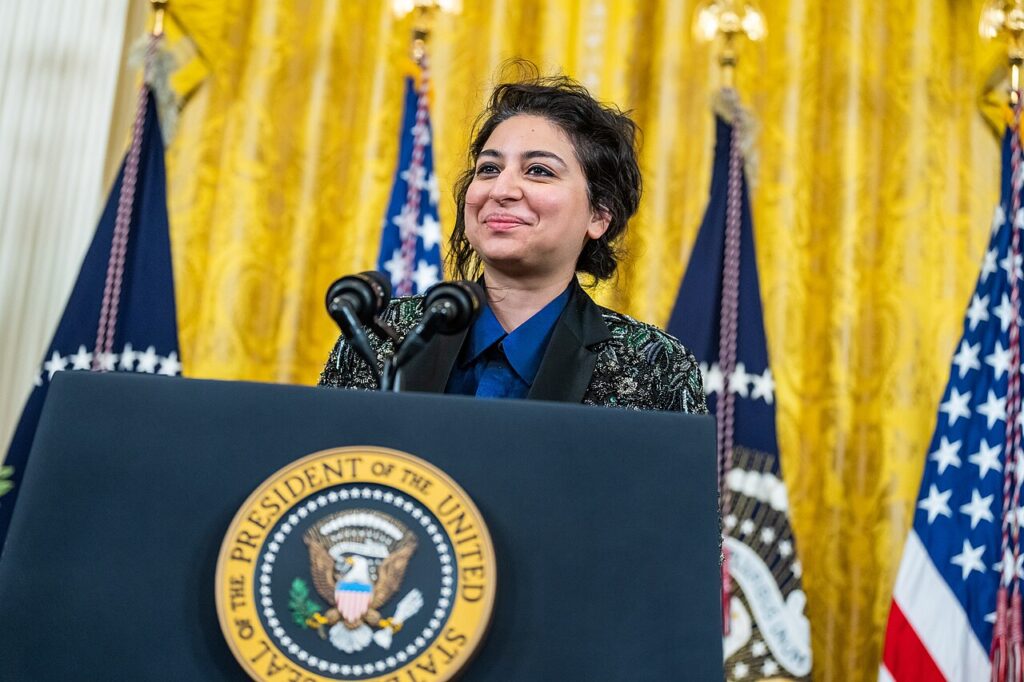
Mohabbat is the obvious door, and for once the obvious door is the right one. The words belong to Hafeez Hoshiarpuri, and the ghazal reached most of our parents through Mehdi Hassan; Iqbal Bano and Farida Khanum have sung it too. Those versions sit on harmonium and tabla and move the way a mehfil moves, line by line, waiting for the room to sigh.
Arooj strips all of that out. Her 2021 recording leans on Maeve Gilchrist’s harp, Gyan Riley’s guitar and Nadje Noordhuis’s flugelhorn, and she sings the ghazal almost as if she is remembering it rather than performing it. It won Best Global Music Performance at the 64th Grammy Awards, which made her the first Pakistani artist to win a Grammy. Barack Obama put it on his summer playlist that year. None of that is why it works.
It works because she trusts the sher. Hassan’s genius was ornament; hers is restraint. Play the two back to back and you hear one poem being read by two very different readers, the way a Ghalib couplet changes depending on who is quoting it to you at a shaadi.
My one reservation: the track is long and nearly static, and a listener who wants the ghazal’s emotional climax will not get one. That is the point, but it is still a trade-off.
The rest of Vulture Prince
Mohabbat came from Vulture Prince, released by New Amsterdam Records on 23 April 2021. It is a seven-track album dedicated to her younger brother, Maher, and parts of it were written through grief during the New York lockdown, as she told Dawn’s Icon.
Baghon Main
The opener, with violinist Darian Donovan Thomas, is the best case for the whole album. The strings circle rather than resolve, and her voice floats on top as if nobody else is in the room.
Last Night
Rumi, sung in English, over a loose, almost reggae lilt. It is the closest thing to a pop song she has recorded, and it is a good one to send a friend who claims not to like “slow music”.
Saans Lo
The lyric is by the late writer Annie Ali Khan, and it is the album’s most fragile moment. Listen to it last, on headphones, not in traffic on Canal Road.
The honest criticism of Vulture Prince is that its tempos barely change across 46 minutes. As a mood piece it is close to perfect. As background music it can blur into one long exhale, and on a casual listen it is easy to drift off by track four.
Mehram and Udhero Na: the detours worth taking
For a Pakistani audience, the most familiar setting is probably Mehram from Coke Studio Season 14, released on 28 January 2022 with Asfar Hussain. It was composed and written by Asfar Hussain and Xulfi, the season’s producer, and the arrangement is big: cello, piano, guitar, harp and layers of synth.
I like it more than I expected to, mostly because Asfar’s grainier voice gives her something to push against. My complaint is the production. Coke Studio’s instinct is to fill every gap, and Arooj is a singer who lives in the gaps. The quietest sections of Mehram are its best ones.
Then there is Udhero Na, her 2022 song with the sitarist Anoushka Shankar, announced while Arooj was also up for Best New Artist. It is unhurried and a little underrated, and the sitar plays more like a second voice than a showpiece.
Love in Exile: the record that asks for patience
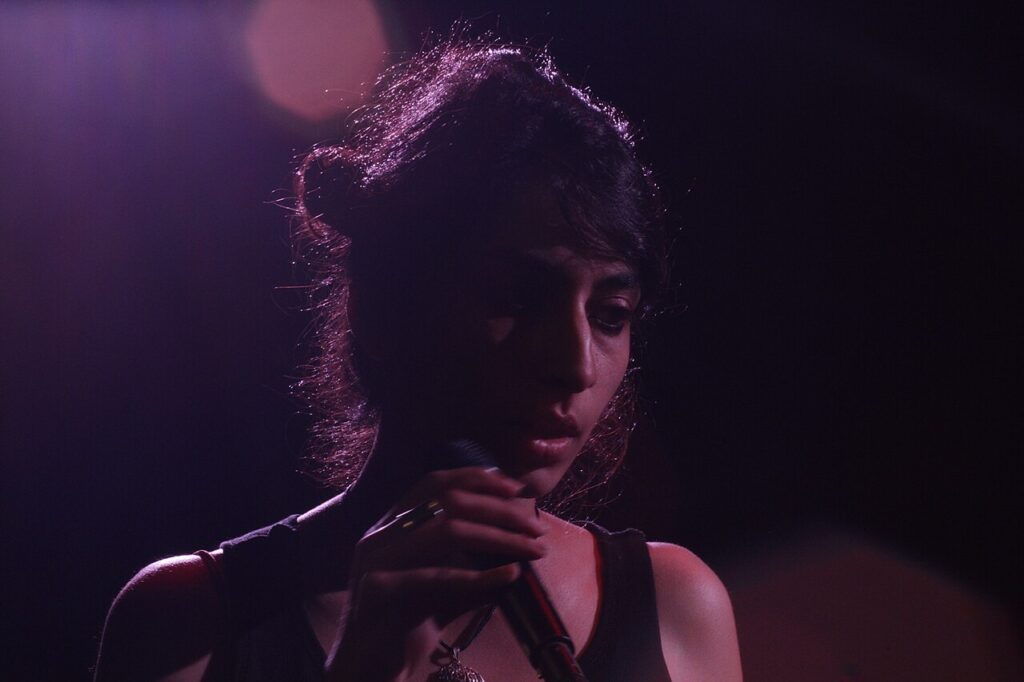
Love in Exile (Verve, March 2023) is a trio album with pianist Vijay Iyer and multi-instrumentalist Shahzad Ismaily, who first played together live in New York in 2018. The Express Tribune covered its release as a long-held dream project, and it was later nominated for two Grammys, including Best Global Music Performance for Shadow Forces.
This is not where you start. Seven tracks run for 75 minutes, several of them past twelve minutes, and the songs are built collaboratively in the room. Haseen Thi and Sharabi are the pieces I return to; the Urdu feels half sung and half thought aloud.
Some reviewers abroad called it telepathic. I would say it is beautiful in long stretches and meandering in others, and you need to be in the right evening for it. Treat it the way you would treat a Bano Qudsia novel: not a commute read.
Night Reign: where she finally lets herself have fun
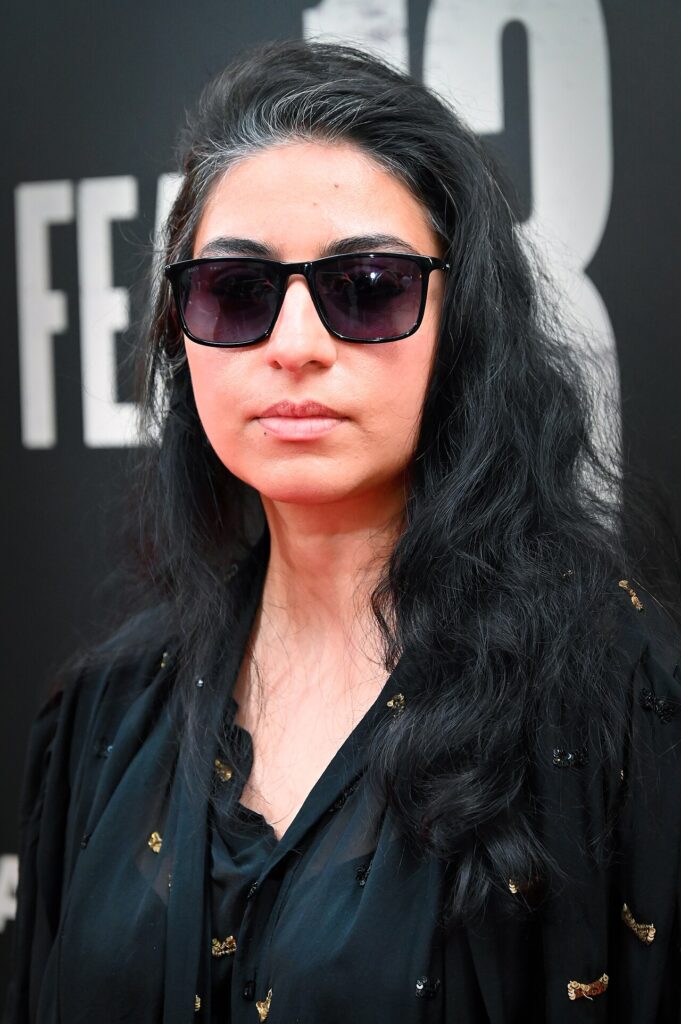
If Vulture Prince is mourning, Night Reign (Verve, 31 May 2024) is the night out afterwards. It is my favourite of her albums, and also the one I would hand to someone who has never heard her.
Raat Ki Rani was the lead single, and anyone who grew up with the night-blooming jasmine outside a Lahore window will get the title before the first verse. Arooj has said the track borrows from Brazilian maracatu and 90s house, and it is the first time she used autotune on her voice. The video was directed by the actor Tessa Thompson. It was nominated at the 67th Grammys, as was the album.
The quieter discovery on this record is the poetry. Na Gul and Saaqi set words by Mah Laqa Bai Chanda, the Hyderabad poet and courtesan who in the late 1700s became the first woman to have a full diwan of Urdu ghazals to her name. That a Verve album in 2024 opens its doors to her feels like a small act of literary justice; our Urdu syllabi rarely did. Aey Nehin, meanwhile, uses a lyric by Yasra Rizvi, whom most drama viewers know as an actor and writer, not a lyricist.
The weak spot is the English-language cover of Autumn Leaves. It is tasteful and well played, but next to Na Gul it sounds like a jazz standard included because jazz albums are supposed to have one.
Why she hits differently at home than abroad
In the West, Arooj is filed under jazz, ambient and “global”. At home she belongs to a longer line: the Lahore bedroom-recording kids who came after the Lahore rock underground, and the tradition of Pakistani records that were released before their audience was ready. The difference is that her audience got ready while she was away.
There is also a gentle irony in the timing. The early-2000s pop boom that gave us a whole crop of one-hit wonders was loud, fast and built for TV. One singer from that same online scene went furthest by going slow and quiet.
My recommendation
Play Mohabbat and Mehdi Hassan’s version back to back. Then put on Night Reign from the top, and keep Love in Exile for a long, late evening when you have nowhere to be. If none of it lands, try Mehram: it is her music with the furniture put back in, and some ears need that first.
Where to listen: her official website links to all the albums discussed here on the major streaming services, and Mehram is on Coke Studio Pakistan’s channel.
The strangest thing about Arooj Aftab is how Pakistani she sounds precisely when she sounds least like what Pakistani music is supposed to be.


.jpg)

