

The first episode of Hurmat opens in a prison, with its young heroine behind bars, and only then flashes back to the house that confined her long before any prison did. It is a confident opening for a serial about confinement. The HUM TV serial, written by Kashif Anwar, directed by Nadeem Siddique and produced by Momina Duraid, premiered on 5 October 2026 in the Monday and Tuesday 8pm slot. Dananeer Mobeen plays a young woman who has finished her bachelor’s degree and wants to keep studying, and Ali Tahir plays Akram, the father who will not allow it.
The Hurmat drama drew a strong response almost immediately. Within two days of the premiere, as Images reported on 7 October, Mobeen shared a viewer’s comment on Instagram saying that their own father had painted over the windows of their home so the family could not look outside. The actor said she was glad audiences connected with Hurmat and saddened by the reason they did. A drama that so many viewers recognise as their own story owes them more than a strong premise.
At the ten-episode mark, Hurmat has delivered that premise with real force and then swerved, through a hurried engagement, a death that may or may not be a killing and a new romance, into territory that is harder to defend. The serial is at its best when it studies the house and its rules, and at its weakest when it treats the men around Hurmat as exits from that house.
The premise: a father’s rules and an uncle who opens the door
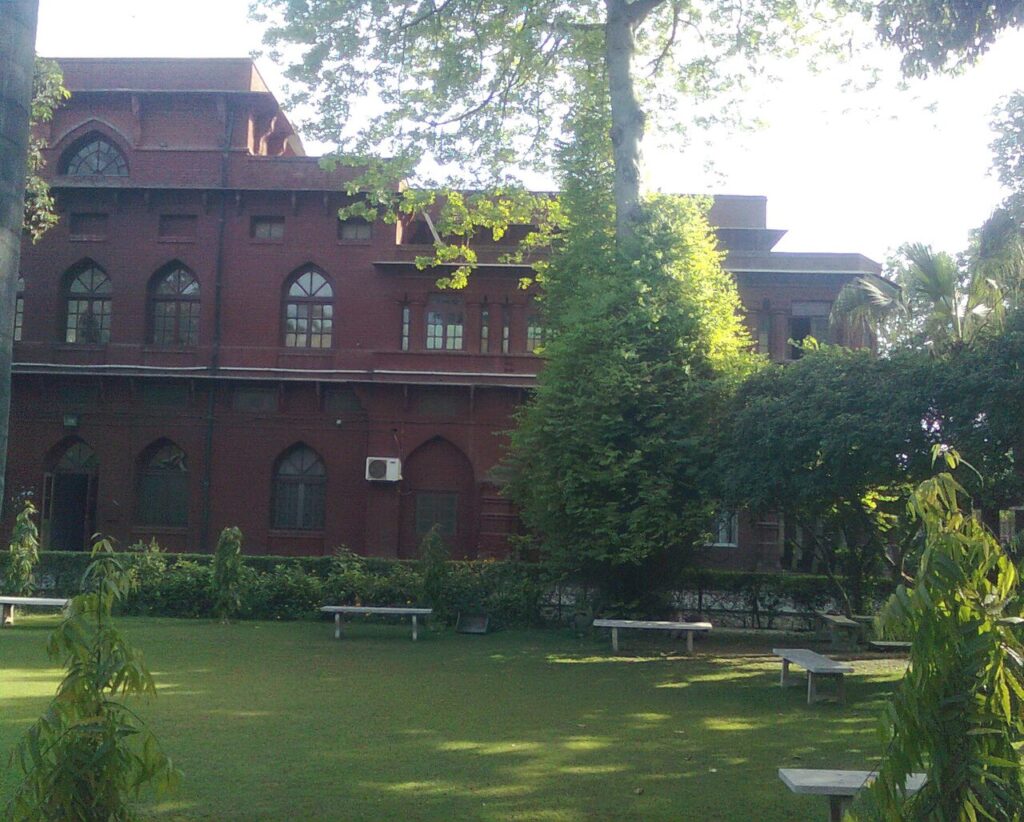
Anwar sets up the household economically. Akram distrusts anyone who comes near his family, and Hurmat’s mother, played by Uzma Hassan, lives in fear of him. Hurmat has the grades for university, but her father sees no need for a young woman to leave the house. The intervention comes from inside the family: her taya, played by Javed Sheikh, takes her side and gets her admitted. When a family friend proposes a match with his son, Hurmat’s refusal is whispered to her mother rather than spoken to her father, a small detail that says a great deal about who holds the floor in that home.
Fuchsia’s review of the first episode singled out the natural lighting, the overhead shots and a rooftop scene with the taya in which the sky opens up above Hurmat. Those choices give her confinement a physical shape. The roof is the one place where the house opens to the sky, which is why it matters that the terrace was among the spaces her father had forbidden her.
Kashif Anwar keeps returning to the confined heroine
Hurmat is not the first Anwar heroine to grow up behind someone else’s walls. In Nauroz (Green Entertainment, 2023), Mawra Hocane played Rishtina, raised in isolation in Jalalam, a remote mountain town, and taught that the outside world is dangerous, until her adoptive mother’s death and the truth about her origins send her out into it. In Neem, on HUM TV the same year, his heroine returns to Kashmir to work for children’s schooling. Anwar, still best known for Sabaat (2020), keeps returning to two ideas: education as a woman’s claim on the wider world, and the outside world as something men call dangerous so that women will stay in.

The teaser, released in early September and reported by Minute Mirror, included a line observing that a woman takes a surname twice in her life, at birth and again at marriage. It names the serial’s real subject, which is not one cruel father but an arrangement in which a woman passes from one household’s authority to another’s. Read that way, Hurmat belongs to a long tradition, from Haseena Moin’s PTV heroines to the women-led serials Miysha Usman gathered in her piece on dramas women can relate to. It also recalls Rokeya Sakhawat Hossain’s Sultana’s Dream, published in 1905, which imagined a Ladyland where men were kept in seclusion while women ran the country. Hurmat is not satire, but its opening episodes achieved a similar estrangement, letting viewers see the rules of an ordinary middle-class house as the strange and costly things they are.
Tabish and the problem of the rescuer
The romance with Tabish is where the serial first loses its footing. Shahveer Jafry, a YouTuber in his first television drama role, plays an upright young officer whose appeal for Hurmat lies in his willingness to stand up for what he believes in. In practice the relationship moves from chance meeting to proposal to engagement within a handful of episodes, with Hurmat doing much of the pursuing (Reviewit’s recap of the seventh episode called it stalking). Niche, writing on 20 October, argued that her attachment looked more like a response to her father’s control than a romance, and that Tabish risked becoming an escape route that would swap one dependency for another.
That reading may well be what Anwar intends. In the seventh episode Hurmat learns about Tabish’s traumatic childhood and decides she wants out, and she has since told him she will not marry him. The difficulty is that the drama has not given Tabish enough inner life for the turn to land as a recognition rather than a whim. Much of the online response to the ninth and tenth episodes sided with him, and the complaint was less that Hurmat changed her mind than that the serial changed her too quickly. A story about a young woman learning that a man is not a way out needs time to show her learning it.
Hurmat airs on HUM TV on Mondays and Tuesdays at 8pm Pakistan time, and full episodes are uploaded to HUM TV’s official YouTube channel.
Akram’s death and the ambiguity of the eighth episode
The serial’s boldest move came in the eighth episode. After Hurmat confronts her father over something she has learned about his past, Akram is found dead. The death first appears natural; then a flashback suggests, without confirming, that Hurmat may have choked him. Reviewit’s account of the episode recorded viewers split between those who believed she had killed him and those who read the scene as a hallucination brought on by years of abuse. Given that the first scene showed Hurmat in a cell, the drama is clearly building toward an answer.
There is a version of this arc that would be bold in the best sense: a story about the violence that a lifetime of control can plant in a person, told without excusing or sensationalising it. What worries me is what followed. Hurmat then discovers that her father kept her photograph as his phone wallpaper, and her mother explains his strictness as fear of what society would say. Poise Mag, reviewing the first four episodes, fairly argued that Akram needed to be a full human being rather than a villain. But humanising a controlling father after his death, through a sentimental detail and a wife’s explanation, is not the same as dramatising him while he was alive, and it risks telling viewers like the one who wrote to Mobeen that such rules were love in another form. The best serials about honour, Mustafa Afridi’s dramas among them, show how custom persuades from the inside without letting it off the hook.
Dananeer Mobeen’s performance and the new romance
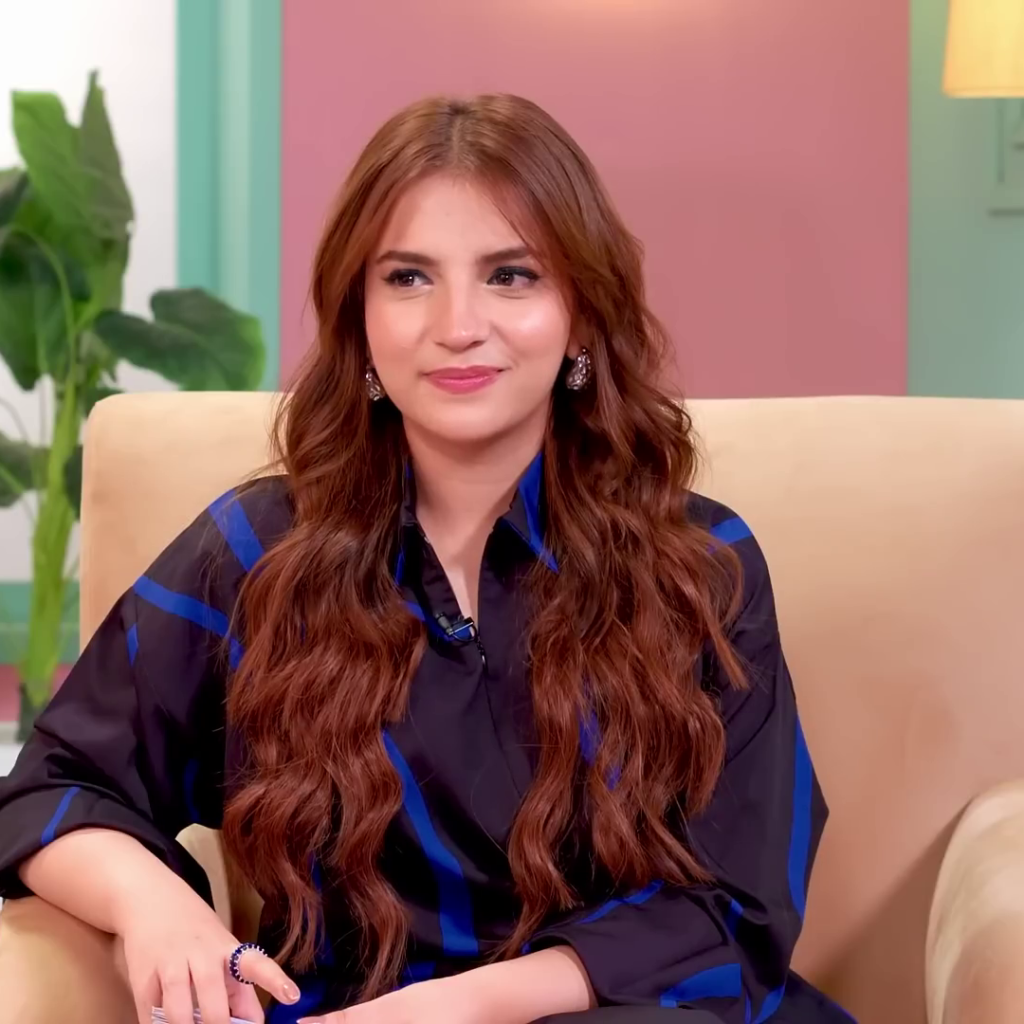
Mobeen remains the strongest reason to watch. Early reviews praised the fear and lack of confidence she brought to Hurmat under her father’s control, and that tentativeness gives the first half its emotional truth. Her career has moved quickly since the viral video of February 2021 that made her famous: the 2023 Lux Style Award for best emerging television talent for Sinf-e-Aahan, lead roles in Muhabbat Gumshuda Meri and Meem Se Mohabbat, and a first film, Abu Aleeha’s Mera Lyari. Gulf News noted that Hurmat echoes her role in that film, another daughter under a father’s pressure. The risk for an actor this young is being cast repeatedly as the daughter in need of rescue; the opportunity, if the second half allows it, is to play a woman living with what she may have done.
The arrival of Zeeshan, a company owner’s son back from America with plans for an artificial intelligence and robotics venture, does not help yet. Hurmat tells him the engagement was her parents’ arrangement and one she never truly accepted, a claim that sits uneasily beside the episodes in which she pursued Tabish herself. If the drama wants viewers to notice that Hurmat is rewriting her own story, it needs to signal that more clearly. The latest episodes leave her caught in a police raid after a party, and it is not yet clear whether this is the cell the first episode opened on.
What Hurmat still has to prove
Hurmat began as one of the season’s most pointed serials, a drama about a young woman’s right to study and move through the world that many viewers recognised from their own homes. It has since tried to become a mystery and a love triangle at once, and the strain shows in the pacing of recent episodes. None of that is fatal. The prison framing gives Anwar a structure for the second half, and in Nauroz he has already written a heroine reckoning with the world after leaving a closed home.
What the serial must avoid is resolving its central question in the easiest way, either by forgiving Akram through his daughter’s grief or by making Hurmat’s freedom depend on choosing the right man. Its own teaser observed that a woman takes a surname twice, and the remaining episodes will show whether Anwar can imagine a heroine who defines herself by neither. On the strength of its first half, and of Mobeen’s performance, Hurmat deserves its audience; on the evidence of its recent episodes, it deserves to be watched with a more critical eye than the early enthusiasm suggested.


