

The first episode of Mitti De Baway opens with a homecoming that turns into a massacre. Iqbal Channan, known to everyone as Baala, walks out of prison to a small crowd of well-wishers, goes to a graveyard to pray at a family grave, and is ambushed there by gunmen. The order, the episode makes clear, came from Bilqees Bano, the woman he once loved, who is now a revered pirni and has vowed not to break her fast until her mannat is fulfilled. It is a bold way to introduce a heroine.
The serial premiered on Green Entertainment on 23 September 2026 and airs on Wednesdays and Thursdays at 8pm. It is written by Faiza Iftikhar, directed by Syed Wajahat Hussain and produced by Tehreem Chaudhary, and it pairs Mahira Khan, as Billo, with Wahaj Ali, as Baala, for the first time. When Images reported on the trailer on 26 August 2026, it described a story that moves between 1998 and 2002 and a romance that appears to run from lovers to enemies and, perhaps, back again.
Six episodes in, Mitti De Baway is one of the more ambitious serials on air this autumn: a Punjabi period drama about class, caste and the authority that comes with a spiritual seat. The writing is sharp about how status is used as a weapon, but the show is less sure what it thinks of the power its heroine holds, and that uncertainty matters more than the rough edges in its production.
What Mitti De Baway is about: Billo, Baala and a feud across years
The story alternates between two timelines. In the late 1990s, young Billo (Aena Khan), the daughter of a respected family in Wazirabad, falls for Baala (Fazal Hussain), the son of a woman who sings at weddings while he plays alongside her. Years later, Baala is released from prison, and Billo has become Bari Sarkar, a spiritual figure whose followers obey her without question. Sohail Ahmed, Samiya Mumtaz, Hina Afridi, Noor ul Hassan and Amar Khan fill out the cast.
The flashbacks are where the series sets out its argument. In the third episode, after Baala misses a meeting because his mother has died, the young Billo and a friend mock him, and she dismisses him as a marasi, the hereditary musician caste that Punjabi village society has long treated as beneath it. By the sixth episode, as Minute Mirror reported on 9 October 2026, the adult Billo is taking revenge by exposing secrets that wreck the marriage of Baala’s sister and drive his brother out of town. The romance, in other words, is being built on contempt.
Faiza Iftikhar returns to Punjab
Faiza Iftikhar, a Lahore-based novelist and screenwriter, has returned to Punjabi families more often than most of her peers. Bilqees Kaur (Hum TV, 2012) moved between New York, Lahore and Gujranwala and earned praise for the Punjabi spoken by Bushra Ansari in the title role. Ranjha Ranjha Kardi (Hum TV, 2018–19) won her the Lux Style Award for best TV writer. It is hard not to notice that her new heroine is also called Bilqees.
What links these serials is an interest in pride, in the way people hold on to status even when it costs them happiness. Mitti De Baway pushes that interest further than before. Billo is not a misunderstood heroine waiting to be redeemed; on the evidence so far, she is cruel, and her cruelty is tied to her class. The director, Syed Wajahat Hussain, has worked on class-divided romances before, including Do Bol (ARY Digital, 2019), about an heiress married to her father’s manager, and Mannat Murad (Geo, 2023). This is a darker version of the same terrain.
Mahira Khan’s Billo and the power of a pirni

This is Mahira Khan’s first television serial since Razia in 2023, and it is a long way from the role that made her famous, Khirad in Humsafar (Hum TV, 2011). Her Billo is controlled and watchful. The review site Sunday, writing about the first two episodes on 28 September 2026, singled out that restraint. Viewers who know her from romantic leads (our Mahira Khan profile covers that career) will find a harder edge here.
The difficulty is in how the drama frames that authority. Billo orders an ambush in a graveyard while keeping a devotional fast for its success, and the first episode treats this as a mark of her resolve. The blogger Shabana Mukhtar, who reviews each episode on The Other Me Unfolded, asked after the first episode whether the show was granting its pir and pirni a licence to kill. It is a fair question, because the early episodes seem more interested in Billo’s command than in its consequences. If the second half of the serial does not reckon with what the gaddi allows her to do, the show will have flattered the very hierarchy it set out to criticise.
Wahaj Ali, Amar Khan and the supporting cast
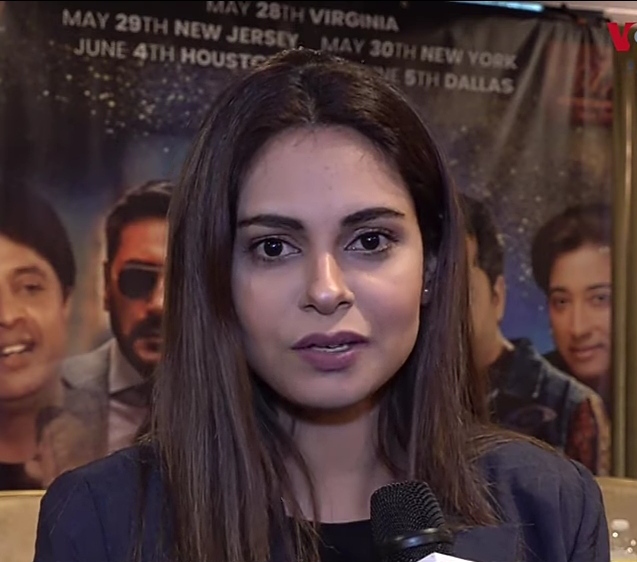
Wahaj Ali comes to the serial after the success of Tere Bin (Geo, 2022), which won him the viewers’ choice award for best TV actor at the 2025 Lux Style Awards. Baala is a quieter role than Murtasim, and Wahaj plays him with a wounded patience that suits the material. In the first episode he also sings a Bulleh Shah kalaam in his own voice as Baala remembers the past. His Punjabi has drawn less praise. Mukhtar found it unnatural, and in a serial that depends so much on texture, any gap between him and the more fluent members of the cast is costly.
The most talked-about performance after six episodes belongs to Amar Khan as Zareena. The Current reported on 9 October 2026 that viewers were praising her colloquial Punjabi and her delivery, and that the actor Saboor Aly had publicly called it a solid performance. Aena Khan and Fazal Hussain carry the flashbacks with an energy that, as Minute Mirror noted on 26 September, made some viewers briefly forget they were waiting for the adult stars. That matters, because the case against Billo is built in those flashbacks.
Bulleh Shah, caste and the word marasi
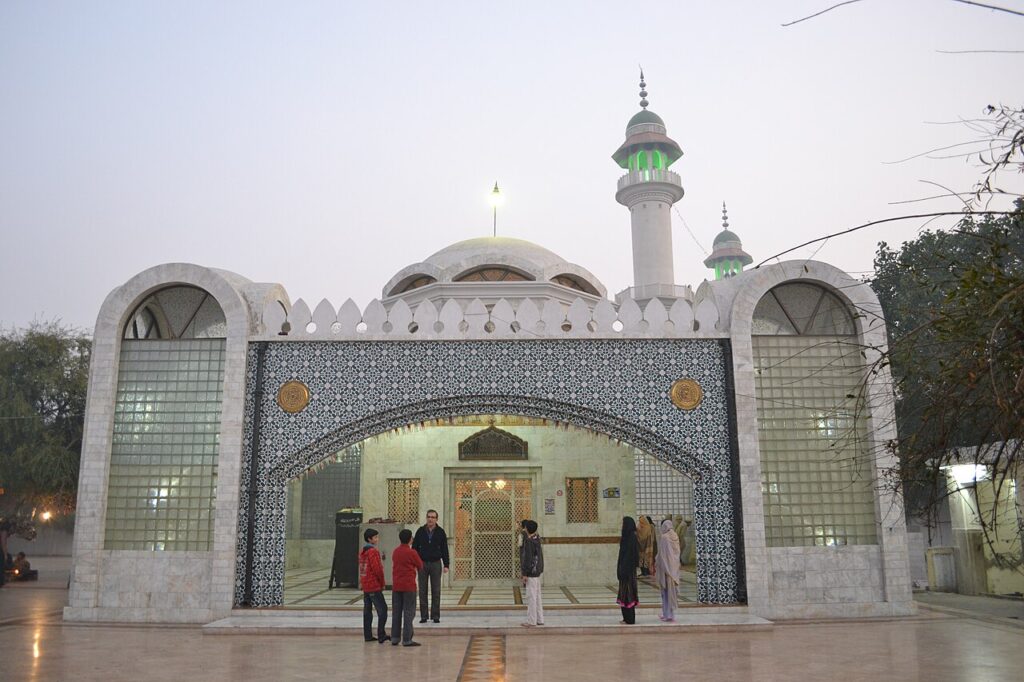
The choice of Bulleh Shah for Baala’s song carries real weight. Bulleh Shah, born into a Syed family, scandalised his relatives by becoming the disciple of Shah Inayat Qadiri, a teacher they considered beneath them, and his poetry repeatedly mocks the idea that birth or ritual makes one person purer than another. Giving his words to a man called a marasi by a woman who later holds a spiritual seat is pointed writing. The serial seems to know which tradition it is arguing with: a Sufi inheritance that began as a rejection of caste and has, in many places, hardened into its own aristocracy. It is the most interesting idea in the drama, and it places Mitti De Baway alongside older Punjabi love stories such as Heer, in which the lovers’ real enemy is a family’s sense of its own standing. Minute Mirror’s report that viewers have responded to the drama’s treatment of caste-based discrimination suggests the idea is reaching its audience.
Where the early episodes fall short
The period setting is thin: Mukhtar observed that the late-1990s scenes, with their styling and houses, look much like the present, and the background score is heavy enough to flatten moments that would work better in silence. She also found the adult leads too unlike their younger selves to be convincing as the same people. None of this is fatal, but it keeps the drama less rooted in its time and place than its writing deserves.
The deeper risk lies in the structure. A story about caste and status can easily become a story about two individuals settling scores, and the sixth episode, with its exposed secrets and broken marriage, leans in that direction. When Billo’s cruelty is explained as personal hurt, the social argument loses its force, because the problem becomes one bad woman rather than a system that rewards her. Amber Javed Malik wrote in Images on 2 July 2026 that 2026 had become a “golden quarter” for Pakistani dramas, with serials such as Kafeel (which we reviewed here) taking social themes seriously. Mitti De Baway has the material to join that list, but only if it treats Billo’s power as a subject rather than a spectacle.
Is Mitti De Baway worth watching?
For viewers who want a period drama with real conflict, the answer is yes, with reservations. The writing is braver than most prime-time romance. It gives its heroine a truly ugly past, it uses Punjabi music and Sufi poetry with some intelligence, and it has found in Amar Khan and the young leads performers who make its world feel inhabited. Those who prefer their heroines sympathetic from the first scene, in the tradition of the women in our list of iconic female roles in Pakistani dramas, may find Billo hard to like, which is partly the point.
The test for the rest of the run is whether Faiza Iftikhar and Syed Wajahat Hussain can hold on to the argument they set out in the flashbacks. A serial that began by asking why a woman of high standing could call a man a marasi and walk away should end by showing what that standing costs, both to him and to her. If it settles for a revenge romance, it will still be watchable, but it will have wasted its best idea. On the evidence of six episodes, I think the writing is good enough to deserve the benefit of the doubt.
Where to watch: Green Entertainment, Wednesdays and Thursdays at 8pm; the official trailer is on the Green TV Entertainment YouTube channel.


