

The first chapter of Kafeel is about a woman doing sums. Zeba, played by Sanam Saeed, teaches for a living, raises four children and keeps the household’s bills paid, while her husband, Jamshed, whom everyone calls Jami, drifts from one failed plan to the next and answers his wife’s worries with contempt. Little of this is staged as tragedy. The damage is done in ordinary exchanges about money and in a husband’s steady habit of belittling the person who is holding his family together, and the serial’s real achievement is to show how those exchanges accumulate, over years, into the shape of several lives.
Written by Umera Ahmed and directed by Meesam Naqvi, Kafeel premiered on ARY Digital on 15 December 2025 in the Monday and Tuesday 8pm slot and ended in late April 2026 after 34 episodes. Fahad Mustafa and Dr Ali Kazmi produced it for Big Bang Entertainment, with Emmad Irfani as Jami and Hasan Khan as Jamal, who eventually becomes Zeba’s second husband. As Minute Mirror reported on 25 April 2026, Ahmed told viewers on social media that it was inspired by a real woman who spent more than twenty years in a marriage to a man who would not provide for their four children.
The serial was widely praised while it aired, and its finale was just as widely argued over. Both reactions are deserved. Kafeel is one of the few recent Pakistani serials to treat a wife’s endurance as a harm rather than a virtue, and to follow that harm into the next generation. It is also a drama whose structure, a twenty-year leap early in its run and a hurried final fortnight, keeps undercutting the patient case its writing makes.
Umera Ahmed, Meesam Naqvi and a story taken from life
Umera Ahmed’s name on a serial usually promises a particular kind of drama. Zindagi Gulzar Hai, Alif and Sinf-e-Aahan, which Miysha Usman championed on this site in nine reasons to watch Sinf-e-Ahan, are earnest stories in which characters are tested and come out improved. Kafeel is quieter and less certain of itself. Its pressure falls on a whole family rather than on one heroine’s faith or ambition, and its central antagonist is not a scheming outsider but a husband who is weak far more often than he is wicked.
The choice of director suited that material. Meesam Naqvi had already made Mayi Ri (2023), about a fifteen-year-old married to her cousin at a dying uncle’s wish, and Parwarish (2025), about two teenagers struggling under their families’ expectations, both for ARY Digital. Naqvi’s interest in younger characters is one reason Kafeel‘s second half never becomes a conventional romance.
Zeba and Jami: a marriage drawn without melodrama
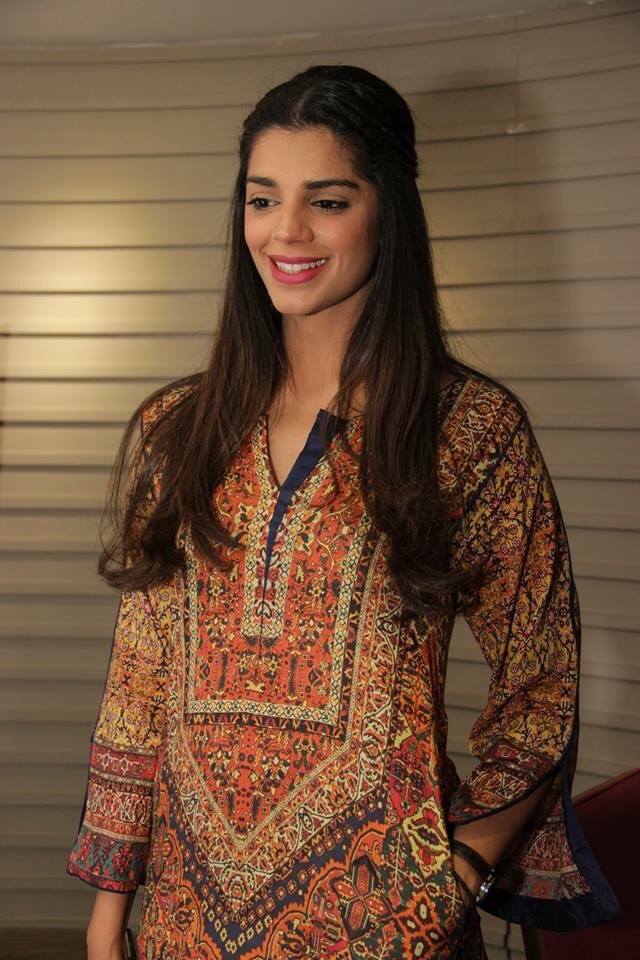
Sanam Saeed first worked from an Umera Ahmed script in Daam (2010), and became a household name as Kashaf in Zindagi Gulzar Hai (2012–13), the guarded daughter of Rafia, a government school principal whose husband left her for a second wife because she had not given him a son. In Kafeel Saeed plays a woman much closer to Rafia’s position: a teacher keeping a household afloat while its father fails it. Whether or not the echo was intended, it gives Zeba a weight before she says a word, and Saeed plays her exhaustion without ever asking the audience for pity.
Saeed has been unusually direct about what the role meant. In an Instagram note marking the end of the serial’s first chapter, reported by Images in January 2026, she rejected the idea that a dutiful woman must give up her future and her peace, wrote that “self-preservation is not selfishness”, and said women had written to the team about seeing their own lives in Zeba’s.
Emmad Irfani’s Jami is the harder role, and the serial’s most interesting gamble. Writing in Dawn’s Icon on 26 April 2026, Sarwat N. Shah read him as a covert narcissist, but one whose behaviour is partly explained by his own upbringing: his siblings left him to care for their parents, and nobody encouraged him to finish his education. That background is the most generous decision in the script. It is also a risk, because a drama that explains an abusive husband so carefully can drift towards excusing him, and in some of the middle episodes Kafeel lingers on Jami’s grievances longer than the story needs. Irfani keeps him from becoming either a monster or a victim.
The children of Kafeel and the cost of the time leap
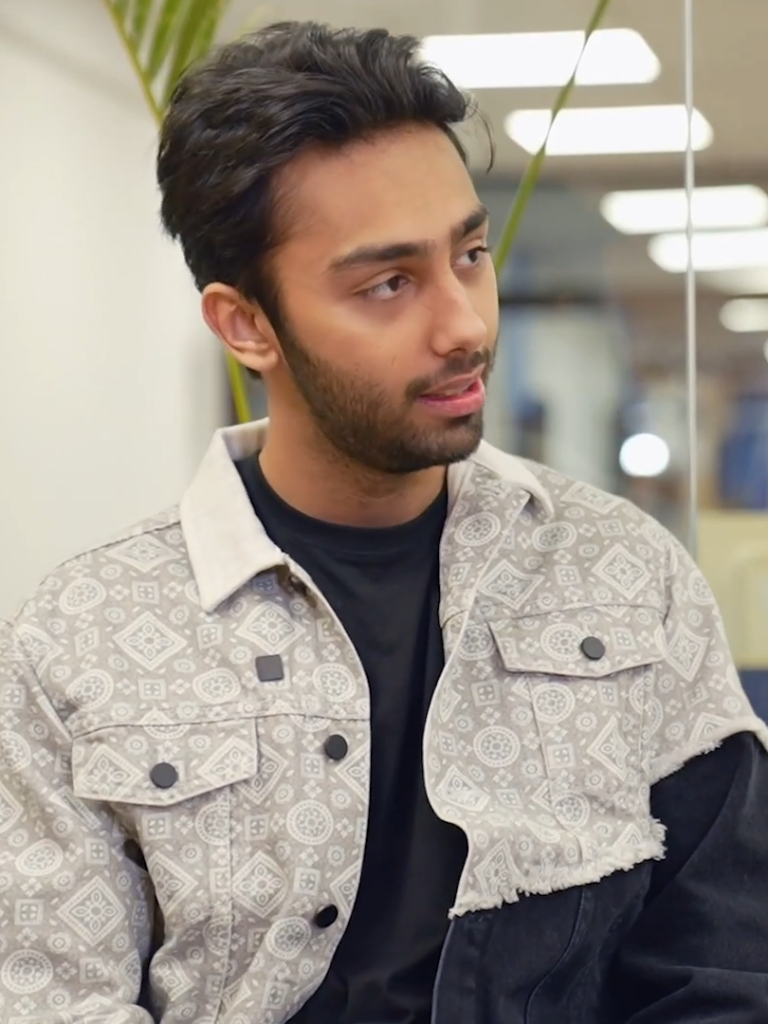
In episode 11 the serial jumped roughly twenty years forward and turned its attention to Zeba and Jami’s grown children, a shift that, as Jang reported in January, split viewers who had settled in for a marriage drama. The second half is where Kafeel is most original. Shah’s Icon review traced a different survival response in each child: Subuk, the eldest son, takes on the role of a parent; Javeria blames herself and tries to please everyone; Zoya carries her fear in her body; and Tania, the youngest, copies her father. Subuk is the most painful case, because the son who protects his mother has also absorbed some of his father’s anger, and the serial lets that contradiction sit unresolved.
Aashir Wajahat gives Subuk the steadiness the role requires. His best scene comes late, in a conversation in which he tells his mother that she is allowed to want a life of her own, including a second marriage. Few Pakistani serials put that argument in a son’s mouth, and fewer let him make it calmly, as a matter of fairness rather than rebellion.
The leap, though, costs the serial more than it gains. Ahmed has said the script originally spanned 27 years and was compressed after casting changes, and in his review for Images in May 2026 Mamun M Adil noted that some characters now look too young for the marriages the plot hands them. The deeper problem is what the leap removes. The years in which these children learned to flinch, to please and to imitate pass off screen, so Kafeel shows causes in its first ten episodes and effects in the rest, but rarely the process connecting them. For a serial whose subject is how damage is passed down, that missing middle is a real loss.
Where the ending lost its nerve
Adil’s review, published in Images on 12 May 2026, argued that the last two episodes felt as though someone had pressed fast-forward, and the complaint is hard to dispute. Zeba’s decision to leave her marriage, which should feel like the serial’s reward, arrives so late that it reads as overdue rather than triumphant, and her acceptance of Jamal’s proposal follows a single meeting with the mother of his late wife. Adil credited the serial for refusing the familiar clichés about divorced women remarrying, and that credit is fair. The problem is speed: Zeba has no time to reflect on one marriage before entering another.
As Samaa reported after the finale, viewers asked why Zeba could move on and leave her daughters behind so easily, and others objected that Jami was absent from the last episode altogether. Both complaints point at the same weakness. A serial that spent thirty episodes arguing that parents shape their children’s inner lives chose, at the end, to put the daughters’ futures off screen and to deny Zeba any final reckoning with the man who shaped theirs.
Kafeel and the long tradition of sabr on Pakistani television
Pakistani drama has rewarded women for endurance for as long as it has existed. The wife who swallows insults and waits for her husband to change is a fixture of the genre, and CurryFlow’s older surveys of dramas tackling domestic issues and dramas women can relate to show how often the form returns to marriages that women survive rather than leave. Even Rafia in Zindagi Gulzar Hai, one of Ahmed’s most admired characters, earns her dignity by enduring alone.
Kafeel breaks with that tradition in two ways. It names the cost of a wife’s sabr and shows her children paying it, and it allows her to leave and to marry again without punishing her for either. The title helps here. A kafeel is a guarantor or guardian, the person who takes responsibility for another, and the serial’s quiet irony is that the man who should have filled that role never does, while the woman he belittles fills it for twenty years.
Is Kafeel worth watching?
Taken as a whole, Kafeel is better than its ending and more uneven than its reputation. Its first ten episodes are among the most precise portraits of a failing marriage on Pakistani television in recent years, Sanam Saeed’s Zeba deserves a place beside the women in our list of iconic female roles in Pakistani dramas, and the serial’s account of how children absorb their parents’ unhappiness is more careful than most prime-time drama manages. Against that, the time leap leaves a hole at the centre of its argument, and the finale resolves in a few scenes what took months to set up.
I would still recommend it, with the expectation that the last two episodes will disappoint. The serial’s lasting value is that it asked a mainstream ARY audience to see a wife’s patience as something that can wound her children, and it made that case largely through performance and accumulation rather than speeches. Pakistani television does not need more serials about suffering wives, but it could use more that treat their suffering, as Kafeel mostly does, as a problem with causes and consequences rather than a virtue to be admired.
Where to watch: episodes are available on ARY Digital’s official YouTube channel and the ARY Zap app.


.png)