

Midway through Doctor Bahu, after Dr Farheen has died, the camera moves slowly through the grieving house until it settles on her husband, Dr Shahnawaz, the one man in it who will not accept any share of the blame. He has already decided whose fault it is: his younger son’s wife, Dr Sania, the daughter-in-law who would not do her residency where she was told. The scene needs no dialogue, because by then the serial has spent months showing how this household runs.
The Doctor Bahu drama, written by Sanam Mehdi Zaryab and directed by Mehreen Jabbar, ran on ARY Digital from 27 March to 31 July 2026. On paper it is familiar territory: a strong-willed bahu, a difficult sasural, a husband caught in the middle. What made it one of the most discussed serials of the year was its treatment of control inside a respectable, educated family as a system with rules and rewards, and its interest in what that system costs the women expected to keep it running.
That ambition is the reason the serial is worth taking seriously, and also the reason its ending disappoints. A drama conceived as an argument about women’s medical careers spends its final hour on a hospital bed, a newborn son and a repaired marriage, while the question it set out to ask is left politely unanswered.
Where Doctor Bahu came from: the “doctor bride” debate
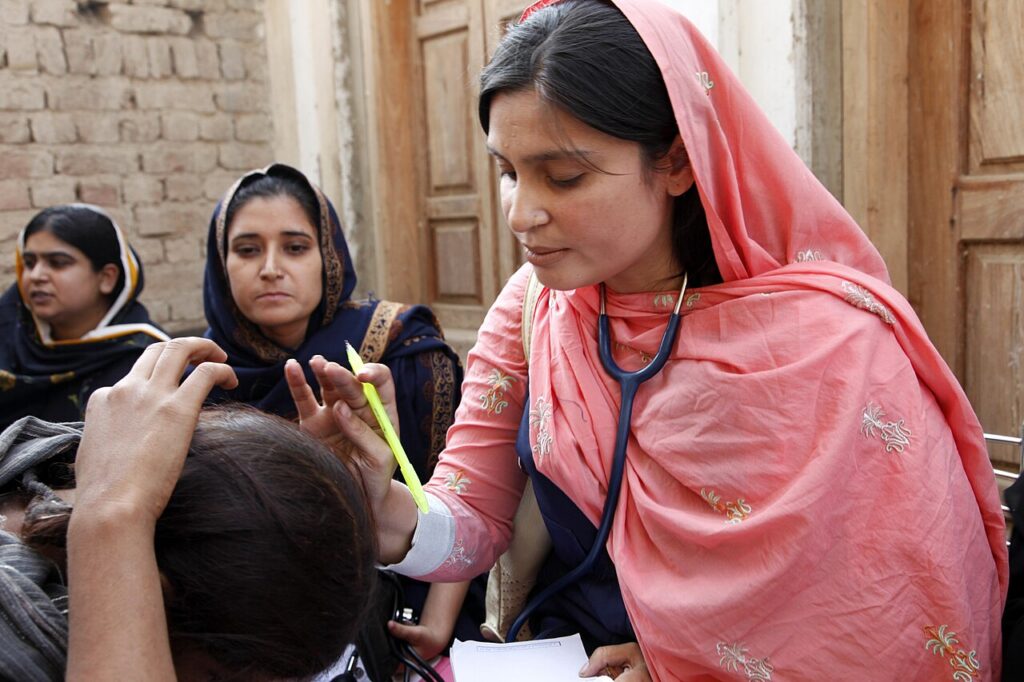
The serial began as a public complaint. In January 2022, Humayun Saeed posted that only about one in four women who qualify as doctors in Pakistan go on to practise, blamed family pressure, and attached the hashtag #DoctorBahu to a project he was considering. The problem is well documented. An AFP report carried by Images in April 2026 cited medical associations’ estimates that around 70,000 registered women doctors, almost a fifth of the country’s 370,000, are not practising. In a 2019 piece for Dawn, “The myth of ‘doctor brides’“, the bioethicists Sualeha Siddiq Shekhani and Farhat Moazam argued that the stereotype of the girl who studies medicine to improve her rishta hides structural failures such as poor postgraduate training and no day-care.
Saeed and his producing partner Nadeem Baig took the idea to Jabbar, and Six Sigma Plus produced it. Jabbar told Usman Ghafoor of Gulf News in March 2026 that she had hesitated over a 30-episode commitment, since she prefers shorter formats, and she described the serial’s target precisely: families who want a woman doctor in the house as an unpaid, live-in carer rather than a working professional. For most of its run the serial honours that premise. Sania (Kubra Khan) is preparing for her FCPS when the proposal arrives from Salman (Shuja Asad), the only member of Dr Shahnawaz’s family who is not a doctor. The in-laws accept the match on a condition: she will defer to them and work at the family hospital, as the elder daughter-in-law, Mina (Hajra Yamin), already does.
Dr Shahnawaz and the rules of a controlling house
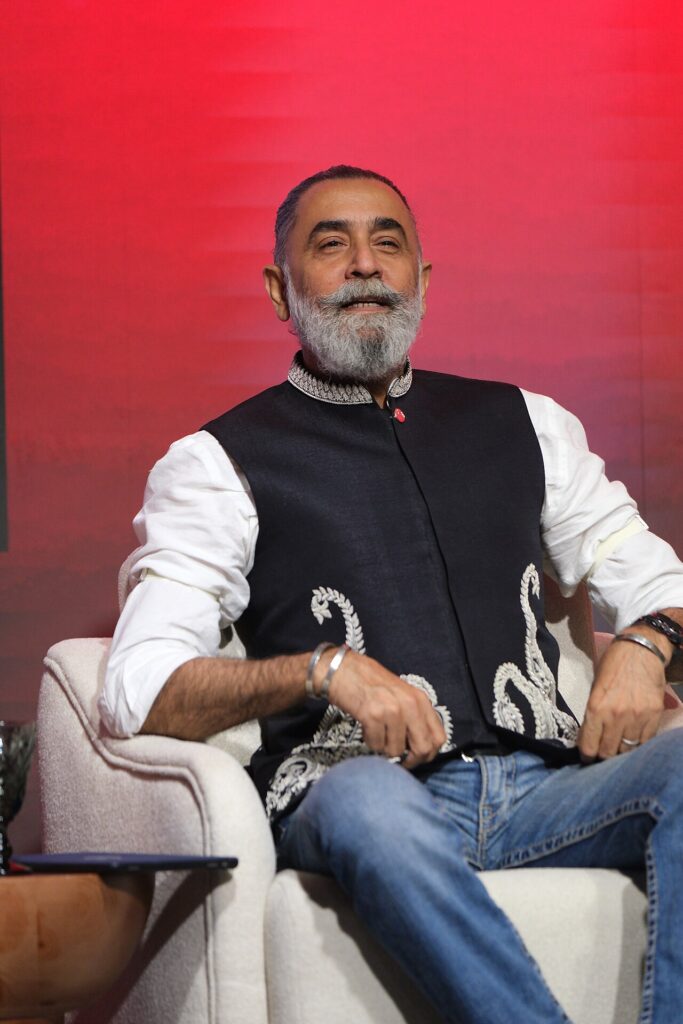
The serial belongs, more than to anyone else, to Shahzad Nawaz. His Shahnawaz is an oncologist who owns two private hospitals, and he never raises his voice when a raised eyebrow will do. Writing in Dawn’s Icon in July 2026, Sarwat N. Shah read the show as a study of coercive control dressed up as tradition, and pointed to the mechanics that make it convincing: the tap of a spoon that tells the women what is expected of them, the information he hoards, the favours he grants the families of his daughters-in-law so that gratitude does the work orders would otherwise do. The household runs on fixed roles, with a compliant wife, a favoured son and a son labelled difficult, and the drama shows that the arrangement functions even as it shrinks everyone inside it.
Some of the best writing goes to those who have made their peace with him. Saba Hameed’s Dr Farheen, a qualified doctor confined to an aesthetics practice and the home, carries the cost of that peace without naming it, and her death, after she overhears her husband and Dr Rubina (Atiqa Odho) discussing their past, lands as the bill for a lifetime of silence. Adeel Hussain’s Faizan, the obedient elder son with a childless marriage, drifts into an affair with Dr Amber (Mira Sethi), and the serial asks for sympathy for his suffocation without excusing the betrayal.
The weakness in this strand is a late revelation about Shahnawaz’s own past that recasts him as a wounded man. Shah argued that it does not excuse him, and the script does not quite say it does, but the timing works against the drama. Arriving so close to the end, it offers viewers a reason to sympathise with him at the moment the serial most needs to show what his control has cost, and Brandsynario’s round-up of reactions to the finale found many viewers defending him as practical and misunderstood.
Mehreen Jabbar’s direction and the Mil Hi Lo OST
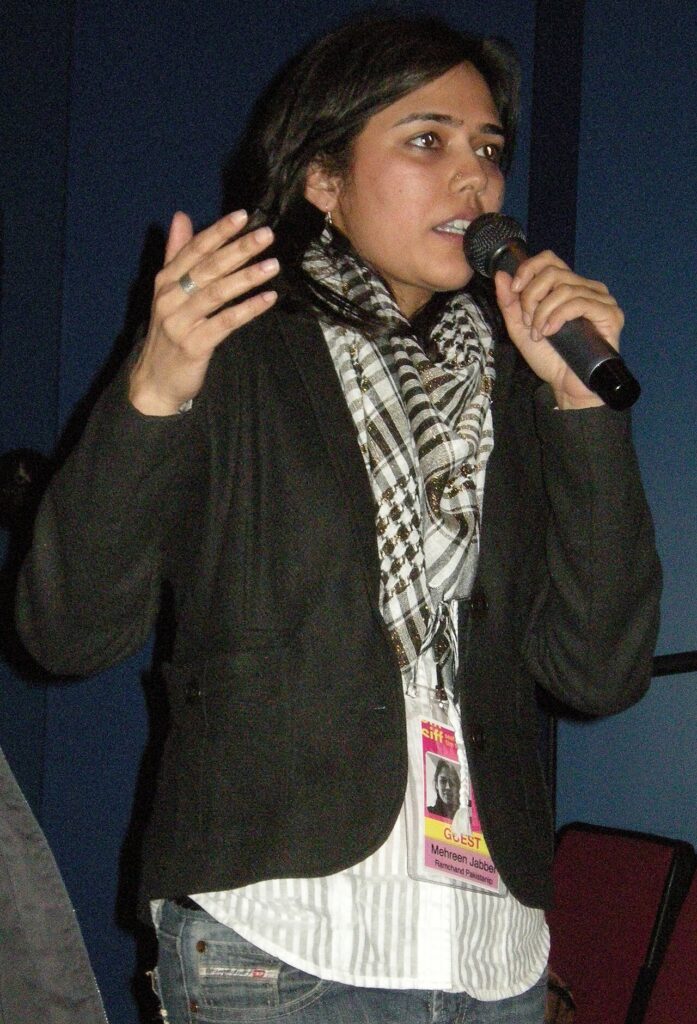
Jabbar has been making television since the mid-1990s, and her best work, from Doraha, which won her a Lux Style Award, to Daam and Jackson Heights, has preferred observation to declaration. Doctor Bahu, a weekend primetime serial, is her most mainstream project in years, yet she compromised little for the slot. Ozair Majeed, reviewing the early episodes for PakistaniCinema.net in April, singled out a six-minute single-take party sequence that establishes, through movement alone, who is circling whom. The mourning scene described above, which the actor Sahar Hashmi shared on Instagram as “Pure cinema”, works the same way.
Kubra Khan plays Sania as competent and slightly impatient rather than saintly, and Jabbar defended that choice on a podcast, as ARY News reported in July, saying Sania does not see herself as flawed even when she hides her father-in-law’s corruption from her husband. Majeed also noted that Khan’s dialogue delivery is sometimes indistinct, which is fair. The soundtrack is unusually strong. “Mil Hi Lo”, sung by Faisal Kapadia and Zeb Bangash and composed by Saad Sultan as part of his In The Box series, sounds like a duet written for two distinct voices rather than a theme written for a montage.
Thirty-five episodes and a rushed ending
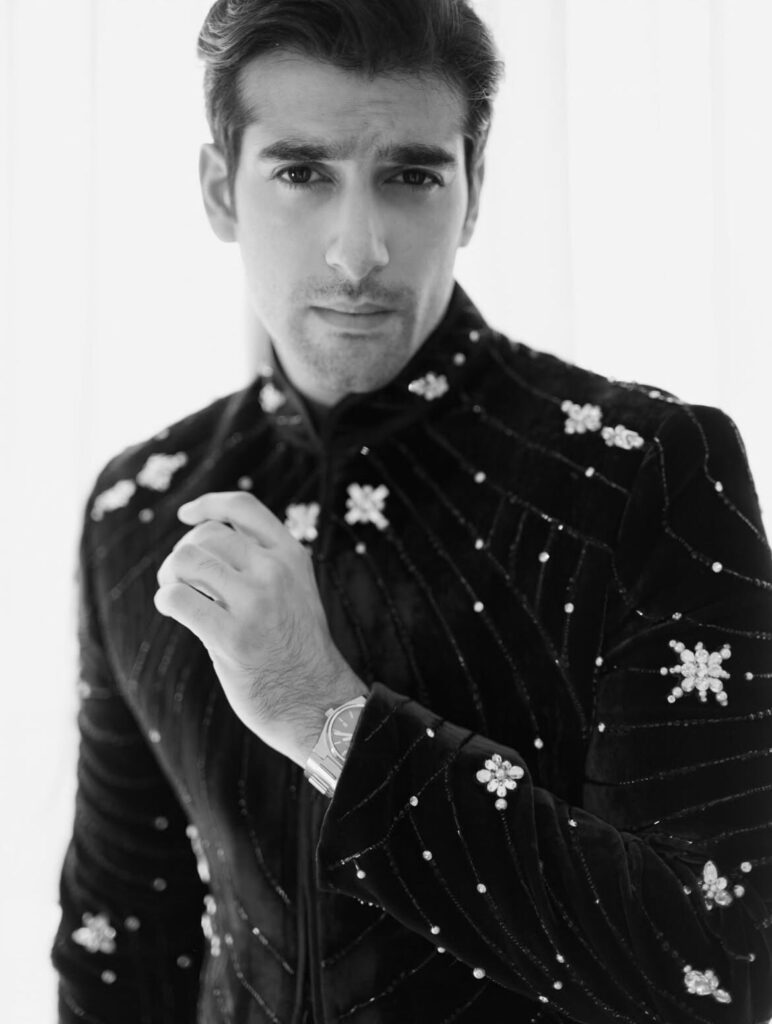
The structural problem is visible in the arithmetic. Jabbar agreed to 30 episodes and the serial ran to 35, with the extra length going into a middle stretch that circles Faizan’s affair and Salman’s insecurities at a slow pace, and then into a finale that has to close half a dozen threads at once. Salman hands the evidence of his father’s corruption to the press, Faizan and Mina give statements to the anti-corruption authorities, and Shahnawaz is left exposed and alone, walking out of his home, apparently to leave the country, rather than facing arrest. Sania survives a dangerous delivery and wakes to a son and a penitent husband.
Salman’s arc suffers from the compression. Asad wrote after the finale, as the Express Tribune reported, that the character’s journey was about accountability and redemption, and he plays well a son made defensive by a father who never forgave his career choice. But months of resentment are forgiven in a handful of bedside scenes. The larger cost falls on Sania. The serial grew out of Saeed’s question about women who stop practising after marriage, yet its final episode never shows whether its heroine returns to her residency. By leaving that off screen, the finale implies that a woman doctor’s story is complete once her health, marriage and motherhood are secured, which is the very assumption the serial was written to question.
From Dhoop Kinare to Doctor Bahu
A piece of casting shows how far the genre has and has not moved. Marina Khan, who appears here as Zainab, was Dr Zoya in Haseena Moin’s Dhoop Kinare in 1987, the PTV serial in which a woman doctor’s hospital work was the setting for a romance, never something she had to defend. Almost four decades later, a woman doctor’s right to keep working is the conflict itself. Urdu literature has known this household for a long time: Rashid Jahan, a doctor and one of the writers of Angarey in 1932, wrote about middle-class women whose lives were organised around the needs of the home, and the sasural in Doctor Bahu would be recognisable to her.
Among recent serials, Doctor Bahu sits closer to Kafeel, Umera Ahmed’s argument against silent endurance, than to the saas-bahu dramas its title evokes, and it extends the line of women-led stories Miysha Usman traced in her round-up of dramas women can relate to. Its controlling household, though, is a family of consultants, which makes the point that degrees do not dismantle the system and can just as easily be absorbed into it.
Is Doctor Bahu worth watching?
For its first two-thirds, Doctor Bahu is among the most intelligent serials ARY has aired in recent years: carefully shot, well cast, and written with a clear understanding of how control works in families that consider themselves enlightened. Shahzad Nawaz’s performance alone justifies the time. Its failures are of nerve and length rather than craft. It softened its villain when it should have held him to account, and it gave its heroine a happy ending in every part of her life except the one the drama was named for.
Viewers who start it should expect an abrupt finale, but the central household is observed with a precision Pakistani television rarely sustains at this length, and even the flaws are instructive. Before the serial aired, Jabbar said she wanted producers to move towards shorter, season-based storytelling. The stretched middle and compressed ending of Doctor Bahu support that view, since a tighter serial would have left room to settle the question of Sania’s career that Saeed’s 2022 post first raised.
Where to watch: all 35 episodes are on the official ARY Digital HD YouTube channel.


.jpg)

.jpg)