

Early in Sang-e-Mar Mar, Gulistan Khan, the patriarch Nauman Ijaz plays with a heavy, watchful stillness, kills his aged father, Baran Khan, because the old man has asked him to. The scene establishes, before any romance or feud has begun, that in this Swat household duty and violence are bound so tightly that a son can commit the gravest act imaginable and call it obedience.
The scene belongs to Mustafa Afridi, who over the past decade has written the most sustained body of work on Pakistani television about custom and the damage it does. Born in Dera Ismail Khan, he went to the National Academy of Performing Arts wanting to act, but his teachers judged him better suited to writing. His first script was “Mukti”, an episode of PTV’s Partition Stories in 2007, and he has since won Best TV Writer at the Lux Style Awards twice, for Sang-e-Mar Mar and Sang-e-Mah.
Taken together, Mustafa Afridi dramas make a consistent argument: that honour, ghag and the mob are systems with their own internal logic, and that a serial can only defeat that logic by first showing how persuasive it is from inside. When he trusts that method, he writes some of the best television of the period. When a sponsor’s message or a spectacular finale stands in for it, the work loses the patience that made it distinctive.
Early Mustafa Afridi Dramas: The Household as an Institution
After lighter early work such as the ARY comedy Khandaan-e-Shuglia (2011), the turn came with Aseerzadi, which aired on Hum TV from 17 August 2013 to 25 January 2014 under Mohammed Ehteshamuddin’s direction. Its premise is a family in which men take three wives in pursuit of a male heir, and its heroine, Maira, is a new bride who refuses to accept the arrangement as natural. The serial is uneven, but the central idea is already his: the home is not a private refuge but an institution with rules, and the drama lies in a woman testing them.
Sang-e-Mar Mar and the Logic of Ghairat
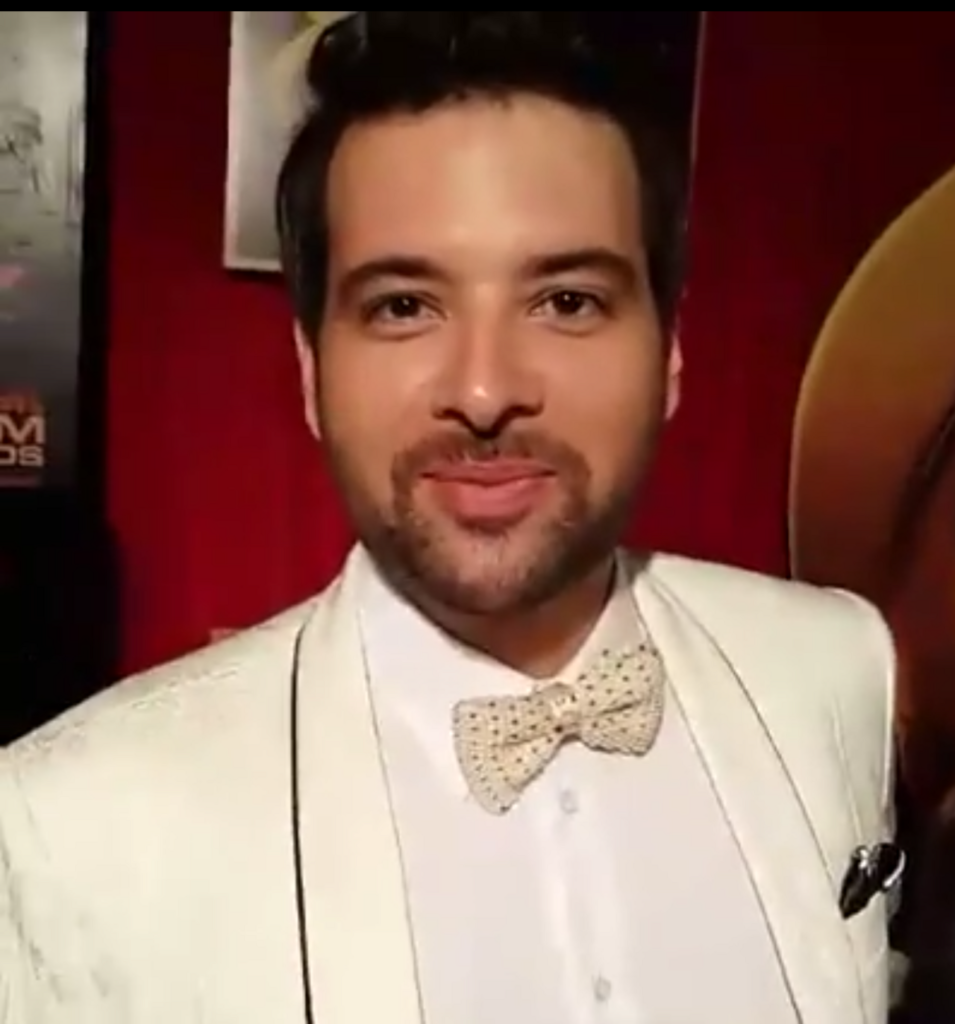
Sang-e-Mar Mar ran on Hum TV on Thursday nights from 1 September 2016 to 9 March 2017, 28 episodes directed by Saife Hassan and produced by Momina Duraid. It follows two Pashtun families in a Swat village, and its central injustice is the fate of Shireen (Kubra Khan), wrongly blamed for a killing and handed over in vani to Safiullah, played by Omair Rana. Around her, Gulistan Khan and Sania Saeed’s Shameem form a marriage of two people who understand exactly what the code costs and keep paying it anyway.
Writing in The Express Tribune in October 2016, Mahwash Badar connected it to the murder of Qandeel Baloch that July and the anti-honour-killing legislation that followed, and praised it for exposing the social machinery behind honour rather than simply condemning it. When it ended, Sadaf Haider’s review for Dawn Images called it a necessary critique of the obsession with ghairat, praising Afridi’s refusal to excuse his villains and noting that Mikaal Zulfiqar’s Aurang was written as a weak, conflicted man rather than a rescuing hero. Afridi won Best Writer at the 2017 Hum Awards and Best TV Writer at the 2018 Lux Style Awards, and Rahat Fateh Ali Khan’s title song is among the best-loved Sahir Ali Bagga OSTs.
Its weakness is one that recurs in his later work. In the final third, the serial resolves its arguments through a run of killings and an accident, and the deaths arrive with the regularity of plot mechanics rather than the weight of consequence. The serial shows a writer who can build a moral trap with great care and then reach for melodrama to spring it.
Aangan: Adapting Khadija Mastoor’s Novel
Afridi’s screenplay for Aangan, directed by Ehteshamuddin and aired on Hum TV from 20 December 2018 to 27 June 2019, took on a more literary source. Khadija Mastoor’s 1962 novel watches the politics of Partition intrude on a family courtyard through the eyes of Aaliya. Afridi kept that structure, with Mawra Hocane as Aaliya and Sajal Aly as Chammi, a performance discussed in our piece on Sajal Aly dramas. What the adaptation cannot carry over is the novel’s interiority. Mastoor’s Aaliya is a judging, reflective presence; on screen she becomes a passive observer, and the serial leans on Chammi’s fire for energy that, in the book, comes from Aaliya’s mind. It reveals Afridi’s natural strength, which is confrontation rather than contemplation.
Ehd-e-Wafa and the Limits of a Commissioned Script
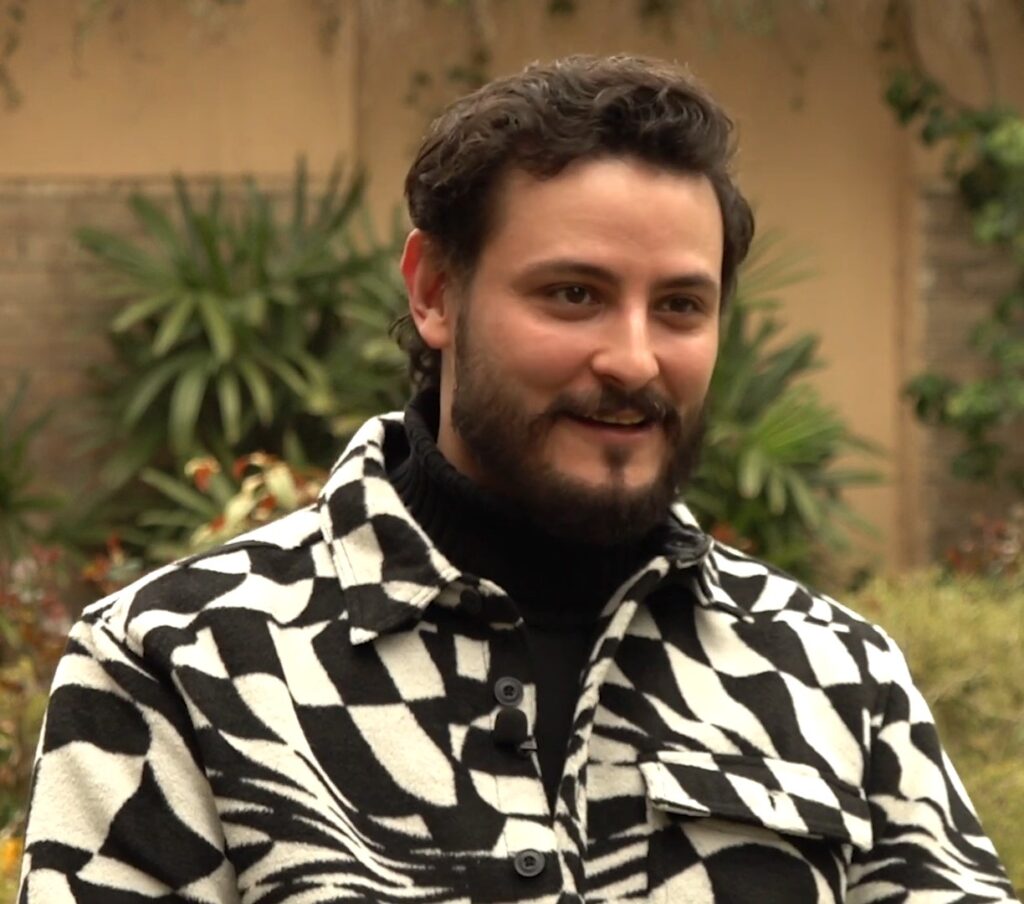
Ehd-e-Wafa, which aired on Hum TV, PTV Home and the ISPR channel from 22 September 2019 to 15 March 2020, is the outlier in his serious work. Created by ISPR with MD Productions, it follows four Lawrence College friends who choose different careers in the army, politics, television news and the civil service, played by Ahad Raza Mir, Osman Khalid Butt, Wahaj Ali and Ahmed Ali Akbar. It won Best TV Play at the Lux Style Awards and made Wahaj Ali a star.
The friendship is written with a humour his heavier dramas rarely allow, but the brief limits it. Of the four paths, the soldier’s is the one whose choices are never seriously questioned, while the politician and the journalist absorb the moral doubt; a petition at the Lahore High Court over the portrayal of politicians and the media was dismissed, yet the imbalance it pointed to is visible on screen. As a friendship drama it works, but it is the clearest example of how an institutional commission narrows a writer whose best work depends on putting institutions on trial.
Sang-e-Mah: Hamlet in Laspiraan
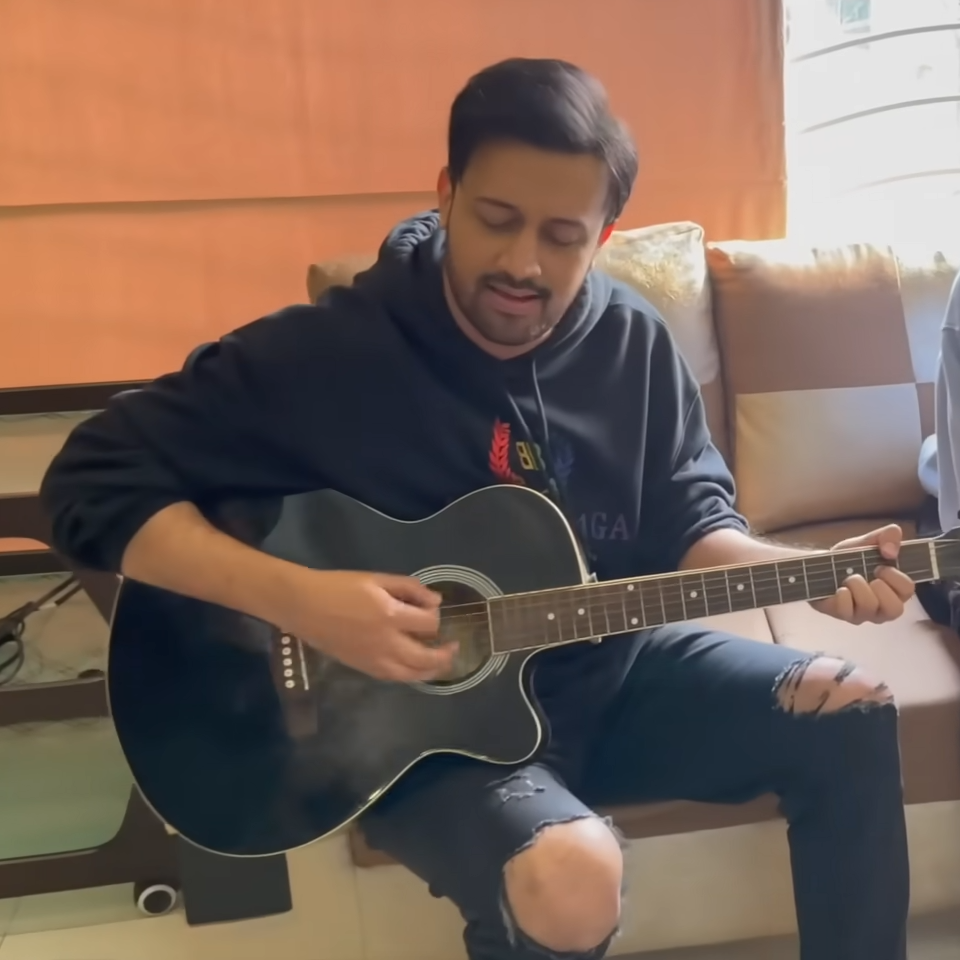
Sang-e-Mah, the second part of a planned trilogy begun by Sang-e-Mar Mar, ran on Hum TV from 9 January to 3 July 2022 over 26 episodes, again directed by Saife Hassan. Atif Aslam, in his acting debut on television, plays Hilmand, a young man living a dervish’s life in a graveyard, opposite Nauman Ijaz and Samiya Mumtaz. Its subject is ghag, the tribal custom in which a man publicly claims a woman for marriage and so forecloses her choices.
It is also the clearest instance of Afridi’s reading entering his scripts. In April 2022, Mehreen Odho argued in Dawn Images that it is a deliberate adaptation of Hamlet: Hilmand speaks to his dead father at the graveside, is dismissed as mad, and confronts a stepfather who poisoned his father and married his widow, and in episode nine Sheherzaad says outright that something is rotten in Laspiraan. A revenge tragedy suits a story about a culture of revenge, and Shakespeare gives Afridi a structure in which brooding is itself a form of resistance.
Its problems are also more serious. The Friday Times reported in January 2022 on criticism that the show trades in stereotypes of Pashtuns, and Aneela Khalid’s review for Independent Urdu argued that the writing blurs ghag with love, softening the custom it sets out to condemn. The ending compounds this. Marjaan and Zarsanga take poison together rather than face the jirga, and only after their deaths do the elders abandon ghag; Aaj News reported the next day that many viewers were angry at the finale. The deeper difficulty is structural: a drama arguing against a violent custom concludes that only a spectacular death can end it, which comes uncomfortably close to the custom’s own logic.
Zard Patton Ka Bunn and Tan Man Neel o Neel: Two Kinds of Message Drama
Zard Patton Ka Bunn, which premiered on Hum TV on 12 May 2024, was a co-production with Kashf Foundation, and as Arab News reported that month, it set out to discuss family planning and women’s health, with Sajal Aly as Meenu. The subject is one television usually avoids, but the brief shows in scenes where characters speak in the register of a public-information campaign rather than of people under pressure.
Tan Man Neel o Neel, produced by Sultana Siddiqui and directed by Saife Hassan, begins as a lighter story about young dancers, with Sehar Khan and Shuja Asad as Rabi and Sonu. In its final ten minutes, a rival falsely accuses Sonu of dancing at a holy site and a mob kills the accused; the episode closes with photographs of real victims of false blasphemy accusations, including Mashal Khan and Priyantha Kumara. As Images reported in February 2025, viewers praised its courage while some found the turn abrupt, which is fair, since the earlier episodes barely prepare it. Yet this death works differently from the one in Sang-e-Mah. It resolves nothing and offers no reform, and so it indicts the society watching rather than tidying up the plot.
Mustafa Afridi’s Place Among Pakistani Drama Writers
Afridi’s most important collaborator is Saife Hassan, who directed Sang-e-Mar Mar, Ehd-e-Wafa, Sang-e-Mah, Zard Patton Ka Bunn and Tan Man Neel o Neel, and whose restrained camera gives the writing room to breathe. In seriousness Afridi stands close to Bee Gul, though he favours broad social canvases over the intimate psychology she prefers, and he is more willing than most dramas about taboo subjects to leave his audience with discomfort.
I would place Sang-e-Mar Mar first among his serials, because it holds its argument most steadily and lets its characters, rather than its message, carry the critique. Sang-e-Mah is more ambitious and more flawed, and Tan Man Neel o Neel is the bravest of the recent work despite its rushed construction. What links them is a writer who understands how custom persuades, which is rarer than simply condemning it. His appetite for the grand finale is a real weakness, but it is the weakness of someone attempting what most of the industry will not.
Where to watch: Sang-e-Mah is on HUM TV’s official YouTube channel; Hum Network took Sang-e-Mar Mar off YouTube in 2017 and later made it available on its own website.


.png)