

Midway through the opening credits of O Rangreza, the voice carrying the title song climbs into a high, almost pleading register. Hum TV aired the serial from July 2017 to February 2018, and for many viewers that voice was the first time a face came attached to a sound they had been hearing for years. It belonged to Sahir Ali Bagga, who composed the song, sang it, and who had by then written music for a long list of drama title songs.
Bagga is a strange kind of famous. His melodies open serials on most of the major channels, and some of his work has travelled far beyond television: “Zaroori Tha”, the 2014 Rahat Fateh Ali Khan single he composed to lyrics by Khalil-ur-Rehman Qamar, passed a billion views on YouTube in early 2021. Yet his name rarely sits on the screen for long, and for much of his career the singers fronting his songs collected most of the credit.
This piece looks at Sahir Ali Bagga’s OSTs as a body of work rather than a playlist: where the sound came from, which title songs show it at its best, and why the formula that made him the default composer of the drama title song has also become its biggest limitation.
From a Lahore drum kit to the drama title song
Bagga was born in Lahore in 1980 into a working musical family. His father, Amjad Hussain, was a composer and drummer active in the 1970s, and Bagga himself started behind a drum kit, playing with the band Jupiters before composing for Jawad Ahmad’s album. That rhythm-first training is audible in his drama work, where the percussion often does more emotional lifting than the strings, and where songs tend to build in stages rather than arrive fully formed.
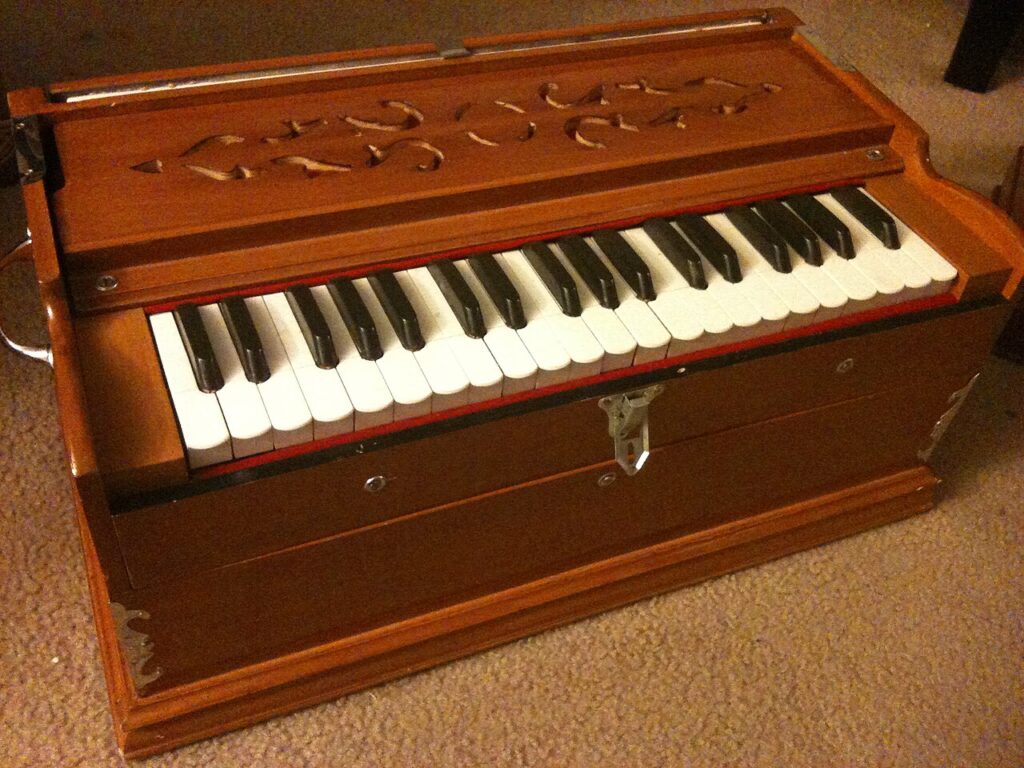
His broader recognition came through PTV’s Virsa: Heritage Revived in 2009 and 2010, a series that set folk and Sufi material for singers such as Shafqat Amanat Ali, Rahat Fateh Ali Khan and Sanam Marvi. The project shaped what became his signature: a Punjabi and Sufi melodic base, a harmonium-led texture borrowed from qawwali, and a gradual swell toward a sustained high note. Television producers in the following decade wanted exactly that kind of song, one that could announce heartbreak in the first thirty seconds of an episode and still sound grand when cut down to a ten-second sting before an ad break.
In a 2018 interview with Madeeha Syed for Dawn’s Icon, Bagga spoke openly about the cost of working in the background. He said that singers who had recorded in his studio sometimes claimed his compositions as their own, and that he had kept quiet partly out of friendship and partly because his family needed the work. The interview is also memorable for his comparison with A.R. Rahman, whom he praised while arguing that, measured by YouTube numbers, his own standing was the same. It is a boastful line on the page, but read alongside the credit disputes it sounds more like a composer insisting on being counted.
O Rangreza and Khaani: two ways of scoring heartbreak
The best case for Bagga as a drama composer is still O Rangreza, written by Saji Gul and directed by Kashif Nisar, with Sajal Aly as Sassi, a young woman drawn to performing as her family comes apart, and Bilal Abbas Khan as her cousin Qasim. Saji Gul wrote the lyrics himself, and the song fits the serial in a way most title tracks do not: the rangreza of the title, the dyer, gives the writer an image for love as something that colours a person, and the melody follows that idea rather than a generic swell. Sajal Aly later joined Bagga on a version of it, and the track won Best Original Soundtrack at the 2018 Hum Awards and was nominated at the Lux Style Awards the same year. Bagga’s own voice, less polished than the stars he usually writes for, gives it a rawness that suits a story about a household held together by resentment.
Khaani, which began on Geo Entertainment in November 2017, shows the other mode. Written by Asma Nabeel and directed by Anjum Shahzad, with Feroze Khan and Sana Javed in the leads, it gave its title song to Rahat Fateh Ali Khan, and Bagga is credited with the theme music. Here the music does not comment on the story so much as raise its temperature. Rahat’s voice is a blunt instrument in the best sense, and in a revenge melodrama about a powerful man’s son and a woman who refuses to forgive him, the bluntness works. The trade-off is that the song could sit on almost any serial about wounded pride, which is the first sign of a pattern that becomes harder to ignore later.
The Rahat partnership and the question of credit
The partnership with Rahat Fateh Ali Khan produced Bagga’s most widely heard work, and also his most public grievance. When Images reported in January 2021 that “Zaroori Tha” had crossed a billion views, it named Bagga only as the composer, in a single line, while the coverage centred on the singer and the video’s Indian television stars. Speaking to Asfa Sultan of The Express Tribune in June 2020, around the release of his first solo single, “Ishq Hoya”, Bagga said Rahat had never acknowledged his contribution to their songs, and that this was part of why he wanted to work as an independent artist.
Disputes like this are not new in South Asian music. In the film era, a music director such as Khawaja Khurshid Anwar, whose score for Heer Ranjha (1970) is still treated as a landmark, had his name on the poster, and audiences discussed a film’s music by its composer as well as its singers. Television never developed that habit. Drama credits roll fast, YouTube uploads of OSTs list the singer first, and the composer becomes a footnote even when his melody is the reason viewers return to the opening credits. Bagga’s frustration is personal, but it points to a structural problem in how the industry, and the audience, credits the people who make drama music.
Coke Studio and the ISPR years
Coke Studio gave Bagga a stage where his name came first. Across seasons 10 to 12 he served as music director on “Baazi” and “Malang” with Aima Baig, “Roye Roye” with Momina Mustehsan, and “Dhola”, again with Baig. These songs are useful for understanding his drama work because they strip away the visuals: the slow opening, the folk-inflected hook, the climb to a chorus built for two voices in call and response. “Malang” is the strongest of them, and its energy shows what his writing can do when it is not tied to a ninety-second credit sequence.
The same period brought a long run of work for ISPR, the military’s media wing. “Bara Dushman Bana Phirta Hai”, the 2015 march song he composed, earned him the Pride of Performance in 2020. That work fed directly into drama through Ehd-e-Wafa (2019–20), Mustafa Afridi’s serial about four boarding-school friends whose lives later diverge, directed by Saife Hassan and co-produced with ISPR. Its anthem “Yaarian”, with lyrics by Imran Raza, puts Bagga alongside Ali Zafar, Asim Azhar and Aima Baig in a chorus built for singing along. It succeeded at what it set out to do, which was to make friendship sound like a team chant, but it is closer to a commissioned song than a character study, and it shares that quality with much of the ISPR catalogue.
Where the Bagga formula runs thin
The weakness in Bagga’s drama catalogue is the sameness that comes with volume. Listen to several of his title songs back to back and the architecture repeats: a quiet, often solo opening, a harmonium or string figure under it, a second verse that adds percussion, and a final rise into a sustained, pleading note. In Deewar-e-Shab (Hum TV, 2019–20), “Kya Hai Ishq”, which he sang with the Manwa Sisters, has lovely moments, but its emotional shape is close to half a dozen of his other songs. When one composer supplies so many title tracks across channels, viewers lose the sense that a serial has its own musical identity.
The partnerships compound this. Rahat Fateh Ali Khan, Ali Zafar and Aima Baig are distinctive singers, but returning to the same voices so often makes the songs feel like a brand rather than a response to a particular script. Compare the songs collected in CurryFlow’s roundup of the best Pakistani drama OSTs from 2020, where the most memorable entries often came from composers working against the house style. None of this cancels out O Rangreza, but it explains why his weaker songs blur together in memory while that one does not.
Sahir Ali Bagga’s place in drama music
Few composers have shaped what a Pakistani drama sounds like in its first minute as much as Bagga has over the past decade. His best title songs, O Rangreza above all, come out of the story, take their lyrics from the writer, and give a serial an identity viewers carry with them long after the finale. His weakest are serviceable openers that could be swapped between serials without anyone noticing. The difference between the two usually lies in how closely he worked with the drama itself, and in whether the producers wanted a song or a sound.
In my view, the more interesting chapter is the one he has been trying to write since 2020, as a performer under his own name, collaborating with younger voices and still being credited on recent HUM TV work such as My Dear Cinderella (2025). Readers who came to Pakistani music through Coke Studio may find the context in our pieces on the one-hit wonders of 2000s Pakistani pop and on Arooj Aftab’s songs useful, since both are about artists whose work outgrew the frame it was first heard in. Bagga’s drama songs deserve to be judged the same way: by the handful that belong only to their serial, rather than by the many that belong to every serial at once.
Where to listen: the official OSTs are on HUM TV’s YouTube channel, and his Coke Studio songs are on the official Coke Studio Pakistan channel.


