

Early in Dhoop Kinare, Dr Ahmer Ansari learns that the house he grew up in, the home of the man he called Baba, has been left not to him but to a granddaughter he has never met. He tries to buy it through a lawyer and is turned down. The granddaughter turns out to be Zoya Ali Khan, the careless young intern he has spent his shifts correcting at the hospital, and the serial spends its thirteen episodes working out what these two owe each other.
Haseena Moin wrote the serial and Sahira Kazmi directed and produced it for PTV Karachi in 1987, with Rahat Kazmi as Ahmer and Marina Khan as Zoya. It ran for 13 episodes of about 50 minutes each, and for the next three decades it never quite went off the air: PTV repeated it, families abroad passed it around on videocassette, and India’s Sony Entertainment Television remade it. Few Pakistani serials have had that kind of afterlife, and fewer have kept it on the strength of so small a story.
Watched now, Dhoop Kinare is both more modern and more dated than its reputation suggests. Its heroine has a profession, a temper and room to grow, in a form that later drama often took away from women. Its central romance, on the other hand, rests on a power imbalance the serial never examines, and some of its moral lessons land harder on women than on men.
Haseena Moin, Sahira Kazmi and a lighter kind of PTV drama
By 1987 Haseena Moin was already PTV’s most trusted writer of romantic comedy. Writing after her death in March 2021, Omair Alavi noted in Dawn’s Icon that her first original script, Kiran Kahani, came at a time when PTV drama was mostly adapted from novels, and that in the 1980s, when feudal sagas dominated the schedule, she offered lighter stories built on wit rather than tragedy. Tanhaiyaan, which gave Marina Khan her debut, and Ankahi belong to the same run, and Dhoop Kinare completes it. CurryFlow’s survey of Haseena Moin’s dramas traces that whole run, from Ankahi to Tanhaiyan.
The partnership with Sahira Kazmi mattered as much as the script. Kazmi had acted in Moin’s earlier work, and in the same Icon tribute she described the writer as a leading voice for women on screen, someone who wrote them as bold and independent while keeping them inside recognisable families. That balance is the serial’s real subject. Zoya lives with her father and a caretaker, has a best friend next door and a household falling into debt, and still spends most of the serial at work, where her mistakes have consequences that no amount of family warmth can soften.
Zoya, Ahmer and a romance built on correction
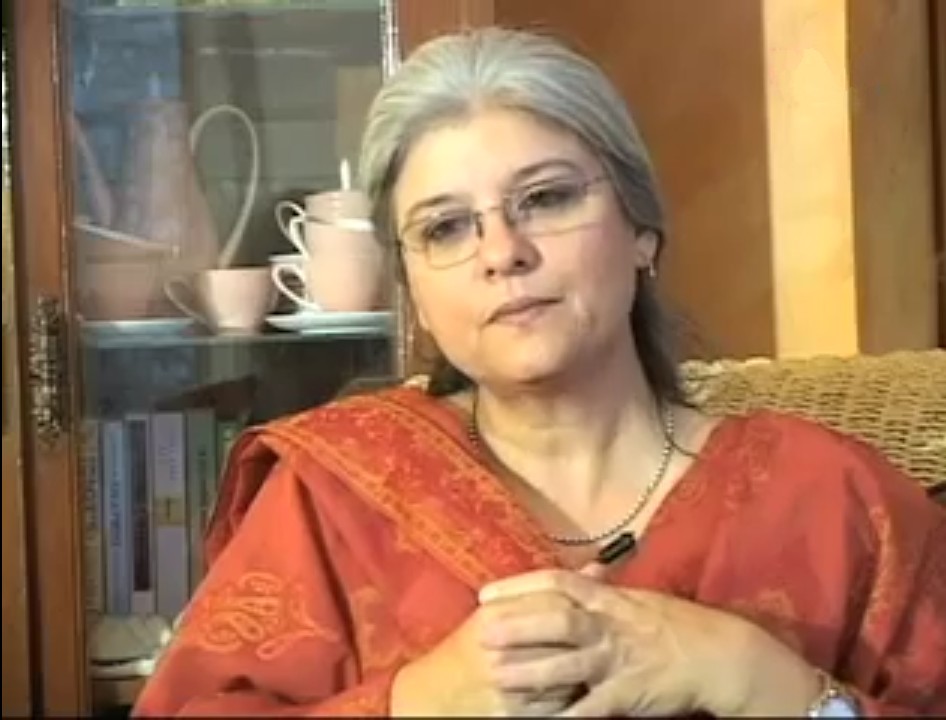
Marina Khan plays Zoya as careless and immature at the start, and the serial lets her stay that way long enough for it to matter. Her turn comes through a professional mistake rather than a romantic one, and the change in her afterwards is about competence before it is about love. That ordering is the serial’s most modern feature. Viewers raised on later serials, where a heroine’s growth is usually measured by how much she can endure at home, will notice how unusual it is to watch a young woman become serious about her career and be rewarded for it.
The romance itself is harder to defend today. Ahmer is Zoya’s senior, her critic and eventually her love interest, and the serial treats his harshness on the ward as proof of good character. Rahat Kazmi gives him a brooding dignity, but the structure of the relationship, in which the older man corrects the younger woman until she earns his regard, is closer to a teacher and pupil than to equals. The plot has a familiar literary shape: a proud man, a misjudged woman and a disputed inheritance owe something to Pride and Prejudice. Austen, though, makes Darcy change as much as Elizabeth does. Ahmer’s great gesture is to buy the house and give it to Zoya, which is generous, but it leaves him exactly as he was, while she has done all the growing.
The supporting characters fill out the picture. Sajid Hassan’s Dr Irfan, flirtatious and kind, supplies most of the comedy and helps bring the lead couple together; in Dawn’s tribute he said most people still know him for this role. Kehkashan Awan’s Anji, Zoya’s neighbour, wants to study interior design but is pushed by her father toward the family business, a small subplot that carries more of the serial’s social observation than its big scenes do.
Where Dhoop Kinare has aged
The weakest strand belongs to Badar Khalil’s Dr Sheena, the colleague who resents Zoya and pursues Ahmer. Her arc is the most conventional in the serial: she marries a man who already has a wife, the marriage ends in divorce, and she returns to Ahmer only to discover that he has never seen her as more than a friend. The serial means this as a lesson in pride, but it is the one woman with open ambition who is punished, while Ahmer’s coldness is forgiven as depth. For a writer celebrated for independent heroines, it is a curious place to put the moral weight.
The hospital is also thinner than the title of “medical drama” suggests. Cases and procedures appear mainly to create situations between characters, and the production, like much PTV work of the period, was made under tight financial constraints. None of this hurts the serial’s charm, but it means Dhoop Kinare works as a workplace romance more than as a portrait of medicine in 1980s Karachi.
Nayyara Noor, Faiz and the sound of the serial
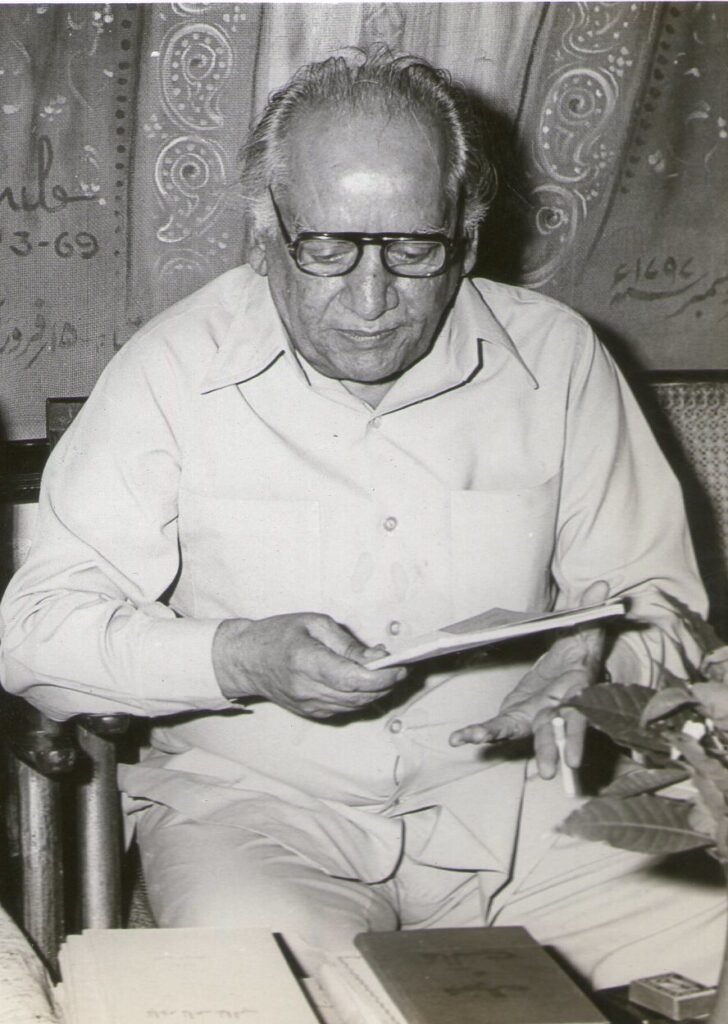
Much of the serial’s lasting affection comes from its music. Arshad Mehmood directed the score, and Nayyara Noor sings the title theme, “Hansi Khanakti Hui”, along with two ghazals. One of them, “Raat Yun Dil Mein Teri”, sets Faiz Ahmed Faiz’s poem about a lost memory returning at night, and placing Faiz inside a light romantic serial gives its quieter episodes a depth the dialogue alone does not reach. In an August 2026 feature on PTV dramas that travelled to the Gulf on VHS, Gulf News singled out that use of Faiz as the part of the score that still moves viewers.
The choice also says something about the PTV of the period. Drama music then was closer to the ghazal tradition than to the pop-inflected title songs that dominate today, and it trusted viewers to sit with a slow, literary piece of music at the end of an episode, a trust that later serials, with their louder and more insistent title songs, have mostly given up.
VHS tapes, Sony’s remake and a long afterlife

The same Gulf News feature, by Areeba Hashmi, described how PTV serials reached the UAE long before satellite channels did, recorded on cassettes in Pakistan, carried in luggage and passed from family to family as the picture degraded with each copy. It called Dhoop Kinare the serial “every argument comes back to”. Official recognition followed decades later. In April 2019 Geo News reported that PTV had chosen Dhoop Kinare and Tanhaiyaan as the first Pakistani dramas it would subtitle into Arabic for Saudi viewers, and in May 2020 PTV Home gave it a daily rerun in its Gold Hour slot.
India produced the most revealing tribute. Sony Entertainment Television’s Kuch Toh Log Kahenge, an official adaptation that ran from October 2011 to March 2013, stretched the story to 346 episodes, with Kritika Kamra as the intern and Mohnish Bahl, later replaced by Sharad Kelkar, as her senior. The comparison flatters the original. Haseena Moin told the whole story in 13 episodes, and its economy is one reason it can still be watched in a weekend. The remake’s length shows how much of the Indian daily-soap model depends on delay, and how little of that Dhoop Kinare needed.
Why Dhoop Kinare still deserves a rewatch
Dhoop Kinare has earned its place on lists like CurryFlow’s best Pakistani dramas of all time, and Zoya belongs alongside the women in our piece on iconic female roles in Pakistani dramas. Its achievement is to show a young woman growing up through her work, in a romance light enough to rewatch and short enough to finish. It is also a product of 1987, with a hero whose authority goes unquestioned and a rival who pays for her ambition, and it is better appreciated with those limits in view than by pretending they are not there.
In my view, its most useful lesson for today’s industry is formal rather than moral. Many recent prime-time serials run past thirty episodes, and much of that length goes to suffering rather than story. Haseena Moin and Sahira Kazmi built a lasting classic from thirteen episodes, a modest budget and a Faiz ghazal, and the serial’s survival through three decades of reruns, tapes and remakes suggests that viewers remember precision longer than they remember length.
Where to watch: PTV’s official PTV Digital channel on YouTube has uploaded the episodes.


.jpg)
