

Dumpukht is a way of cooking in which the pot is sealed with dough and left on a low flame, so that nothing escapes and everything inside cooks slowly in its own steam. Kashif Nisar used the word as the title of his 2016 A-Plus serial Dumpukht (Aatish-e-Ishq), about a household that will not take a decision without its pir. A decade later, the title describes his whole body of work. Nisar’s dramas seal their characters inside a house or a marriage and keep the heat low, trusting slow pressure to reveal more than any twist.
That approach has won him three Lux Style Awards for Best TV Director, for Dar Si Jaati Hai Sila, Ranjha Ranjha Kardi and Raqeeb Se. Yet viewers who could name every lead in those serials often could not name their director, because the industry sells its dramas by star and channel.
When Nisar is discussed at all, it is usually as Bee Gul’s director, which is accurate but incomplete. Across the writers he has worked with, from Zafar Mairaj and Saji Gul to Faiza Iftikhar, a consistent preoccupation emerges: the respectable man at the centre of a household, and the harm done in the name of faith or custom while everyone keeps up appearances. The patience that makes those themes land is also his main weakness, and his best serials show both.
From screenwriter to three-time award-winning director
Nisar came to directing through writing, with early screenwriting credits on the PTV Home serial Cousins in 2007 and on Jinnah Ke Naam, which earned him a Lux Style nomination for television writing in 2009. Early serials such as Ullu Baraye Farokht Nahi (2013) and Sannata (2014) brought director nominations, but the decisive turn came in 2016 and 2017.
Within eighteen months he made Dumpukht; O Rangreza for Hum, written by Saji Gul and starring Sajal Aly and Bilal Abbas Khan, which won him Best Director at the 2018 Hum Awards; and Dar Si Jaati Hai Sila, Bee Gul’s serial about a girl abused by a man her family trusts, which brought his first Lux Style win. Ranjha Ranjha Kardi, Faiza Iftikhar’s story of Noori, a factory worker married to Bhola, a landowner’s son with a mental disability, followed on Hum from November 2018 and won him the award again. Iftikhar is on air this autumn with Mitti De Baway, her caste drama for Green Entertainment, another story about shrines and inherited status.
The respectable man at the centre of the house
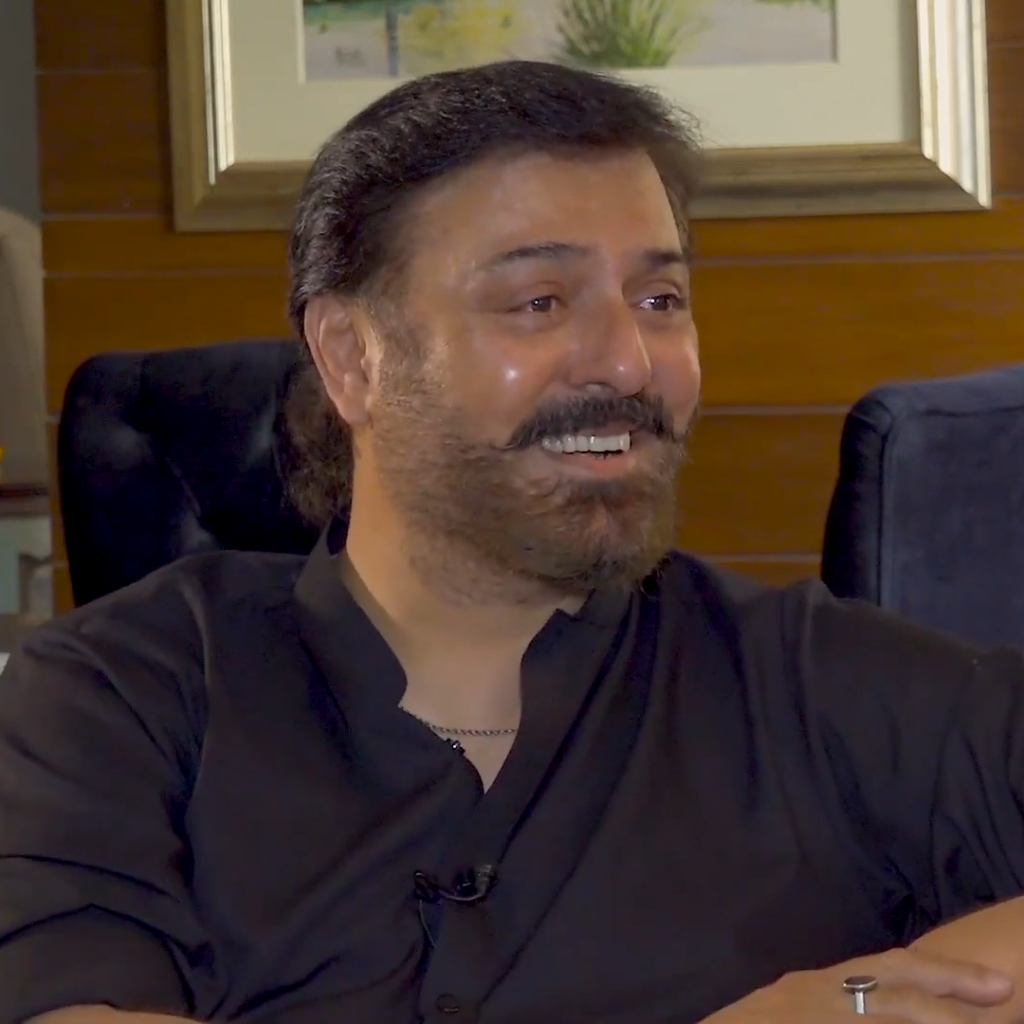
The clearest thread through Nisar’s work is a single actor. Nauman Ijaz played the pir Habib Ullah in Dumpukht, the charming, neglectful father Khayyam Sani in O Rangreza, Jawad, the household manager everyone trusts, in Dar Si Jaati Hai Sila, and Maqsood, the married man whose old love arrives at his door, in Raqeeb Se. Across four serials and three writers, the figure is the same: a man the family has arranged itself around, whose authority is real and whose failings sit in plain sight.
Ijaz is unusually good at warmth that curdles, and Nisar uses him to make a point Pakistani drama often avoids: the danger in a family rarely comes from outside it. In Dar Si Jaati Hai Sila the abuser runs the house and flatters its elders; in Dumpukht the family’s obedience to its pir sets the tragedy in motion; in O Rangreza, Sassi’s adoration of her father blinds her to how he treats her mother. Nisar lets that menace emerge from the arrangement of a room, from who sits, who serves and who may interrupt. It is a harder-edged version of the critique of polite patriarchy that Haseena Moin’s PTV heroines once offered, and a large part of why his late-2010s serials still hold up.
Faith, custom and the people who profit from them
Nisar’s longest partnership after Bee Gul is with Zafar Mairaj, who wrote Dumpukht, Kabli Pulao and Mann Jogi, and together they keep returning to the gap between religion and the uses people make of it. In Dumpukht, a girl’s request to the family pir for a taweez draws her into his orbit. In Mann Jogi, a nine-episode Hum serial from 2024, a moulvi’s suggestion of nikah halala sends a divorced woman into a marriage with a stranger, played by Bilal Abbas Khan, that neither her first husband nor the cleric can control. Iftikhar’s Ranjha Ranjha Kardi belongs to the same family: its plot turns on a mother’s vow to sacrifice her son at a shrine, and its sympathy lies with Noori, who questions the vow. In each case the target is not belief but the person who turns belief into leverage over someone weaker.
Kabli Pulao (2023) is the gentlest of the Mairaj collaborations and arguably the best. Mohammed Ehteshamuddin plays Haji Mushtaq, a 51-year-old Lahori bachelor who marries Barbeena, a young Afghan woman played by Sabeena Farooq, and what begins as a comedy about a marriage without a shared language becomes a drama about who may call a place home. Green Entertainment aired its 19 episodes from July to November 2023, and reviewing it for Images that August, Foha Raza singled out its camera work. Its title song, Ankhain, sung by Rahat Fateh Ali Khan to music by Sahir Ali Bagga, was directed as a video by Nisar himself.
The Bee Gul partnership, from Sila to Pakeezah
CurryFlow’s guide to Bee Gul’s dramas covers her side of this collaboration; from the director’s side, what stands out is how differently their serials are staged. Dar Si Jaati Hai Sila is claustrophobic, built around rooms Sila cannot leave. Raqeeb Se, which aired on Hum from January to May 2021, opens onto the courtyards of a Punjabi house as Sakina, played by Hadiqa Kiani in her first acting role, arrives with her daughter at the home of Maqsood, the man she once loved, and his wife Hajra, played by Sania Saeed. The title comes from Faiz Ahmad Faiz’s nazm addressed to a rival in love, which treats the other man as a fellow keeper of the same memories rather than an enemy, and Nisar takes that reading seriously. Hajra and Sakina refuse to behave like rivals, and the serial’s strongest scenes let the two women share space without forcing a confrontation.
Aik Aur Pakeezah, which began on Geo on 14 January 2026 and was produced with the Kashf Foundation, brought the partnership into the present, with Sehar Khan as a lawyer whose life comes apart after a private video of her spreads online. Writing in The News on Sunday after the first two episodes, Gaitee Ara Siddiqi called the direction superb. In her review for Images in April, Sana Hussain credited Nisar with restrained symbolism, pointing to the tea-pink outfit Pakeezah wears in the finale, an echo of an earlier wish about her wedding, and to the house key she takes back.
Where the slow cooking goes wrong
The same review identified the problem that runs through much of Nisar’s work. Hussain found the middle episodes repetitive, with characters discussing a media trial whose effects the audience does not see until the final episode, and the first substantial courtroom hearing arriving only around episode 21. The criticism is fair and not isolated: when a long episode order outlasts the story, slow pressure turns into stasis, and Ranjha Ranjha Kardi, at 31 episodes, sagged in the same way in its middle months.
O Rangreza shows a different weakness. Its late subplot, in which Tipu’s girlfriend Mina takes the name Amna and marries Qasim, exists mainly to give Sassi a rival, treating a conversion as a plot mechanism rather than a story. The direction does nothing to complicate a turn that blurs the serial’s sharp study of a daughter and her father. The reliance on Nauman Ijaz has a cost too: four variations on the compromised patriarch let regular viewers see the pattern before the story reveals it. The best counter-argument is Mann Jogi, which at nine episodes had no room to idle and suggests Nisar’s method suits shorter formats far better than the long serials channels still prefer.
Where to start with Kashif Nisar’s dramas
For newcomers, Raqeeb Se is the most rewarding introduction, although Hadiqa Kiani’s performance turns repetitive in places, as Gaitee Ara Siddiqi observed when it aired. Kabli Pulao is the warmer choice, for viewers willing to accept its unhurried pace. Dar Si Jaati Hai Sila remains the most important and the hardest to watch, and is best approached knowing that it deals directly with the sexual abuse of a child. Where to watch: most of these serials are on the official YouTube channels of HUM TV, Har Pal Geo and Green TV Entertainment, though availability varies by country.
Why Kashif Nisar deserves to be followed by name
Pakistani television tends to treat directors as technicians, and Nisar’s career argues against that habit. His writers are very different, yet their serials with him share a moral interest in the respectable man at the centre of the house and the customs that protect him, along with a visual patience that lets those men reveal themselves. In a medium where directors rarely choose their scripts, that consistency is what authorship looks like.
His dramas are not without faults, and the long middle of Aik Aur Pakeezah shows he has not solved the stretched episode order. But while many serials still send their heroines to the shrine for answers, he has spent a decade asking who benefits from the shrine, the taweez and the family’s silence, and his subjects have widened from a pir’s household in 2016 to a courtroom and a viral video in 2026. On that record, his next serial deserves attention for the director’s name as much as its cast.


