
Saturday, December 27, 2025
More
    Home Blog Page 530

    Abdus Salam And Other Famous Scientists Who Were Ridiculed During Their Lifetime

    1
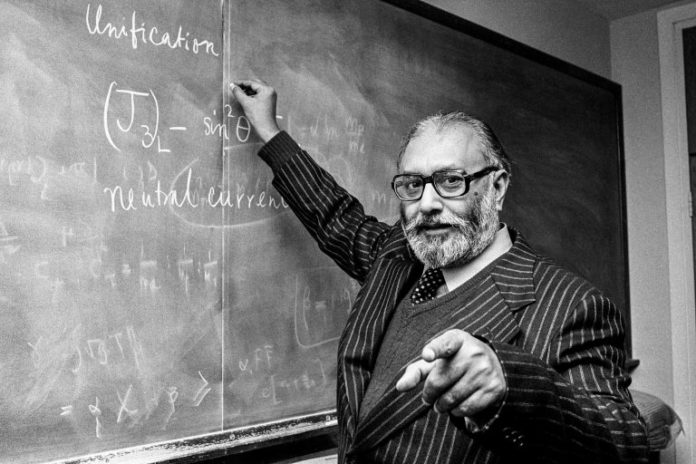
    Abdus Salam

    In this article, we take a light-hearted look at some famous (wo)men of science who did not get their due recognition and appreciation during their lifetime. This includes Pakistan’s famed scientist Abdus Salam.

    Since we now live in an age where scientists such as Richard Dawkins routinely perform lab experiments on priests and pundits alike, it may surprise many of you (i.e. those who don’t read books) that there was once a time in which some of the most brilliant men of science faced harsh ill-treatment and ridicule.

    After centuries of ignorance and dogma, a group of people become angry at Jesus & Co. (this being Europe) for being away from desk during disasters such as the Bubonic Plague and the Crusades. Also, science was coming up with all types of inventions — Netflix not being one of them (yet).

    It was no surprise, therefore, that more and more people shifted towards rationalism and scientific enquiry.

    We will now look at six groundbreaking scientists, who despite the golden age of enquiry that defines the past few centuries, were pretty much treated like second class citizens during their lifetime.

    Galileo
    Galileo

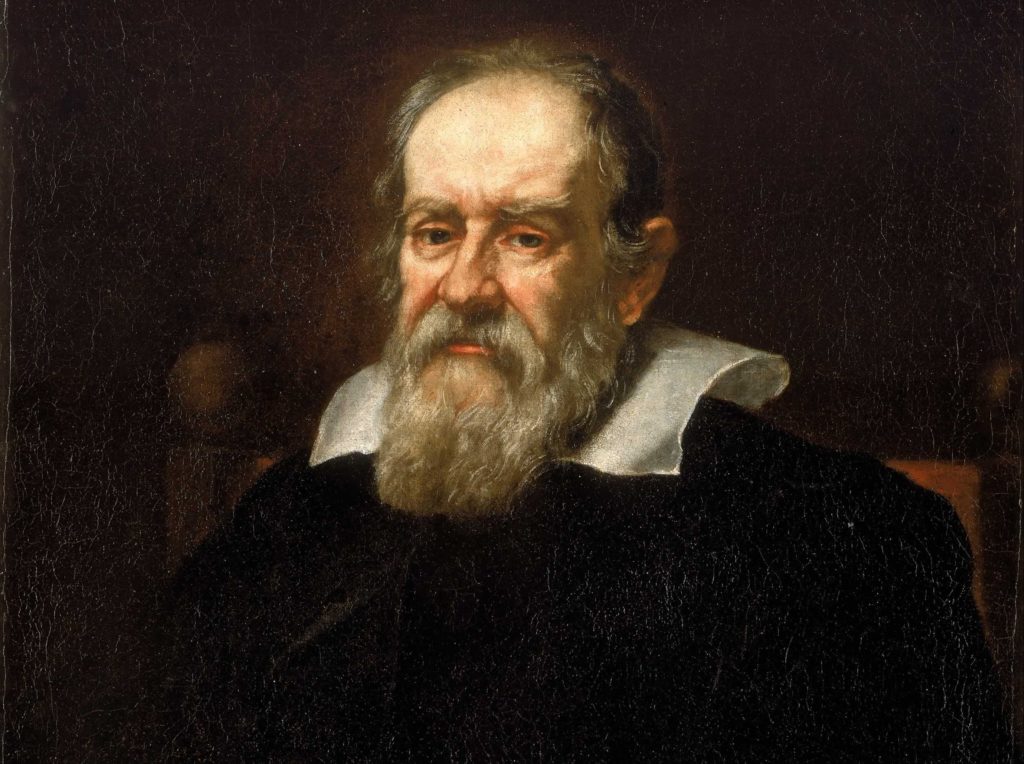
    Anyone that has ever opened a science textbook knows that Galileo was the Kanye West of his times. Like Kanye, Galileo was brilliant and misunderstood. The man was instrumental in inventing the first really effective telescope. This allowed him to make some of the most astounding discoveries in early observational astronomy. It also helped confirm his belief in the heliocentric theory, which posits that the Sun is the centre of the solar system. People know him today as the father of observational science, astronomy and perhaps even the real father of North Galileo-West.

    Not surprisingly, Galileo was in all sorts of trouble with the Church. The church, if you didn’t know – was the NSA of its time. It sorted through Big Data and laid the smackdown on anyone acting smart.

    His controversial writings eventually reached the Inquisition. Making people think that geocentricism is bullshit was a serious no-no. Of course, the Church implored, how could the acclaimed writers who wrote and edited the New Testament after Jesus’s death be any wrong?

    The inquisition accused Galileo of heresy placed him under house arrest for the rest of his life.

    Copernicus
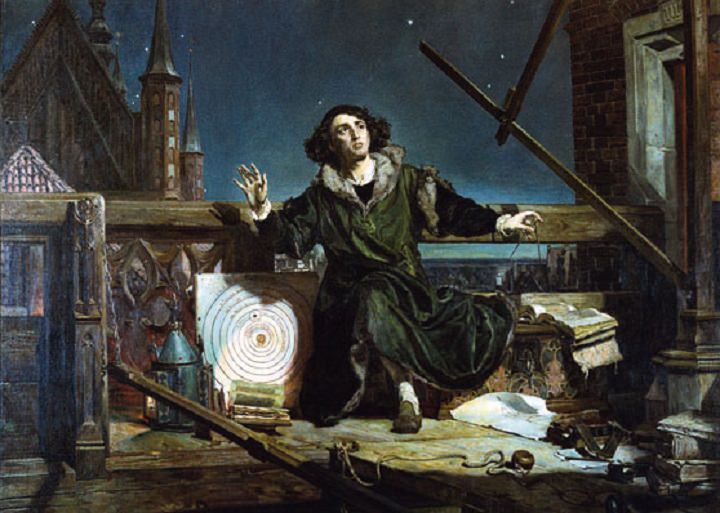
    Now it would just be wrong to talk about the heliocentric model without crediting the man behind it. Although Copernicus didn’t really face persecution within his lifetime, he did spend many of his days wondering whether to go ahead about publishing his ideas.

    Ultimately, Copernicus never published his book during his life. The fear of criticism and ridicule probably made Copernicus a victim to inertia. Which turned out to be a good thing eventually. Once the book published, a wave of criticism came flowing in from all circles. Everyone demeaned the theory posited in the book – from Martin Luther to his very own assistant.

    In the 16th century, Aristotle’s geocentric world view remained entrenched in the mass psyche: questioning it was out of the question.

    Charles Darwin
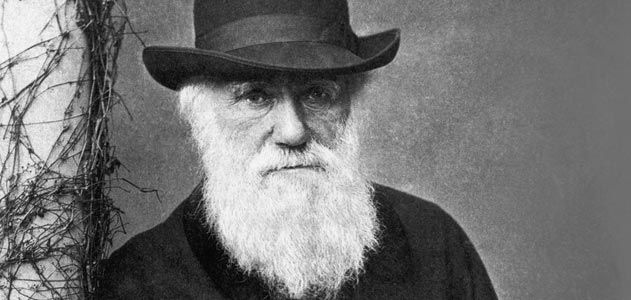
    Darwin’s game-changing theory of evolution actually goes like this: all species have descended over time through common ancestors, driven by the process of natural selection. Add to that a little rhetoric such as the ‘survival of the fittest’ and you find a theory that gives the Bible’s Adam and Eve a hard look.

    Unsurprisingly, Darwin’s ‘On the Origins of the Species’ did take a fair share of flak from the general public. The only reason Darwin probably came through was the support of scientists and thinkers from the age.

    Understandably, the church was not happy. They church failed to merit in an explanation of man’s origins that had no room for God, Jesus and the Holy Spirit.

    Karl Marx felt that the book was ‘a bitter satire’ and local publications were full of loathsome attacks on Darwin’s person and theory.

    Alan Turing
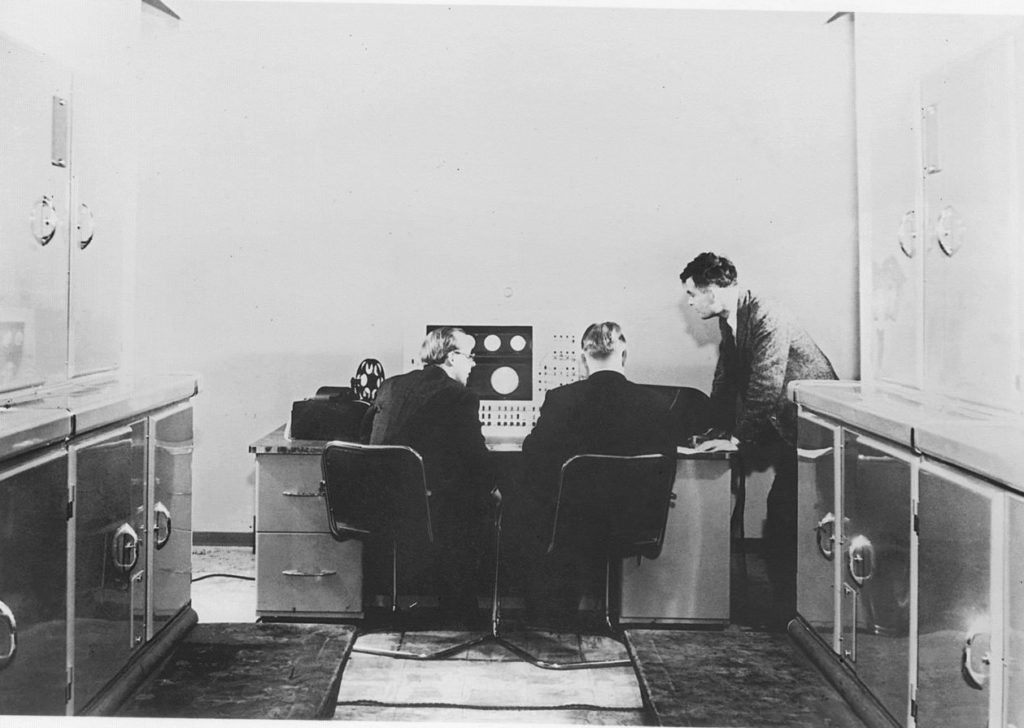
    Today, we call Alan Turing as ‘the father of computer science’. However, he is also classified as something you just could not be in early 20th century Europe: he was gay. Turing passed his time formulating the Turing machine and formulating techniques to decode German ciphers in World War II.

    Homosexuality was a serious crime in 1952. If caught, your ass was grass. This wouldn’t be too bad of a thing if you were a curious gay felon in Atlanta, who wouldn’t mind the sausage party going on in most jail cells. However, you must understand: Turing was a scientific genius and not your local drug dealer.

    The court ordered Turing to be brutally castrated. Two weeks later, he killed himself.

    Women scientists, generally.

    Women have played a bigger role in public life as the centuries rolled on. The field of science is no exception. Between them, women have accumulated 16 Nobel prizes. Recent Nobel Prize winners include the likes of Rita Levi-Montalcinian. Rita is an Italian neurologist credited for her work in nerve growth factor (NGF).

    Up until the 1800s (and even later in most scientific circles), it was largely believed that women were primarily sent by God to ‘grill that chicken, right’.

    Even today, famous women scientists such as Chien-Shiung Wu (research on radiation detection and uranium enrichment), Esther Lederberg (discovery of a virus that infects bacteria) and Rosalind Franklin (usage of x-ray to take picture of DNA) have generally been snubbed due to the prevalent sexism in society.

    Over the centuries, female researchers have to work as “volunteer” faculty members. They have also had their work and discoveries get assigned to male colleagues, without much choice.

    Abdus Salam
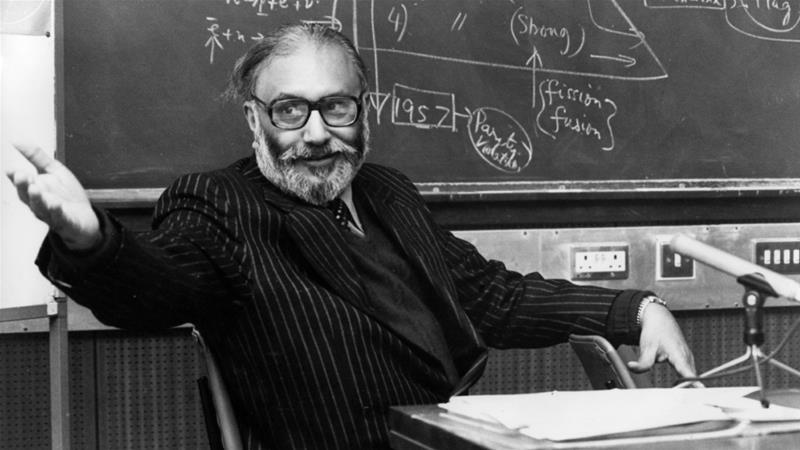
    Abdus Salam was the Nobel Prize winning scientist (only the second Muslim ever) recognized for his contribution to the field of theoretical physics. Simply put, the man played a monumental role in helping us understand the weak force and the theory of quantum mechanics.

    Abdus Salam did receive the wide acclaim of the scientific community. In his home country of Pakistan, however, he is still treated more like a shopkeeper than a Nobel laureate. Yes, the Pakistani government did posthumously print stamps alongside the apologetic things countries do after a well-known person dies. Generally, however, there was very little public grief upon his death.

    The reason was simple enough: Abdus Salam was a Ahmedi Muslim, which is like being the descendent of Tutkhamen and going to a holiday trip in Israel. Ahmedis today are as heretics by a vast majority of Pakistan. In 1974, Benazir Bhutto’s father, Zulfiqar Ali Bhutto, declared Ahmadis to be non-Muslims by passing a seminal law.

    This understandably ticked Abdus Salam off as he packed his two finest shirts and headed to England – for ever.


    How Pakistan Uses Torrents To Keep Up With The World

    0
    Torrents are still big in Pakistan

    Torrents are still a big thing in Pakistan.

    Less than 0.1 percent of Pakistanis use Netflix. Social media networks like Facebook are largely used to stalk people and participate in meaningless debates. And YouTube, despite the rapid improvement in local content over the last two years, still falls behind when it comes availability of A-grade art and knowledge.

    So what has driven Pakistan’s cultural and productivity renaissance under-the-hood for the last 15 years? This article explores the story of torrents and Pakistan, and how the latter have helped the country keep up with the rest of the world.

    Pakistan’s Age of Enlightenment

    In 1999, Pakistan was a nuclear dead-zone in terms of access to entertainment and knowledge. Low-speed internet and no indigenous programming other than the state broadcaster and a couple of licensed terrestrial channels. Many middle-income and above homes had foreign channels through satellite television, but the experience was shoddy to state the last.

    In 2002, a mini-cultural boom took place. A flurry of Pakistani television channels went on air and internet speeds shot up with the introduction of DSL. The use of peer-to-peer file exchange was also introduced to the internet users at large.

    Since then, torrents and similar protocols have allowed people to obtain a tremendous array of previously inaccessible movies, software, music and publications. Unsurprisingly, people in developing countries like Pakistan have systemically used the gaps in intellectual property laws to meet their needs for this content without paying a dime.

    Is torrent-ing wrong? It depends on who you ask.

    Torrent clients are still popular in Pakistan

    This pursuit of art was never a noble undertaking, however. There just happened to be millions who were never going to pay for intellectual property. As they say: necessity is the mother of invention.

    We have often heard the saying: torrents are immoral and illegal. A vast majority of this deeply religious country, believe it or not, just does not hold this view. This also holds true for most of the developing world.

    The use of torrents and illegal websites to download pirated content could be seen as a justifiable karmic response to centuries of colonization by the west.

    To best understand how the use of torrents became the norm, we must look at the people most responsible for it.

    Data-mongers

    There are the data-mongers; the people who download file upon file of movies, software, television series and books. Data mongers sell their police officer father’s service medals just to buy a few extra hard disks. This group stacks up on gigabytes of data as passionately as the US Army does on spam during a war. Where can you find every ‘Masterclass’ ever published? These losers.

    Data-mongers are also the library keepers of a great trove of culturally relevant publications. These individuals inspire, influence and instigate others to follow their unending pursuit of digital knowledge.

    An Islamic saying goes, “Seek knowledge even if thou must go to China”. Indeed, they will add every imaginable Chinese film to their collection, even the ones that the Chinese tend to ignore. You can also expect every iteration of Adobe Illustrator to be available just in case they need backward compatibility to open a particular file.

    The Professionals

    Whether it’s Microsoft Office or any other popular productivity software, there is little doubt that a majority of the informal sector works primarily using unlicensed software. This is a norm and not an exception.

    And it makes sense. For one, how do you expect a graphic designer who earns $300 a month to buy a $50 dollar Adobe Photoshop subscription? Similarly, do we really expect small private schools, shops and retailers in thousands of rural towns and villages across the world to download official copies of productivity software? It’s a tough ask.

    Larger software companies with global distribution have tried to circumvent this by pricing locally and affordably for their most used products. However, this is just not possible logistically and financially for a majority of software vendors.

    This gap in supply and demand is understandably met with torrents and similar download sites.

    Seasoners

    Then there are the seasoners – esteemed hoarders of the fraternity of seasons. They will watch each season, old and new, in isolated weekend marathons. I have personally witnessed 17-year olds in Mughulpura finishing complete seasons of Frasier and House of Cards. The analogy of that is a Jew gyrating to Nusrat during Passover.

    And then you must only look towards your Facebook to see how imperative a role these seasons play in the lives of youngsters around you.

    Research has shown that the bucket list for the majority of upper-middle class youth consists of finishing each episode that has hit the airwaves. It starts from Friends and finishes at whatever Netflix is tossing at our faces this weekend.

    These young men and women, who just fifteen years ago would have been watching Veena Malik host a Top Ten countdown show are now busy watching a college professor cook up some meth and sell it around town. Images of Uncle Sargam’s nose are being superseded by incestuous conflicts on Game of Thrones.

    Torrents, without any subscriptions or financial setbacks to their parents, have opened up the world right onto their laptop screens.

    IMDB’ers

    Then there are the IMDBers. The sole objective of this lot is to watch the entire library of 250 movies in the IMDB’s Top 250 Films list.

    These 15-22 year olds, young men and women, will watch it all: from countless sex comedies (no,
    your innocent daughter is not an exception to this process of becoming Munni/Sheila) to films from countries you didn’t know
    existed. Nothing bewilders one more than the sight of a 17 year old suffocate through countless Godard films just for the sake of moving one up on this esteemed list.

    So now that we have met the visionaries, what effect have these people and the torrent movement in general had on our unassuming lives? Let’s go back to the era before torrents.

    Twenty years ago, a search for “Best Protein Powder” on Lycos or Altavista had every chance to redirect you to the personal homepage of Patrick the Poodle-lover. The only evil we took part in was downloading one-off singles on Napster after a thirty-minute wait. It was here that the playlist was truly born, musical tastes diversified; but this was the very limit of free entertainment for the average Pakistani.

    Brown Lives Matter

    The spread of art and knowledge in any form does have it’s merits. For good filmmakers to be born, there needs to exist a social milieu where films are taken seriously as an artfiorm; in which people can freely watch, discuss and dissect films and learn from them. For this to happen, the visionaries of tomorrow need access to original sources of art in the form of films, books and music.

    Torrents fill in that gap for the masses in a very convenient way.

    Similarly, to create the tech and business professionals of the 21st century, you can’t have them working on Windows XP or whatever operating system they can afford.

    Despite the growth and prevalence of open source software, there are many instances where you simply cannot move forward on your digital journey without a credit card. In the absence of the latter, most third world users tend to take the easy route by opening up an instance of uTorrent and getting to work.

    A Race to Relevance

    A few years back, there was always that one rich kid who proudly showcased his collection of 500 DVD’s in his father’s movie collection. Unfortunately for him, his movie savvy-ness was of little worth in his social circle at large.

    Rich kid: Say, what do you guys think about Woody Allen’s Manhattan? I think the black and white cinematography really added
    to the ambience of the film.
    Friend: “I think Stallone was awesome in Rambo. He has these titanic biceps back then.”
    Friend 2: “I think Arnold was more beefed up in Predator.”
    Friend 3: “Is Woody Allen muscular?”

    Thankfully, most of us have progressed beyond this stage. Torrents have largely been responsible for this by levelling the barriers to entry on a massive scale. No wonder so many online pirates see themselves as modern day reincarnations of Guy Fawkes.

    Torrents and Pakistan: How Long Can This Continue?

    Today, people are less envious of their friend’s looks, bank accounts and automobiles, and more of how many seasons they have watched over the last week. A few of us have had the courage to load up our credit cards and get Netflix subscriptions. Many more of us use Netflix credentials belonging to one of our siblings living abroad.

    But this is still a very small minority – most Pakistanis still use under-the-table means to view the content we desire.

    Authorities have unsuccessfully tried to step up and block access. Every time a repository like ThePirateBay goes down, another one goes up in a matter of hours. The tussle seems ongoing – and is likely to continue for a long time.

    For Pakistanis, the race is on for who can stay awake through the most Tarkovsky films. Also up for contention: who can listen to the most albums from a genre of which they don’t possess the wildest clue about? And just while you are at it: who can discover the secrets of life by learning palmistry through counterfeit e-books?

    In this particular Age of Enlightenment, pretentiousness works hand in hand with curiosity toward the noble pursuit of knowledge.